CM Sai Pushes Horticulture Shift in Chhattisgarh Tribal Belts
Synopsis
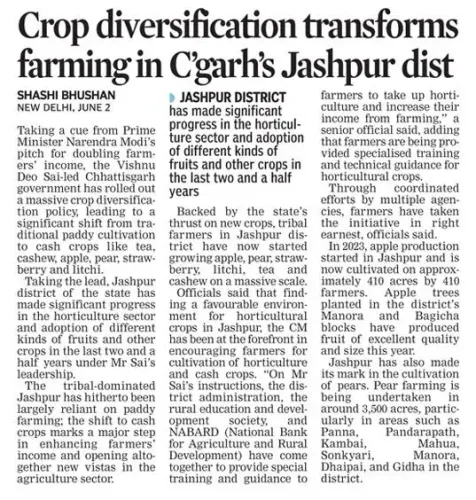
The Chhattisgarh CMO has spotlighted tribal farmers in Jashpur, Balrampur, and Surajpur who are embracing commercial fruit cultivation over traditional paddy farming, framing the shift as a governance achievement of Chief Minister Vishnu Dev Sai's BJP-led administration under its 'Viksit Chhattisgarh' agenda.
Key Takeaways
The Chief Minister's Office of Chhattisgarh highlighted tribal farmers in Jashpur , Balrampur , and Surajpur shifting to commercial horticulture on October 15, 2026 .
Chief Minister Vishnu Dev Sai , in office since December 2023 , is positioning agricultural diversification as a 'good governance' milestone.
The push draws on the centrally-sponsored Mission for Integrated Development of Horticulture (MIDH) , active since 2014 .
The initiative targets Scheduled Tribe communities in northern Chhattisgarh who have historically depended on rain-fed paddy farming.
The campaign falls under the #ViksitChhattisgarh and #SushasanSarkar governance branding of the BJP-led state government.
Specific income-gain figures and acreage data from the 2026 rollout remain independently unconfirmed.
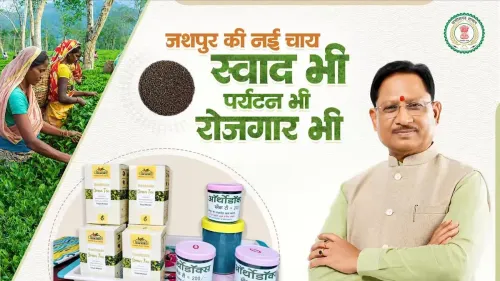
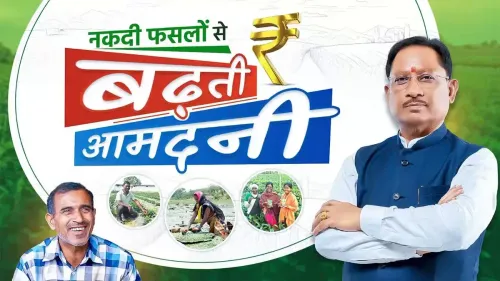
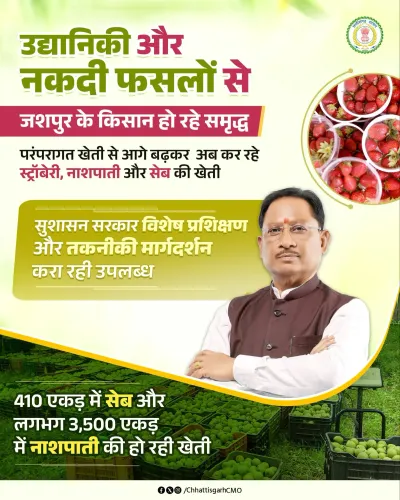
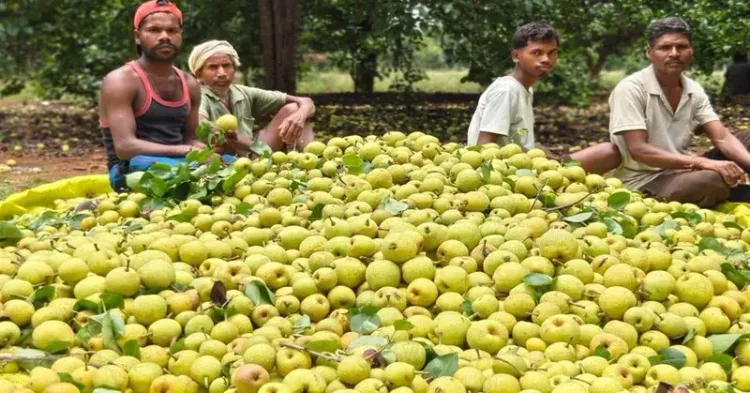
Beyond the paddy field, a quieter revolution is taking root. The Chief Minister's Office of Chhattisgarh, posting on Thursday, October 15, 2026, highlighted how tribal farmers across Jashpur, Balrampur, and Surajpur districts are trading centuries-old subsistence farming for commercial horticulture — and finding a new path to prosperity under Chief Minister Vishnu Dev Sai.
The post, shared by the official CMO handle, declared: 'Paramparaagat kheti se aage, samridhi ki nayi raah!' ('Beyond traditional farming, a new road to prosperity!'). It positioned the shift as the direct fruit of 'good governance' under the BJP-led administration that took office in December 2023.
Three Northern Districts at the Heart of the Shift
Jashpur, Balrampur, and Surajpur — all in the northern tribal arc of Chhattisgarh — are the districts named as leading this transition. These areas carry large Scheduled Tribe populations historically dependent on rain-fed paddy cultivation and forest produce. Commercial horticulture — fruit crops in particular — offers a higher-value alternative that can be harvested across multiple seasons.
The shift aligns with the centrally sponsored Mission for Integrated Development of Horticulture (MIDH), which has been channelling funds to states since 2014 to diversify crop portfolios, particularly in underserved tribal regions. Chhattisgarh has drawn on MIDH support to promote fruit and vegetable cultivation as an income-enhancement tool.
Self-Reliance as the Stated Goal
The CMO's message frames the initiative explicitly around aatmanirbharta — self-reliance — a term that carries both economic and political weight in the current national policy vocabulary. Farmers adopting commercial crops move from dependence on procurement-driven paddy income to market-linked earnings, a structural shift the state government is positioning as a governance achievement.
The post's hashtags — #ViksitChhattisgarh and #SushasanSarkar — signal that this is part of Sai's broader 'Developed Chhattisgarh' agenda, mirroring the national 'Viksit Bharat' framing that the BJP has made central to its rural outreach. Farmers' advancement, the CMO declared, is 'the priority of good governance and the resolve of a prosperous Chhattisgarh.'
What the Horticulture Push Means on the Ground
For tribal farmers in these districts, the move to fruit cultivation is not without risk — it demands upfront investment, storage infrastructure, and reliable market linkages that subsistence farmers rarely command. The success of this model will ultimately depend on whether the state's extension services and marketing networks can absorb and sustain the increased produce volume.
Specific income figures and acreage data from the 2026 rollout are yet to be independently confirmed. But the political signal is clear: the Sai government intends to make agricultural diversification a flagship story heading into the next budget cycle.
Point of View
CM Sai is attempting to shift the political conversation around tribal welfare from entitlement spending to market-linked empowerment — a framing that carries electoral appeal but also scrutiny. The real test will come when district-level yield and income data becomes public, determining whether the 'Viksit Chhattisgarh' label reflects structural change or polished messaging.
NationPress
15 Oct 2026
Frequently Asked Questions
Which districts in Chhattisgarh are promoting horticulture farming for tribal farmers?
Jashpur, Balrampur, and Surajpur — all in northern Chhattisgarh — are the districts where tribal farmers are being encouraged to adopt commercial fruit and horticultural crop cultivation under state government initiatives.
What is the Mission for Integrated Development of Horticulture (MIDH)?
MIDH is a centrally sponsored scheme operational since 2014 that provides funding to states to expand fruit, vegetable, and plantation crop cultivation, particularly in underserved and tribal regions such as northern Chhattisgarh.
What is the 'Viksit Chhattisgarh' agenda under CM Vishnu Dev Sai?
'Viksit Chhattisgarh' is the BJP-led state government's governance framework, launched after CM Vishnu Dev Sai took office in December 2023, focusing on economic upliftment, agricultural diversification, and rural self-reliance in line with the national 'Viksit Bharat' vision.
Why are tribal farmers in Chhattisgarh shifting from paddy to horticulture?
Commercial horticulture offers higher market-linked income compared to rain-fed paddy farming. The state government is promoting fruit cultivation as a path to self-reliance for Scheduled Tribe communities in northern Chhattisgarh who have historically depended on subsistence agriculture.
Who is Vishnu Dev Sai and when did he become Chief Minister of Chhattisgarh?
Vishnu Dev Sai is the Chief Minister of Chhattisgarh and a BJP leader who took office in December 2023. He is from a tribal community himself, and his administration has emphasised rural development, farmer welfare, and the 'good governance' agenda in tribal districts.