Sam Pitroda alleges India's institutions 'captured', judiciary not independent
Synopsis
Congress leader Sam Pitroda has made sweeping allegations from New York, claiming India's judiciary, Election Commission, universities, media, and civil society have all been subordinated to centralised political control — and drawing a pointed contrast with the Manmohan Singh era. The remarks put institutional independence at the centre of the opposition’s political narrative.
Key Takeaways
Sam Pitroda , senior Congress leader, alleged on 28 August that India’s democratic institutions have been ‘captured.’ He claimed the Election Commission of India and the judiciary can no longer be considered fully independent.
Pitroda alleged investigative agencies like the ED are being used against government critics.
He claimed RSS -aligned individuals have been appointed as university Vice-Chancellors, undermining higher education independence.
Pitroda contrasted the current situation with the tenure of former PM Manmohan Singh , saying the PMO did not pressure constitutional bodies then.
He placed India’s democratic concerns within a global pattern, citing Hungary , China , Russia , and the United States .
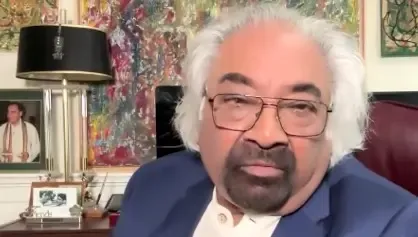
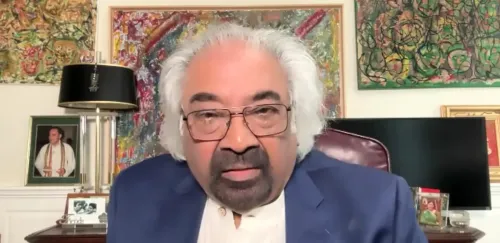
Senior Congress leader Sam Pitroda has alleged that India's democratic institutions have been “captured” and that the judiciary and the Election Commission of India (ECI) can no longer be regarded as fully independent. Speaking in an interview from New York on 28 August, Pitroda also accused the government of deploying investigative agencies against critics and tightening its grip over education, civil society, and the media.
Key Allegations
“So I think institutions have been captured,” Pitroda said when asked whether the judiciary and the Election Commission remained independent. “Let’s look at the track record now. You think election commission is independent in India? I don’t think so. Now we can argue about the degree of it.”
Pitroda further alleged that space for critical journalism had contracted and that those who spoke out faced targeted harassment. “Media is completely bought out, biased, and those who are speaking against get harassed. Revenge is a way of life. You immediately send ED or somebody,” he alleged.
Contrast With Manmohan Singh Era
Pitroda drew a sharp contrast with the tenure of former Prime Minister Manmohan Singh, stating he was unaware of any pressure being exerted by the Prime Minister’s Office on constitutional authorities during that period. “I don’t think during Manmohan Singh time, at least I know, there was any pressure from Prime Minister’s office to anybody. That’s not the way Manmohan Singh operated,” he said.
When asked whether political influence could have existed under the previous Congress-led government as well, Pitroda acknowledged the possibility but argued that the degree mattered. “Possible. I don’t know. It’s possible, but it’s the degree of it,” he said.
Concerns Over Education and Civil Society
Pitroda alleged that appointments of individuals aligned with the Rashtriya Swayamsevak Sangh (RSS) as university Vice-Chancellors had weakened the independence of higher education. “We have put vice chancellors who are RSS people. I mean, that means you’re interfering with education, higher education,” he said. He added that civil society had been curtailed and was “not allowed to function.”
Democracy and the Absence of Press Conferences
Pitroda also questioned the health of Indian democracy in the context of what he described as the absence of regular press conferences by Prime Minister Narendra Modi. “How come Prime Minister of India does not have press conference? How can you tolerate that, that you don’t go out to public and have a dialogue,” he said. He argued that democratic governance required consultation, compromise, and continuous communication with citizens, contrasting this with what he called an increasingly centralised “command and control” model.
A Global Pattern, Pitroda Argues
Pitroda contextualised his remarks within a broader global trend, citing developments in the United States, Hungary, China, and Russia. “World over, there is a tendency for authoritarian regime to show their power. It is true in Hungary. It is true to some extent here. It is definitely true in China and Russia, and it is true also in India,” he said. The remarks are likely to sharpen the political debate ahead of upcoming electoral cycles, with the ruling Bharatiya Janata Party (BJP) yet to formally respond to the specific allegations.
Point of View
Made from New York rather than New Delhi, will reach international audiences and feed into an already active global conversation about democratic backsliding in large emerging economies. The BJP’s silence on the specifics — particularly the Election Commission charge — will be as telling as any formal rebuttal.
NationPress
12 Oct 2026
Frequently Asked Questions
What did Sam Pitroda allege about India's institutions?
Sam Pitroda alleged on 28 August that India’s democratic institutions have been ‘captured,’ and that the judiciary and the Election Commission of India can no longer be considered fully independent. He also accused the government of using investigative agencies against critics and curtailing civil society and the media.
What did Pitroda say about the Election Commission of India?
Pitroda directly questioned the Election Commission’s independence, saying, ‘You think election commission is independent in India? I don’t think so.’ He added that the degree of political influence was a matter for debate, but maintained the body was not fully independent.
How did Pitroda compare the current government to the Manmohan Singh era?
Pitroda said he was unaware of any pressure being exerted by the Prime Minister’s Office on constitutional authorities during Manmohan Singh’s tenure. He said Singh ‘would never make a call to Chief Justice’ or deploy the ED against political opponents, contrasting that with what he alleged is the current practice.
What did Pitroda allege about universities and higher education?
Pitroda alleged that individuals aligned with the RSS have been appointed as Vice-Chancellors at universities, which he said amounted to interference in higher education. He said this had weakened the independence of academic institutions.
Did Pitroda say democratic decline is unique to India?
No. Pitroda placed India within a broader global pattern, citing Hungary, China, Russia, and the United States as examples of governments using state power to assert control. He said the tendency toward authoritarian methods was a worldwide phenomenon, not exclusive to India.