CJP protest at Jantar Mantar: A mirror to India's fraying institutions
Synopsis
The CJP protest at Jantar Mantar was never just about exam paper leaks — it became an unplanned audit of Indian society. It exposed institutional rot, political opportunism, and a generation partly steered by the pursuit of viral fame rather than civic purpose. Modi's 31 July address, combining the Nilekani task force with a plea for compassion over punishment, was the most substantive political response — but the deeper questions about parenting, values, and online culture remain unanswered.
Key Takeaways
The CJP protest at Jantar Mantar in late July 2026 exposed systemic failures in India's examination infrastructure, coaching industry, and political discourse.
Prime Minister Narendra Modi announced fast-track courts for paper leak cases and a task force led by Nandan Nilekani to recommend examination reforms, unveiled on 26 July .
The Public Examination (Prevention of Unfair Means) Amendment Bill, 2026 was introduced to prescribe stricter penalties for those involved in paper leaks.
Modi's 31 July video adopted a personal, compassionate tone — urging society to guide errant youth rather than punish them — and referenced abusive language directed at him and his late mother during the protests.
The opposition, including Congress leader Rahul Gandhi , was criticised for failing to channel the controversy into a substantive reform agenda.
Reports of protesters directing Sonam Wangchuk for better camera angles raised questions about whether viral content had overtaken civic purpose at the demonstrations.
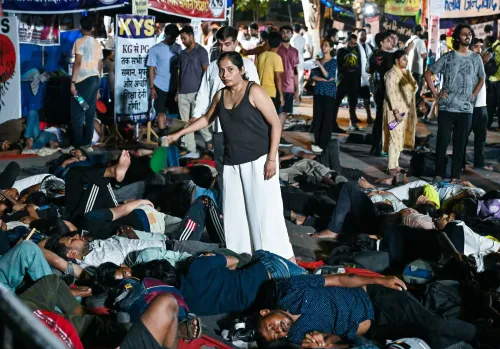
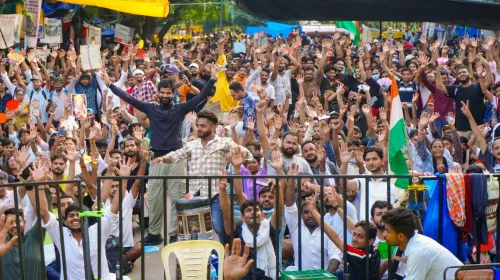
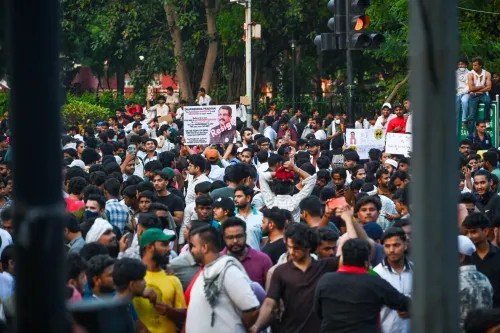
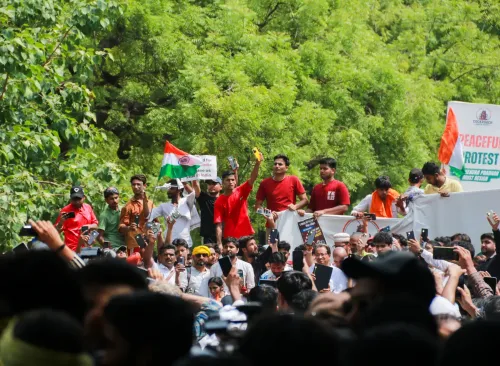
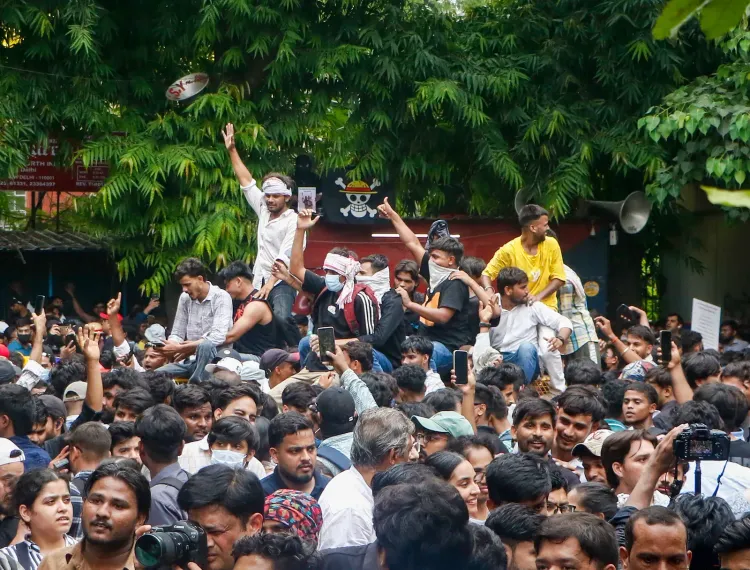
The Cockroach Janta Party (CJP) protest at Jantar Mantar, New Delhi, which drew national attention over examination paper leaks, has left behind a reckoning far weightier than the immediate grievance that sparked it. Analysts and commentators argue the agitation, which unfolded across late July 2026, laid bare a cascade of institutional failures — a corroded examination system, diminished respect for educators, profit-driven coaching institutes, opportunistic politics, and a troubling erosion of family values that has left segments of Indian youth vulnerable to manipulation.
Long after the slogans have faded, these are the questions that should concern the country most.
What the Protest Exposed
The CJP agitation peeled back several uncomfortable truths simultaneously. India's examination infrastructure, critics argue, has been deteriorating for decades — hollowed out by those entrusted with its integrity. The stature that teachers once commanded in Indian society has visibly eroded. Coaching institutes, observers note, increasingly treat education as a revenue stream rather than a public responsibility. And political actors across the spectrum were swift to channel student anger toward electoral ends rather than substantive reform.
Perhaps the most unsettling revelation, however, was closer to home. Reports suggested that inadequate parental guidance has left many teenagers susceptible to the pull of instant online fame — a dynamic that shaped both the tone and the tactics of the protest.
Prime Minister Modi's Response
Prime Minister Narendra Modi chose to engage the controversy through a sequence of social media videos, projecting himself as a concerned elder within a national family rather than a political adversary.
His first Instagram video, posted on 23 July while the CJP protests were still active, announced fast-track courts to adjudicate paper leak cases and pledged legislation imposing stricter penalties on those responsible. The following day, he acknowledged the volume of constructive suggestions that had poured in from young viewers.
On 26 July, Modi announced that a task force headed by Infosys co-founder Nandan Nilekani would audit India's examination architecture and recommend comprehensive reforms. He subsequently released a video explaining the Public Examination (Prevention of Unfair Means) Amendment Bill, 2026.
His 31 July message, however, stood apart in tone. Opening with the words, 'Hi friends, today I feel like talking only to you', the Prime Minister adopted a distinctly personal register. Referring to the abusive language directed at him and his late mother during the protests, he described the words as unworthy of a civilised society and said seeing 'daughters' resort to such language came as a cultural shock.
Rather than calling for punitive action, he urged restraint. Youth is also the stage when mistakes can be corrected, he said, and society should embrace young people rather than drag them through prolonged legal proceedings or social ostracism. He used the analogy of teeth and tongue to make the point: 'The teeth may bite the tongue and it might bleed. But we do not break the teeth. Both the teeth and the tongue are ours. These youngsters are ours too, and guiding them is our responsibility.'
The Opposition's Missed Opportunity
Throughout the paper leak controversy and the CJP agitation, the opposition failed to convert a genuine public concern into a meaningful national debate. Rather than pressing for institutional accountability and examination reform, much of the political response descended into theatrics. Parliament, too, did not rise to the occasion.
Congress leader Rahul Gandhi, who has consistently sought to position himself as a voice for students and youth, could not advance a substantive agenda. A serious structural issue was ultimately reduced, in much of the public discourse, to an exchange over who called whom an 'idiot'.
The Social Media Dimension
The protest also surfaced a disquieting sub-plot about the relationship between activism and online attention. Some participants, according to reports, appeared more invested in generating viral content than in advancing a coherent movement. Reports also indicated that, in pursuit of better camera angles and social media engagement, some demonstrators were directing Sonam Wangchuk — who was on a fast — to reposition himself for improved visuals.
Such incidents raise pointed questions: has the pursuit of online popularity begun to crowd out dignity, purpose, and genuine civic engagement? Have likes, reels, and follower counts displaced values as the currency of public life?
What Comes Next
The protest has ended and the demonstrators have dispersed, but the fallout endures. The Nilekani-led task force's recommendations, the passage and implementation of the Public Examination Amendment Bill, 2026, and the functioning of the promised fast-track courts will determine whether this episode produces lasting reform or becomes another entry in a long catalogue of institutional promises that did not translate into change. The real test, as commentators note, belongs not only to the government but equally to the opposition, to parents, and to the youth themselves.
Point of View
Parliament, the opposition, and the family unit. Modi's Nilekani appointment and the Amendment Bill are credible first moves, but India has a long record of task forces whose reports gather dust. What is less discussed is the opposition's abdication: a genuine, cross-partisan student grievance was available to be shaped into structural reform, and it was squandered on political point-scoring. The most uncomfortable question, however, is the one no party wants to own — whether the architecture of social media virality is now actively competing with, and often defeating, the architecture of civic values among Indian youth.
NationPress
16 Sept 2026
Frequently Asked Questions
What was the CJP protest at Jantar Mantar about?
The Cockroach Janta Party (CJP) protest at Jantar Mantar in New Delhi was triggered by concerns over examination paper leaks in India. The agitation, which took place in late July 2026, drew national attention and prompted a series of government responses, including fast-track courts and examination reform legislation.
What reforms did PM Modi announce in response to the CJP protest?
Prime Minister Modi announced fast-track courts to hear paper leak cases and introduced the Public Examination (Prevention of Unfair Means) Amendment Bill, 2026, prescribing stricter punishments. He also announced a task force headed by Infosys co-founder Nandan Nilekani to study India's examination system and recommend comprehensive reforms.
What did Modi say in his 31 July message to youth?
In a personal video message on 31 July, Modi addressed young people directly, condemning abusive language used against him and his late mother during the protests as unworthy of a civilised society. He urged society to guide and embrace errant youth rather than punish them, using the analogy of teeth and tongue to argue that young people, like body parts, belong to the national family and must be corrected, not discarded.
How did the opposition respond to the paper leak controversy?
The opposition, including Congress leader Rahul Gandhi, was widely criticised for failing to convert the paper leak controversy into a substantive reform agenda. Much of the political discourse devolved into theatrics, and Parliament did not produce a meaningful debate on examination accountability or institutional reform.
What social media concerns emerged from the CJP protest?
Reports indicated that some protest participants appeared more focused on generating viral content than advancing a civic cause, with some allegedly directing Sonam Wangchuk — who was fasting — to reposition himself for better camera angles. Commentators argued this reflected a broader trend of online popularity overshadowing values and purpose among sections of Indian youth.