Jantar Mantar protest 2024: When student dissent became India's democratic signal
Synopsis
A student protest over exam irregularities at Jantar Mantar in July 2024 became something larger — a generational assertion about merit, institutional trust, and the middle class's stake in India's future. With no party leadership and no ideological slogan, it may be the most significant signal of civic aspiration India's youth have sent in years.
Key Takeaways
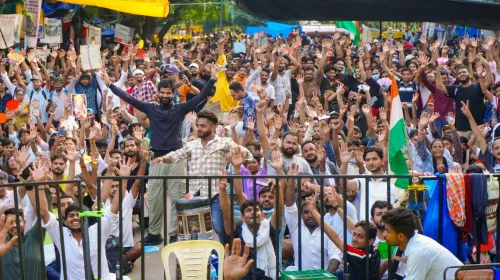
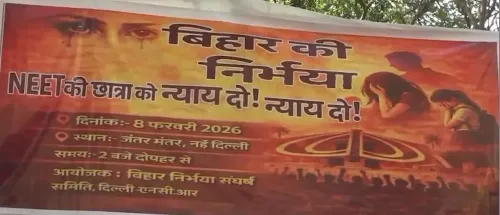
Students gathered at Jantar Mantar , New Delhi , in July 2024 over alleged examination irregularities, but the protest rapidly expanded into a broader question of institutional trust.
The movement had no single political party leadership, no caste mobilisation, and no religious framing — driven instead by middle-class aspiration and anxiety over merit-based opportunity.
Historical student movements such as the Navnirman Movement and the Bihar movement under Jayaprakash Narayan were ideologically rooted; this one is defined by aspiration over ideology .
Senior ministers reportedly reached out directly to fasting students and invited them for discussions, which analysts cite as a demonstration of democratic responsiveness.
The deeper challenge ahead, according to the analysis, is employment — with proposals for university-level innovation centres addressing AI, energy, water, and healthcare.
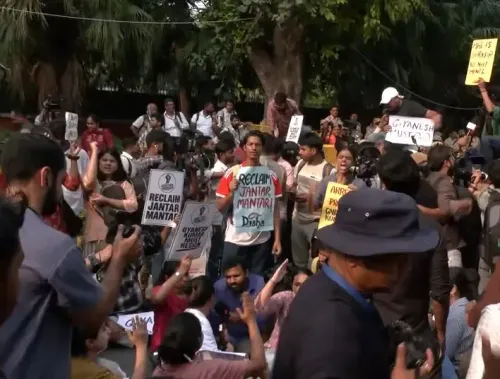
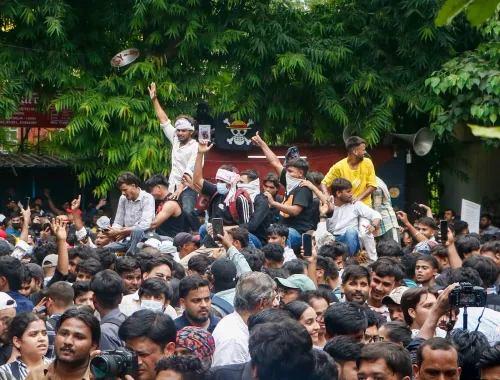
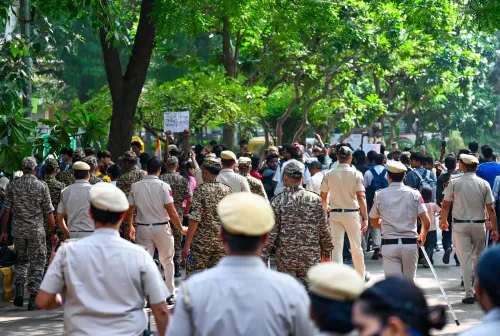
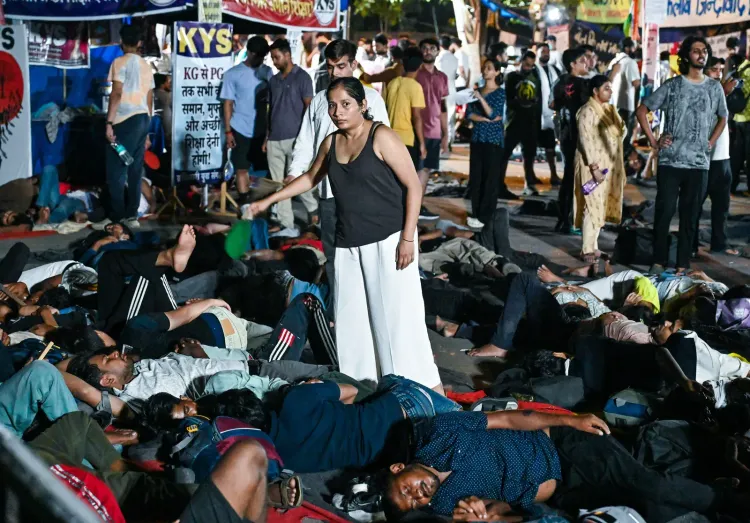
A student congregation at Jantar Mantar in New Delhi in late July 2024 drew national attention — not merely as a protest over examination irregularities, but as a broader assertion of public confidence in democratic participation. The gathering, which saw young people travel voluntarily from small towns and cities across India, has since been analysed as a defining moment in the country's evolving civic culture.
Beyond the Examination Controversy
The immediate trigger was alleged irregularities in a competitive examination, but the movement rapidly outgrew that single issue. At its core, it reflected the anxieties of India's middle class and lower middle class — families that invest heavily in education as the primary route to social mobility and dignity.
Notably, the agitation carried no visible ideological leadership. No single political party directed it, no caste mobilisation defined it, and no religious slogan anchored it. Students arrived at their own expense, representing households that have staked everything on the promise of merit-based opportunity. When that promise appears uncertain, according to observers, the insecurity becomes existential — transforming a grievance about one exam into a question about institutional trust.
Why Jantar Mantar Functions as a Democratic Platform
Every functioning democracy requires accessible spaces where citizens can be heard before frustration hardens into alienation. Parliament is constitutionally designed for that purpose; political parties are expected to amplify public concerns; ministers are expected to respond; and the bureaucracy is expected to resolve problems before they become crises.
When these channels appear inadequate, citizens seek alternatives. Jantar Mantar — historically India's celebrated astronomical observatory — has evolved into precisely such a space. The fact that thousands of young Indians felt compelled to gather there, according to analysts, signals that normal democratic mechanisms were not adequately transmitting their concerns to the establishment.
Their gathering was not a challenge to Parliament, but a reminder, as former diplomat and strategic affairs expert who authored this analysis argues, that 'democracy cannot be confined within the Parliament alone.' Governments are elected by parliamentary majorities, but they sustain legitimacy through continuous public confidence — a currency that numbers inside the legislature cannot permanently replace.
A Generational Shift in Student Movements
India has witnessed powerful student agitations before. The Navnirman Movement in Gujarat and the Bihar movement led by Jayaprakash Narayan reshaped the country's political trajectory, but both arose from explicitly political and regional contexts.
The present movement carries a different character. Its foundation is aspiration rather than ideology. Today's students are digital natives who form communities across caste, religion, and regional lines through technology. Social media enabled the initial mobilisation, but the movement gained credibility only when participants left their screens and occupied public space peacefully — a distinction that observers say marks a significant generational shift in civic engagement.
Their demands were practical rather than doctrinal: Will merit matter? Will institutions remain credible? Will education secure employment? Will governments listen? These questions, critics note, cut across every social divide.
The Middle Class and Long-Term National Consequences
Much of India's developmental discourse focuses, understandably, on poverty alleviation and rural development. Yet the aspirations of modern India are largely carried by its middle class — the source of the country's scientists, engineers, civil servants, armed forces officers, entrepreneurs, doctors, and innovators.
If this section begins to lose confidence in public institutions, the consequences extend far beyond urban electoral politics. The middle class shapes national sentiment, technological innovation, administrative capacity, and economic productivity. Its anxieties, analysts argue, deserve careful attention — not because it is politically louder, but because it remains central to India's long-term development trajectory.
What Comes Next: Employment and Innovation
The deeper challenge that this protest foreshadows, according to the analysis, may well be employment. India's demographic advantage can become either its greatest strength or its greatest vulnerability. The government alone cannot generate sufficient jobs; the solution, the author contends, lies in innovation, entrepreneurship, and structured partnerships between academia, industry, and government.
Proposals include establishing innovation and incubation centres in every university, where students work on national challenges — from energy security and artificial intelligence to water management, waste-to-energy technologies, agriculture, and healthcare. In emerging technologies such as AI, India may not match the financial investments of larger economies, but it reportedly possesses a significant advantage in human talent that, if directed toward practical and socially relevant applications, could yield distinctive global contributions.
The students have dispersed, the placards have come down, and the slogans have faded — but the questions they raised remain open, and how India's institutions respond to them will shape the next chapter of its democratic story.
Point of View
It was. But the more uncomfortable question is why thousands of young Indians concluded that normal channels were insufficient in the first place. If ministers must personally reach out to fasting students for grievances to be heard, that is less a sign of democratic strength and more a signal that institutional early-warning systems are not working at the level below the headline. The real test is whether this episode produces structural reforms in how competitive examinations are administered and audited — or whether it becomes another episode absorbed and forgotten.
NationPress
26 Oct 2026
Frequently Asked Questions
What was the Jantar Mantar student protest in 2024 about?
Students gathered at Jantar Mantar in New Delhi in July 2024 over alleged irregularities in a competitive examination. The protest quickly expanded beyond the exam issue to reflect broader anxieties about institutional trust, merit-based opportunity, and whether governments are listening to the aspirations of India's middle and lower-middle class.
Why is Jantar Mantar significant as a protest site in India?
Jantar Mantar has historically served as a designated public space in New Delhi where citizens and groups can hold demonstrations. It has become symbolically significant because it represents a constitutional channel for public expression when normal democratic mechanisms — Parliament, political parties, bureaucracy — are perceived as inadequate.
How was this student movement different from earlier ones like the Bihar movement?
Earlier movements such as the Navnirman Movement in Gujarat and the Bihar movement led by Jayaprakash Narayan were rooted in explicit political and regional contexts. The 2024 Jantar Mantar protest had no single party leadership, no caste or religious framing, and was driven by aspiration rather than ideology — making it a distinct generational shift in Indian civic engagement.
How did the government respond to the Jantar Mantar student protest?
According to reports, senior ministers personally reached out to fasting students and invited them for discussions, responding to their stated concerns. Analysts have cited this as evidence of democratic responsiveness, though critics argue it also reveals a gap in routine institutional grievance mechanisms.
What is the larger challenge India faces beyond this protest?
The analysis points to employment as the next major challenge. With India's large youth population, the country's demographic advantage could become a vulnerability if job creation does not keep pace. Proposed solutions include university-level innovation and incubation centres focused on AI, energy, water management, and healthcare, alongside stronger academia-industry-government partnerships.