CM Rekha Gupta launches 256-Slice CT, 3T MRI at LNJP Hospital
Synopsis
Delhi CM Rekha Gupta inaugurated a Dual Source 256-Slice CT scanner and 3 Tesla MRI machines at LNJP Hospital on 15 October 2026 under the Seva Sankalp Abhiyan, expanding free advanced diagnostics for heart, brain, and cancer conditions to the city's public hospital patients.
Key Takeaways
Delhi CM Rekha Gupta launched a Dual Source 256-Slice CT Scan machine and 3 Tesla MRI machines at LNJP Hospital on 15 October 2026 .
The equipment enables advanced diagnostics for heart, brain, cancer, and other serious diseases within the public hospital, free of charge for patients.
The launch was held under the Seva Sankalp Abhiyan , the Delhi government's public service and infrastructure upgrade campaign.
Cabinet minister Dr.
Pankaj Kumar Singh and IOCL Chairman Arvinder Singh Sahni were present at the inauguration.
The upgrade is expected to reduce dependence on costly private diagnostic centres for Delhi's public hospital patients.
Similar equipment rollouts under Seva Sankalp Abhiyan are being planned for other Delhi government hospitals.
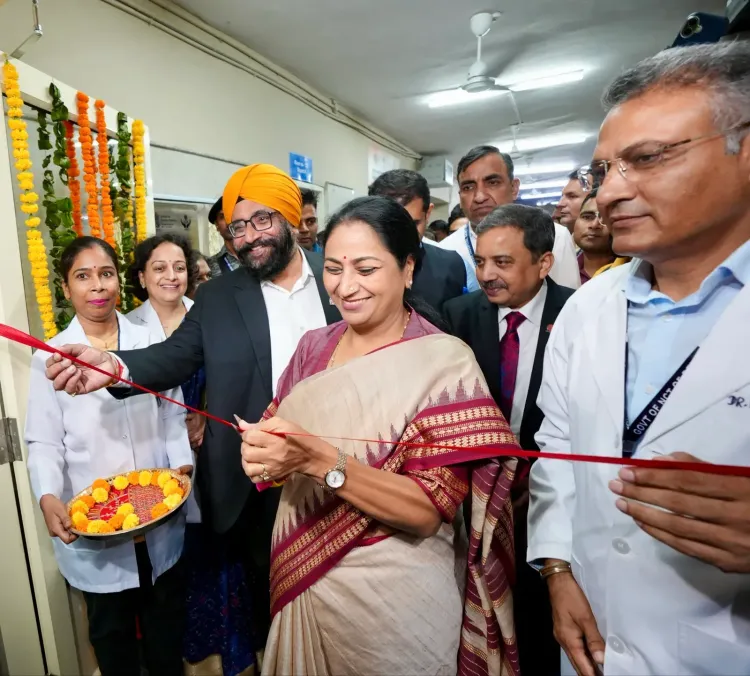
Two of the most powerful diagnostic machines in modern medicine are now inside a Delhi government hospital — available to every patient who walks through the door. Delhi Chief Minister Rekha Gupta on Thursday, 15 October 2026, inaugurated a Dual Source 256-Slice CT Scan machine and 3 Tesla MRI machines at Lok Nayak Jai Prakash Narayan (LNJP) Hospital under the state's Seva Sankalp Abhiyan.
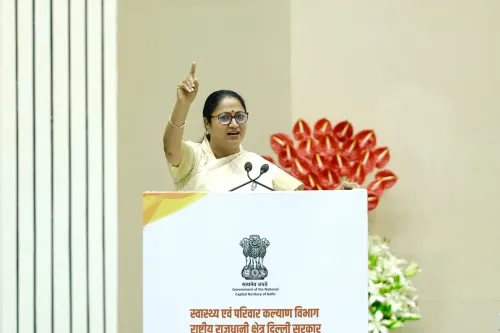
Posting about the launch on X, CM Gupta said: 'Through this, better facilities for diagnosing heart, brain, cancer and other serious diseases will now be available within the hospital itself. We are continuously ensuring that Delhi's government hospitals are equipped with modern medical facilities and better treatment is within reach of every citizen.'
What a 256-Slice CT and 3T MRI actually change at LNJP
LNJP Hospital is one of Delhi's largest tertiary-care public hospitals, routinely packed with patients who cannot afford private diagnostics. A Dual Source 256-Slice CT scanner produces high-resolution, near-instantaneous images of the heart and blood vessels — critical for detecting coronary artery disease without invasive procedures. The 3 Tesla MRI, offering twice the magnetic field strength of a standard 1.5T unit, delivers sharper neurological and soft-tissue imaging, vital for early cancer detection, stroke assessment, and spinal conditions.
Until now, patients referred for these scans often had to travel to private centres, paying out of pocket for each test. Installing both machines inside LNJP closes that gap for thousands of Delhiites who depend entirely on public healthcare.
IOCL's CSR role and the Seva Sankalp Abhiyan push
The inauguration was attended by Delhi cabinet minister Dr. Pankaj Kumar Singh and Arvinder Singh Sahni, Chairman of Indian Oil Corporation Limited (IOCL). IOCL's presence points to a corporate social responsibility contribution toward the equipment, consistent with the public-sector oil major's track record of funding healthcare infrastructure across India — though the precise funding mechanism has not been officially detailed.
The Seva Sankalp Abhiyan is the Delhi government's broader campaign to upgrade public service delivery and modernise hospital infrastructure. The LNJP launch is among the campaign's most visible health-sector moves to date, and officials have signalled that similar equipment rollouts are being planned for additional Delhi government hospitals.
Delhi's public diagnostic gap — and why this moment matters
Across Indian states, the rush to install 256-slice CT and 3T MRI units in public tertiary hospitals reflects a clear policy signal: cut the financial toll that serious illness places on ordinary families. Heart disease, cancer, and neurological disorders are the country's fastest-growing disease burden, and late diagnosis — often caused by the cost of a single scan — is a primary driver of poor outcomes.
For Delhi, a city with millions of daily wage earners and migrant workers who crowd its government hospitals, the upgrade at LNJP is not just a hardware installation. It is a direct intervention in the diagnostic journey of the city's most vulnerable patients.
The machines are in. The next test is whether the staffing, maintenance budget, and referral pathways can keep them running at full capacity — because a 3T MRI switched off for want of a technician saves no one.
Point of View
Equipment-on-the-ground deliverable that the BJP-led Delhi government can point to as proof of its governance agenda — high-visibility, photograph-ready, and genuinely consequential for patients. Framing the upgrade under the 'Seva Sankalp Abhiyan' brand consolidates disparate infrastructure moves into a single campaign narrative ahead of any electoral cycle. IOCL's CSR involvement also demonstrates a model where public-sector enterprises extend the state's capital budget without formal fiscal commitments — a pattern Delhi and other states are likely to replicate. The real policy test, however, is operational: whether maintenance contracts and trained radiographers are in place to sustain throughput on machines this complex.
NationPress
15 Oct 2026
Frequently Asked Questions
What machines were launched at LNJP Hospital by CM Rekha Gupta?
Delhi CM Rekha Gupta inaugurated a Dual Source 256-Slice CT Scan machine and 3 Tesla MRI machines at Lok Nayak Jai Prakash Narayan Hospital on 15 October 2026 under the Seva Sankalp Abhiyan.
What is the Seva Sankalp Abhiyan in Delhi?
Seva Sankalp Abhiyan is the Delhi government's campaign focused on expanding public service delivery and upgrading infrastructure, including the modernisation of government hospitals with advanced medical equipment.
What is the difference between a 256-Slice CT and a regular CT scan?
A 256-Slice CT scanner captures far more detail in a single rotation than a standard CT, producing high-resolution images of the heart and blood vessels rapidly and with less radiation exposure — critical for cardiac and vascular diagnosis.
What is a 3 Tesla MRI and why is it significant for public hospitals?
A 3 Tesla MRI uses a stronger magnetic field than the standard 1.5T unit, delivering sharper images for neurological, oncological, and soft-tissue conditions. Its availability in a free government hospital removes a major financial barrier for serious-disease diagnosis.
What role did Indian Oil Corporation play in the LNJP Hospital equipment launch?
IOCL Chairman Arvinder Singh Sahni was present at the inauguration, indicating a corporate social responsibility contribution toward the equipment. India's largest public-sector oil company has a track record of funding healthcare infrastructure across the country.