CM Bhupendra Patel Pushes WhatsApp Waste Reporting in Gujarat
Synopsis
Gujarat Chief Minister Bhupendra Patel has called on residents to join the 'Maro Kachro, Mari Javabdari' campaign, which allows citizens to report waste to municipal bodies via a WhatsApp chatbot — framing cleanliness as a civic duty under PM Modi's Viksit Bharat vision.
Key Takeaways
Gujarat CM Bhupendra Patel promoted the 'Maro Kachro, Mari Javabdari' campaign on 15 October 2026 .
Citizens in municipal corporation and municipality areas can report waste by sending photos and location via a WhatsApp chatbot directly to local bodies.
The campaign operates under the Swachh Bharat Mission , launched nationally by PM Narendra Modi on 2 October 2014 .
CM Patel linked the initiative to PM Modi 's 'Viksit Bharat' vision, calling cleanliness a foundational dimension of national development.
The digital reporting tool reflects the Swachh Bharat Mission 's strategic shift from infrastructure-building to sustained citizen behaviour change.
Gujarat's performance in Swachh Survekshan rankings could benefit from increased citizen engagement driven by the campaign.
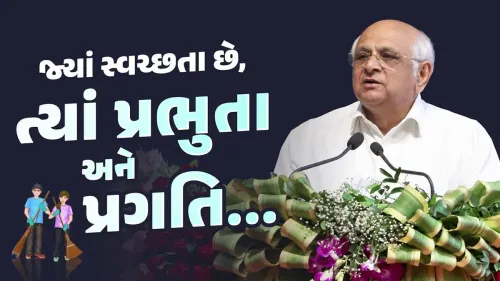
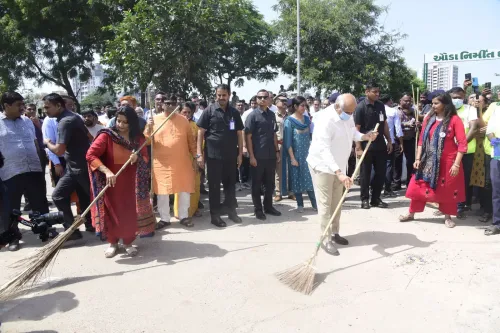
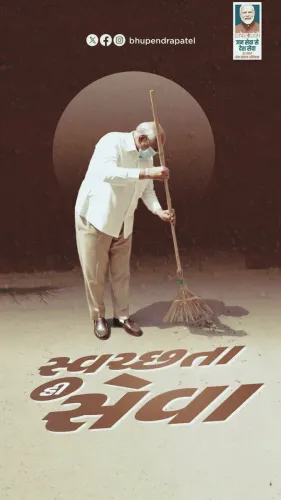
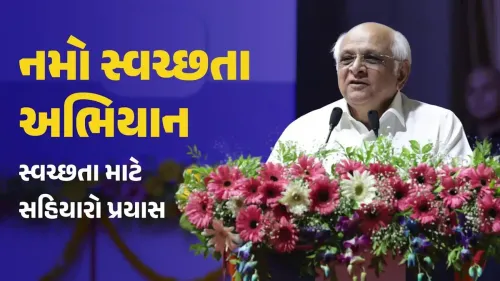
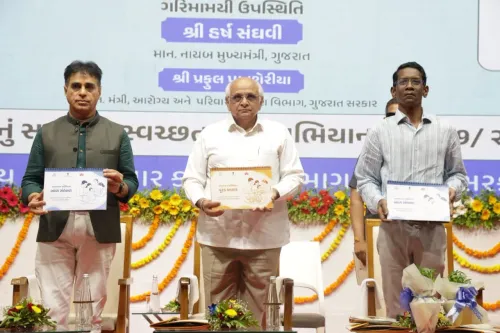
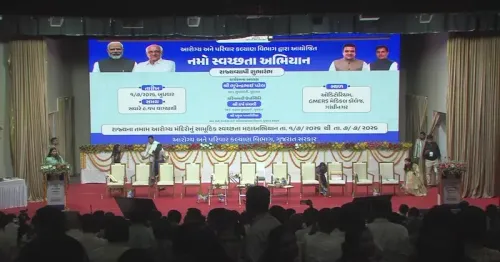
Every piece of litter on a Gujarat street now has a direct line to city hall — and Gujarat Chief Minister Bhupendra Patel wants every resident to use it. On Thursday, 15 October 2026, CM Patel took to X to champion the state government's 'Maro Kachro, Mari Javabdari' ('My Waste, My Responsibility') campaign, urging citizens to photograph garbage and send its location directly to municipal bodies via a WhatsApp chatbot.
The post, written in Gujarati, opens with a pointed declaration: 'Sheher aapnu chhe, to swachhtani javabdari pan aapni chhe!' — 'The city is ours, so the responsibility of cleanliness is also ours.' That framing is deliberate. It calls out civic ownership before it calls out government machinery.
'Maro Kachro, Mari Javabdari' — What the Campaign Actually Does
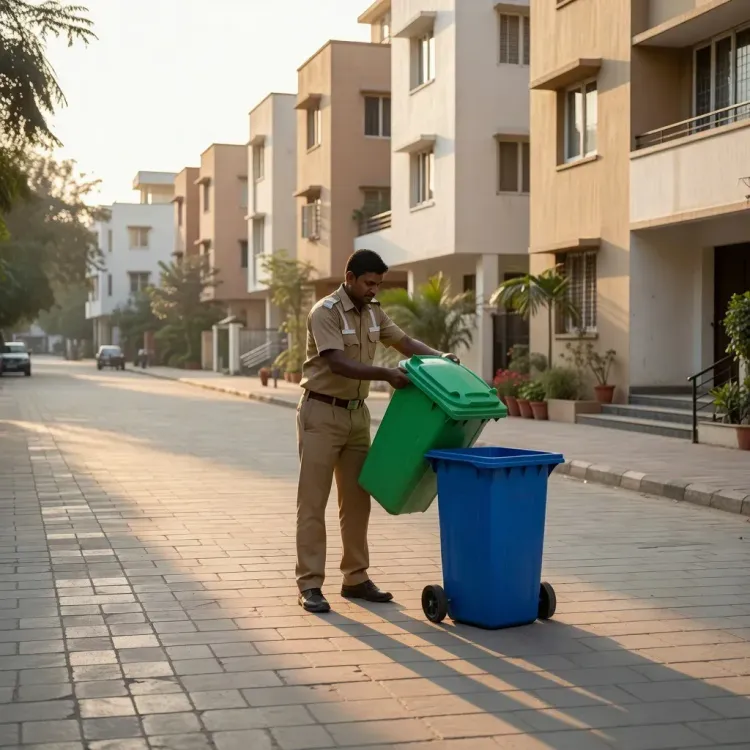
Under this initiative, residents in municipal corporation and municipality areas across Gujarat can photograph any instance of waste or filth near them, attach their location, and send it directly to the relevant local body through a WhatsApp chatbot. The idea is to shrink the distance between a citizen who spots a problem and the sanitation worker who must fix it — no forms, no offices, no waiting.
The campaign sits within the broader architecture of the Swachh Bharat Mission, the flagship national sanitation programme launched by Prime Minister Narendra Modi on 2 October 2014. CM Patel's post explicitly ties this state-level push to PM Modi's 'Viksit Bharat' (Developed India) vision, framing cleanliness as one of its foundational dimensions — not an add-on, but a baseline.
From Infrastructure to Behaviour — the Mission's Evolving Playbook
The Swachh Bharat Mission spent its first years building toilets and waste-processing plants. The current phase leans harder on sustained community behaviour change. State governments, including Gujarat's, have increasingly layered digital grievance tools on top of physical infrastructure — turning smartphones into a second sanitation workforce.
The WhatsApp-based reporting mechanism is a direct expression of that shift. Rather than waiting for scheduled municipal sweeps, residents become real-time sensors of their own neighbourhoods. The architecture also shifts moral accountability: once a citizen has the tool, ignoring the litter becomes a choice, not a helpless shrug.
Gujarat's Place in the Swachh Survekshan Stakes
Gujarat's urban local bodies have historically competed in the annual Swachh Survekshan national cleanliness rankings, where citizen feedback now accounts for a significant share of the score. A campaign that actively trains residents to report and engage directly feeds that feedback loop — meaning the 'Maro Kachro' drive is simultaneously a civic initiative and a rankings strategy.
CM Patel closed his post with a call to collective action: 'Aavo, aapne sau aa jan-andolan ma jodaie' — 'Come, let us all join this people's movement.' The language of jan-andolan (people's movement) is pointed — it frames municipal cleanliness not as a government service delivery question, but as a moral and social compact between citizens and their city.
Whether Gujarat's streets get cleaner will ultimately depend on how many residents actually open WhatsApp. But the state has now put the tool in their hands — and the accountability squarely on their shoulders.
Point of View
So mobilising residents to report actively is as much a rankings play as a sanitation one. The moral framing — 'the city is ours, so the responsibility is ours' — is a deliberate attempt to move cleanliness from a government-service expectation to a citizen-ownership compact, reducing political blowback when streets remain dirty. The real test will be whether the chatbot infrastructure scales and municipal response times hold up once citizen complaints pour in.
NationPress
15 Oct 2026
Frequently Asked Questions
What is the 'Maro Kachro, Mari Javabdari' campaign in Gujarat?
'Maro Kachro, Mari Javabdari' (My Waste, My Responsibility) is a Gujarat government campaign under the Swachh Bharat Mission that empowers citizens in municipal areas to photograph waste and report it with location details to local bodies via a WhatsApp chatbot.
How does the Gujarat WhatsApp waste reporting chatbot work?
Residents who spot garbage or filth in their area can take a photo, attach their location, and send it to a WhatsApp chatbot linked to the local municipal corporation or municipality, which then routes the complaint to sanitation staff.
What is the Swachh Bharat Mission and when was it launched?
The Swachh Bharat Mission is a flagship national sanitation and cleanliness programme launched by Prime Minister Narendra Modi on 2 October 2014, covering solid waste management, toilet construction, and open defecation elimination.
What is Swachh Survekshan and why does it matter for Gujarat?
Swachh Survekshan is the annual national urban cleanliness ranking conducted by the central government, in which Gujarat's cities compete. Citizen feedback and engagement scores are a key component, making campaigns like 'Maro Kachro' directly relevant to a city's ranking.
What did Gujarat CM Bhupendra Patel say about cleanliness on 15 October 2026?
CM Bhupendra Patel said the city belongs to its residents and so does the responsibility for keeping it clean. He urged Gujaratis to join the 'Maro Kachro, Mari Javabdari' campaign as a people's movement and use the WhatsApp chatbot to report waste directly to municipal authorities.