PM-KISAN 24th instalment: ₹1,335 crore reaches 66.59 lakh Rajasthan farmers
Synopsis
With the 24th PM-KISAN instalment, over 66.59 lakh Rajasthan farmers received ₹1,335 crore in a single day — part of a ₹18,690 crore national push to 9.34 crore families. Released from Banaskantha with a clutch of farm-sector data points, the event underlined the scheme's positioning as a cornerstone of the BJP's agrarian welfare narrative ahead of the next election cycle.
Key Takeaways
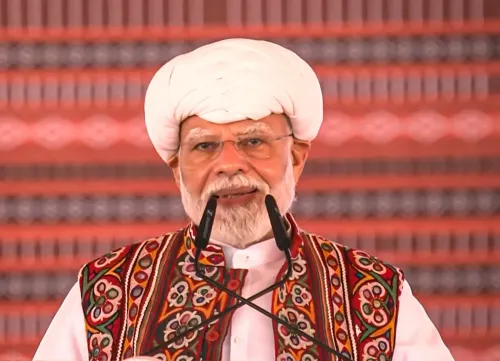
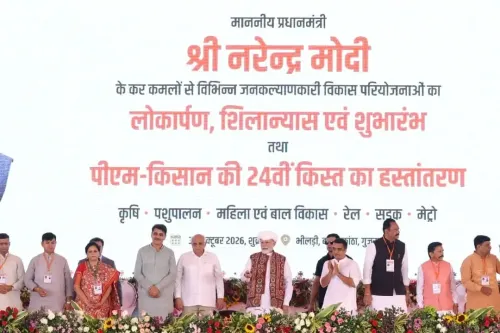
PM Modi released the 24th PM-KISAN instalment on 31 October 2025 from Banaskantha, Gujarat .
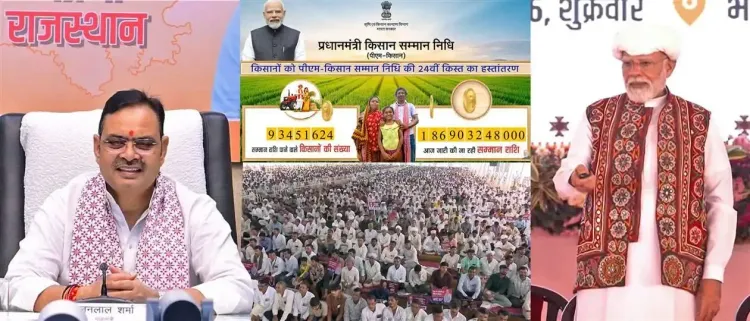
Over 66.59 lakh farming families in Rajasthan received more than ₹1,335 crore via Direct Benefit Transfer.
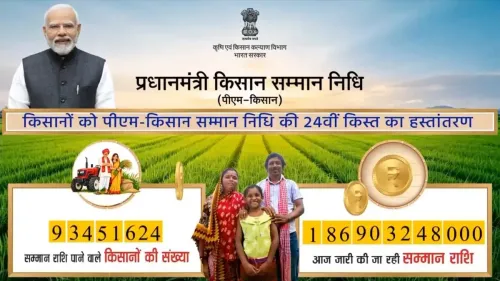
Nationally, more than ₹18,690 crore was disbursed to over 9.34 crore farmer families in this single instalment.
Cumulative PM-KISAN transfers have reached nearly ₹4.47 lakh crore since the scheme's launch in 2019 .
Rajasthan farmers have received more than ₹29,099 crore across the previous 23 instalments .
PM Modi also flagged off the Ahmedabad (Sabarmati)-Varanasi Express during the Banaskantha event.
Prime Minister Narendra Modi on Friday, 31 October 2025, released the 24th instalment of the Pradhan Mantri Kisan Samman Nidhi (PM-KISAN) scheme, transferring more than ₹1,335 crore directly into the bank accounts of over 66.59 lakh farming families in Rajasthan through Direct Benefit Transfer (DBT). Nationally, the instalment disbursed over ₹18,690 crore to more than 9.34 crore farmer families across India.
How the event unfolded
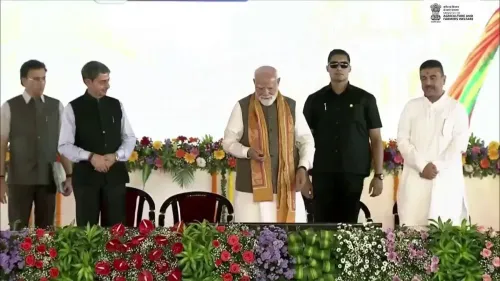
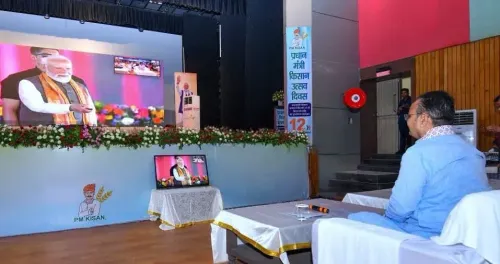
The instalment was released from Banaskantha, Gujarat, during a programme that also featured inauguration of development projects, foundation stone-laying ceremonies, and the launch of several new initiatives. Gujarat Chief Minister Bhupendra Patel, Legislative Assembly Speaker Shankar Chaudhary, and a large number of citizens attended in person, while chief ministers of several states, including Rajasthan Chief Minister Bhajan Lal Sharma, participated via video conferencing.
What CM Sharma said
Welcoming the disbursement, Chief Minister Bhajan Lal Sharma said the prosperity of the nation was closely tied to the welfare of farmers, describing them as the country's 'annadatas' (food providers). He noted that since the scheme's launch in 2019, farmers in Rajasthan had cumulatively received more than ₹29,099 crore across 23 earlier instalments. The latest transfer takes the state's total well past that figure.
PM Modi on the agriculture push
Addressing the gathering, Prime Minister Modi said farmer welfare and empowerment remained a central priority of the Union government. He pointed out that the agriculture budget had grown more than fivefold compared with 2013-14. According to Modi, farmers across the country have collectively received or saved around ₹50 lakh crore over the past 12 years through various government initiatives, with PM-KISAN alone accounting for ₹4.5 lakh crore in direct transfers to small farmers.
The Prime Minister added that around ₹16 lakh crore had been spent to ensure food availability at affordable prices, shielding farmers and consumers from global price volatility. Under Minimum Support Price (MSP) commitments, ₹24 lakh crore had been transferred to wheat and paddy growers. Under Pradhan Mantri Fasal Bima Yojana, farmers received approximately ₹2 lakh crore in crop insurance compensation.
Technology and allied sectors
Modi also highlighted the role of innovation in modernising Indian agriculture. More than 26 crore Soil Health Cards have been issued, and farmers have been given access to 3,000 new seed varieties developed to withstand changing climatic conditions. Under the PM-KUSUM scheme, 12 lakh solar pumps have been provided, saving more than 80 crore litres of diesel annually while also enabling farmers to generate electricity and earn additional income.
On the livestock front, around 150 crore vaccine doses have been administered to protect animals from disease. India's average daily milk yield per cow or buffalo has reportedly risen from under five litres in 2013-14 to around eight litres today, making India the world's largest milk producer. The country has also emerged as the world's second-largest exporter of natural honey, Modi said, citing the Sweet Revolution (Madhu Kranti) initiative.
Other announcements from the Banaskantha event
During the same programme, the Prime Minister flagged off two train services, including the Ahmedabad (Sabarmati)-Varanasi Express. Modi also marked completing 25 years as a head of government on 7 October, reflecting on how Gujarat's development had informed his national governance approach. He appealed to citizens to participate in the Run for Unity on 31 October, the birth anniversary of Sardar Vallabhbhai Patel, in keeping with the vision of 'Ek Bharat, Shreshtha Bharat'.
Nationally, cumulative PM-KISAN transfers have reached nearly ₹4.47 lakh crore, according to figures cited by the Rajasthan government. With the 24th instalment now disbursed, attention turns to whether the scheme's coverage can be expanded further ahead of the next agricultural cycle.
Point of View
The scheme has become as much an electoral instrument as an income-support tool. What the data does not address is agrarian distress beyond income transfers: input cost inflation, erratic monsoons, and stagnating MSPs in real terms remain live grievances. The government's own claim that farmers have 'received or saved ₹50 lakh crore in 12 years' is an aggregate that bundles direct cash, subsidies, and insurance payouts — a framing that critics argue conflates government spending with farmer income.
NationPress
30 Oct 2026
Frequently Asked Questions
What is the PM-KISAN scheme and how does it work?
The Pradhan Mantri Kisan Samman Nidhi (PM-KISAN) is a Central government scheme launched in 2019 that provides ₹6,000 per year to small and marginal farming families in three equal instalments of ₹2,000, transferred directly into their bank accounts through Direct Benefit Transfer (DBT). The 24th instalment, released on 31 October 2025, is the latest in this series.
How many Rajasthan farmers benefitted from the 24th PM-KISAN instalment?
More than 66.59 lakh farming families in Rajasthan received a combined transfer of over ₹1,335 crore under the 24th instalment. Since the scheme's launch in 2019, Rajasthan farmers have collectively received more than ₹29,099 crore across the first 23 instalments.
How much was disbursed nationally under the 24th PM-KISAN instalment?
Nationally, over ₹18,690 crore was transferred to more than 9.34 crore farmer families in the 24th instalment alone. Cumulative transfers under PM-KISAN have reached nearly ₹4.47 lakh crore since the scheme began.
Where was the 24th PM-KISAN instalment launched and who attended?
The instalment was released from Banaskantha in Gujarat during a programme attended in person by Gujarat Chief Minister Bhupendra Patel and Legislative Assembly Speaker Shankar Chaudhary. Rajasthan Chief Minister Bhajan Lal Sharma and chief ministers of several other states participated via video conferencing.
What other agricultural initiatives did PM Modi highlight at the event?
PM Modi cited the distribution of 12 lakh solar pumps under PM-KUSUM, issuance of over 26 crore Soil Health Cards, and ₹2 lakh crore in crop insurance compensation under Pradhan Mantri Fasal Bima Yojana. He also said MSP transfers to wheat and paddy farmers had crossed ₹24 lakh crore, and that India has become the world's largest milk producer and second-largest natural honey exporter.