Are There Efforts to Create Confusion Ahead of the 2026 Elections in Bangladesh?

Synopsis
As the February 2026 elections draw near, Bangladesh faces rising political tensions. The National Citizen Party (NCP) sounds the alarm over attempts to sow confusion and hinder reforms, calling out rival parties for their political maneuvers. What lies ahead for the nation amidst this turmoil?
Key Takeaways
NCP warns of confusion tactics before 2026 elections.
Criticism of BNP and Jamaat for their political maneuvers.
Concerns over national security and internal forces.
Call for elections based on reform support.
Protests planned until demands are met.
Dhaka, Dec 2 (NationPress) As political unrest intensifies in Bangladesh in anticipation of the February 2026 elections, the National Citizen Party (NCP) has raised alarms regarding attempts to generate confusion prior to the polls and disrupt the reform initiatives, as reported by local media.
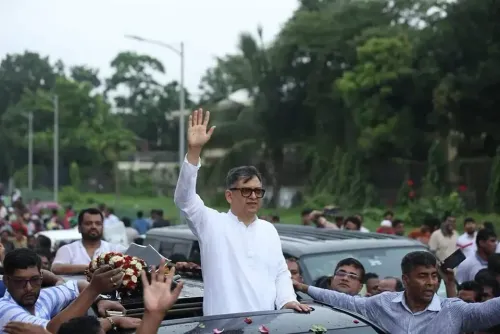
During a gathering in Dhaka on Monday evening, NCP convener Nahid Islam criticized the Bangladesh Nationalist Party (BNP) and the radical Islamist group Jamaat-e-Islami, stating, “One party is exploiting the Liberation War narrative, while another is leveraging religious sentiments, framing it as Islam against anti-Islam.”
“One faction is overtly opposing reforms, while another does so covertly. Consequently, reaching a consensus on reforms has proven elusive,” the NCP leader was quoted by The Daily Star.
Nahid accused the BNP and Jamaat of politically benefiting from last year’s July protests and preparing to gain from the upcoming elections, yet they refuse to accept accountability.
“When the families of those affected during the uprising seek assistance, they are redirected to us, the NCP,” he remarked.
In the meantime, NCP Chief Coordinator Nasiruddin Patwary stated that the country is currently facing a political crisis, highlighting comments from senior political figures who assert that the state is lacking security.
“We need to determine who is actually undermining security—internal forces or external influences,” he noted.
Reiterating his party’s position regarding the forthcoming elections, Patwary emphasized, “We desire elections that reflect support for or opposition to reforms. However, one faction is attempting to frame this as a conflict between proponents and opponents of Islam. We urge them to cease this misguided political strategy.”
Conversely, Jamaat leader Shafiqur Rahman alleged that a particular group is “asserting power without holding office” and attempting to dominate the populace.
“They are exerting influence over the administration. Extortion, corruption, and chaos persist nationwide. Citizens are being coerced into claiming that conditions have worsened compared to the past,” as quoted by The Business Standard during a rally in the Khulna district, organized by the eight-party Islamist alliance.
Rahman declared that street protests would persist until the eight parties' five-point agenda— which includes conducting a referendum via the July Charter implementation order before the elections— is addressed, warning that if necessary, “another 5 August may transpire.”
Bangladesh continues to confront escalating uncertainty and political strife as the next election approaches.
The parties that previously collaborated with chief advisor Mohammad Yunus to topple the democratically elected Awami League government, led by Sheikh Hasina, are currently at odds over reform proposals.
Point of View
The ongoing political tension in Bangladesh highlights the urgent need for transparent dialogue and consensus among political factions. The National Citizen Party's concerns about confusion tactics and reform resistance illustrate the challenges ahead of the 2026 elections. A commitment to democratic principles and accountability is essential for the nation's stability and progress.
NationPress
30 Sept 2026
Frequently Asked Questions
What is the National Citizen Party's stance on the upcoming elections?
The NCP aims for elections focused on support for or opposition to reforms, discouraging divisive narratives.
Who did the NCP criticize during their event?
The NCP criticized the BNP and Jamaat-e-Islami for their opposing views on reforms and their political strategies.
What concerns were raised about political unrest in Bangladesh?
Concerns include attempts to create confusion before the elections and ongoing political crises affecting security.