CM Himanta Hails ABHIGYAN Launch, India's Fast Fingerprint ID System
Synopsis
Union Home Minister Amit Shah launched ABHIGYAN, a rapid fingerprint identification platform on NAFIS, giving Indian police access to over 1.29 crore records with suspect identification in ~35 seconds. Assam CM Himanta Biswa Sarma called it a milestone for smarter criminal justice delivery.
Key Takeaways
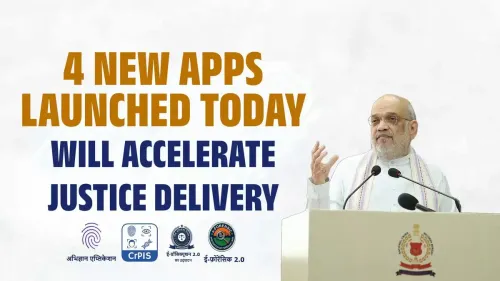
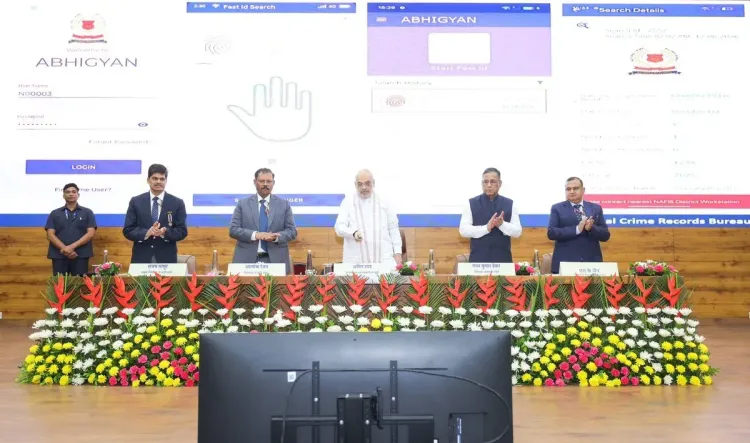
ABHIGYAN is a next-generation fingerprint identification platform built on the National Automated Fingerprint Identification System (NAFIS) , unveiled by Union Home Minister Amit Shah .
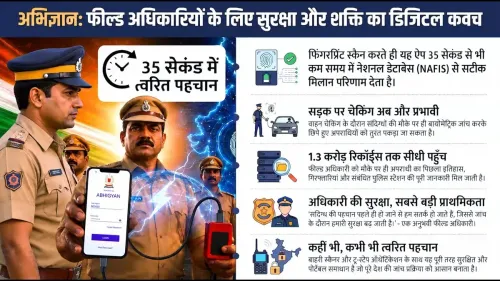
The system provides police access to over 1.29 crore fingerprint records from a centralised national database managed by the NCRB .
Suspect identification through the platform takes approximately 35 seconds , dramatically reducing conventional matching timelines.
NAFIS was originally launched in August 2022 and builds on the CCTNS digitisation project dating to 2009 .
Assam CM Himanta Biswa Sarma described the launch as 'a significant technological milestone' that will speed up the criminal justice delivery system.
Future integration with the Interoperable Criminal Justice System (ICJS) could create a seamless digital evidence chain across police, courts, and forensic agencies.
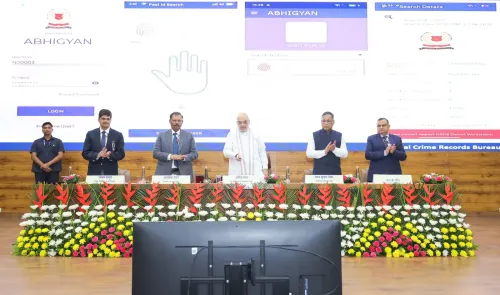
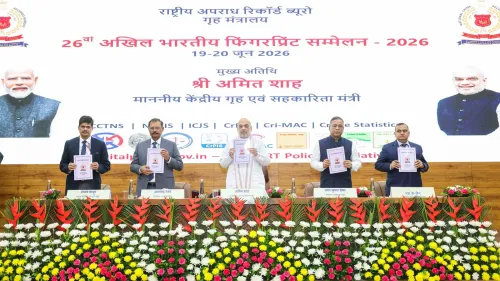
Assam Chief Minister Himanta Biswa Sarma on Saturday, 20 June 2026, welcomed the launch of ABHIGYAN, a next-generation fingerprint identification platform built atop the National Automated Fingerprint Identification System (NAFIS), calling it 'a significant technological milestone' for criminal justice delivery in India. The platform, unveiled by Union Home Minister Amit Shah, gives police forces access to over 1.29 crore fingerprint records and is designed to return suspect identifications in approximately 35 seconds.
Context
ABHIGYAN is a next-generation interface layered on top of NAFIS, the centralised biometric database managed by the National Crime Records Bureau (NCRB) under the Ministry of Home Affairs. CM Sarma described the development as the beginning of 'a new era of smart policing,' underscoring its potential to make investigations 'faster, smarter and more effective.'
The platform's headline capability — suspect identification in roughly 35 seconds — represents a sharp acceleration over conventional fingerprint-matching workflows, which have historically required manual cross-referencing across fragmented state-level databases.
Policy Backdrop
NAFIS was formally launched by the Ministry of Home Affairs in August 2022 to create a unified national repository of fingerprints, enabling law-enforcement agencies across states to query a single, interoperable system. Its foundations trace back to the Crime and Criminal Tracking Network and Systems (CCTNS) project, initiated in 2009, which first digitised police records at scale and laid the groundwork for subsequent biometric integration.
ABHIGYAN builds directly on this lineage, adding a rapid-query interface to the existing repository and positioning the database for continuous expansion. The NCRB manages the backend infrastructure, while state police forces are the primary end-users of the identification results.
Stakeholders and Impact
The most immediate beneficiaries are state police forces and central investigating agencies, who gain real-time access to a national fingerprint pool that was previously accessible only through slower, more procedurally intensive channels. Faster evidence verification at crime scenes and during custodial interrogation is expected to compress investigation timelines significantly.
For Assam and other North-East states — where border-security considerations add complexity to criminal investigations — a centralised, rapidly queryable biometric database carries particular operational value. CM Sarma, as convenor of the North-East Democratic Alliance (NEDA), has consistently advocated for stronger digital infrastructure in the region's law-enforcement ecosystem.
What's Next
Attention will now turn to the roll-out timeline for state police access and the pace at which the 1.29-crore-record database continues to grow. Analysts watching India's criminal-justice modernisation programme will also track whether ABHIGYAN is integrated with the broader Interoperable Criminal Justice System (ICJS) — which links police, courts, prisons, and forensic labs — to create an end-to-end digital evidence chain.
The launch signals the central government's continued commitment to data-driven internal security infrastructure, with biometric centralisation now a cornerstone of that architecture.
Point of View
A single national fingerprint repository queryable in 35 seconds represents a structural shift in investigative capacity. CM Sarma's public endorsement is also politically significant: it signals BJP-governed states' alignment with the Home Ministry's technology-first policing agenda ahead of potential state-level roll-outs. The critical test will be whether ABHIGYAN's integration with the ICJS can translate faster identification into faster convictions — the true measure of criminal-justice modernisation.
NationPress
20 Jun 2026
Frequently Asked Questions
What is ABHIGYAN and what does it do?
ABHIGYAN is a next-generation fingerprint identification platform layered on India's National Automated Fingerprint Identification System (NAFIS). It allows police to query a database of over 1.29 crore fingerprint records and receive suspect identification results in approximately 35 seconds, speeding up criminal investigations and evidence verification.
Who launched ABHIGYAN?
ABHIGYAN was unveiled by Union Home Minister Amit Shah. Assam Chief Minister Himanta Biswa Sarma publicly welcomed the launch on 20 June 2026, calling it a significant technological milestone.
What is NAFIS and how is it related to ABHIGYAN?
NAFIS, the National Automated Fingerprint Identification System, is a centralised biometric database managed by the National Crime Records Bureau under the Ministry of Home Affairs, formally launched in August 2022. ABHIGYAN is a rapid-query interface built on top of NAFIS to make the database accessible to police in near real time.
How many fingerprint records does India's NAFIS database contain?
According to Assam CM Himanta Biswa Sarma's post, the NAFIS database currently holds over 1.29 crore fingerprint records, with the national database described as continuously expanding.
What is the Interoperable Criminal Justice System (ICJS) and how does it relate to ABHIGYAN?
The ICJS is a broader government initiative that links police, courts, prisons, and forensic labs through shared digital infrastructure. ABHIGYAN's potential integration with ICJS modules is being watched as the next step toward an end-to-end digital evidence chain in India's criminal justice system.