Amit Shah Inaugurates 26th All India Fingerprint Conference 2026
Synopsis
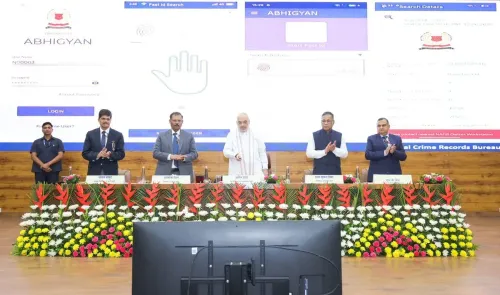
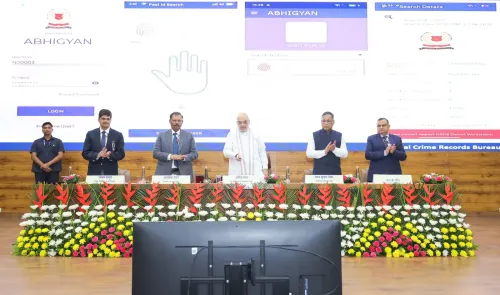
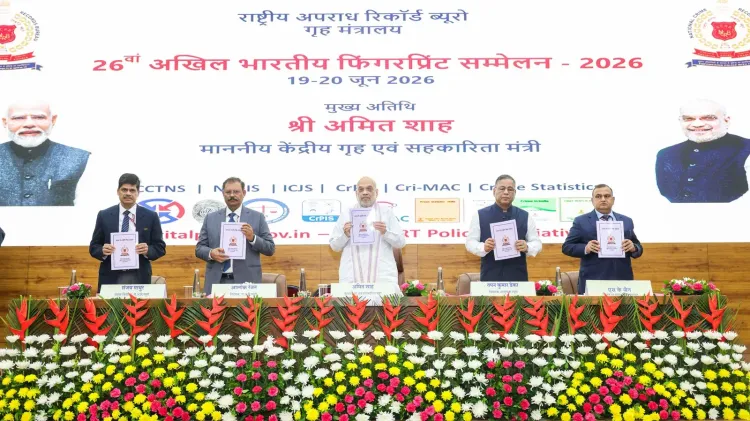
Union Home Minister Amit Shah inaugurated the 26th All India Fingerprint Conference-2026 in New Delhi on June 19, organised by NCRB. The conference deliberates on deploying cutting-edge fingerprint identification technologies introduced by the Modi government to improve speed and accuracy in criminal justice delivery across India.
Key Takeaways
Amit Shah inaugurated the 26th All India Fingerprint Conference-2026 in New Delhi on June 19, 2026 .
The conference is organised by the National Crime Records Bureau (NCRB) , India's central repository for crime statistics and biometric data.
Deliberations focus on maximising the impact of advanced fingerprint identification technologies introduced by the Modi government .
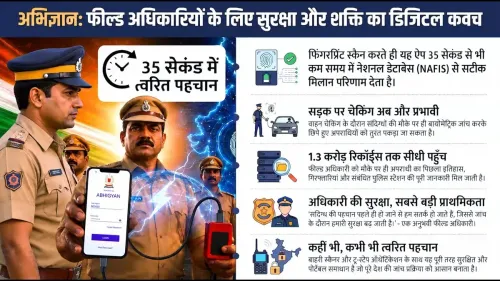
The National Automated Fingerprint Identification System (NAFIS) , launched in August 2022 , provides the key technological backbone for real-time fingerprint matching across states.
The conference is part of a sustained push to integrate biometric and digital tools into policing, aligned with India's 2024 criminal law reforms .
Union Home Minister Amit Shah on Friday, June 19, 2026, inaugurated the 26th All India Fingerprint Conference-2026 in New Delhi, organised by the National Crime Records Bureau (NCRB) under the Ministry of Home Affairs. The conference is focused on leveraging advanced fingerprint identification technologies to strengthen criminal justice delivery across India.
Context
The All India Fingerprint Conference is a periodic gathering that brings together law enforcement officials, forensic experts, and policymakers to deliberate on the state of fingerprint-based identification systems in India. This year's edition centres on 'maximising impact of cutting-edge fingerprint identification technologies' introduced under the Modi government, with an emphasis on delivering what Shah described as 'prompt and perfect justice to people.'
The NCRB, established in 1986, functions as India's nodal agency for crime statistics and biometric databases, and has been the primary institutional vehicle for rolling out national-level forensic technology platforms to state police forces.
Policy Backdrop
The conference builds on a significant policy milestone: the launch of the National Automated Fingerprint Identification System (NAFIS) in August 2022 by the Ministry of Home Affairs. NAFIS created a centralised, real-time fingerprint matching repository accessible to investigating agencies across all states and union territories, enabling faster suspect identification during criminal investigations.
The initiative is part of a broader pattern of biometric and digital integration in Indian policing that successive BJP-led governments have pursued since 2014, building on earlier infrastructure such as the Crime and Criminal Tracking Network and Systems (CCTNS) project. The three new criminal laws that came into effect in 2024 — replacing colonial-era codes — have added renewed urgency to modernising forensic and investigative infrastructure to meet updated procedural requirements.
Stakeholders and Impact
The primary beneficiaries of improved fingerprint identification infrastructure are state and central law enforcement agencies, which rely on biometric matching to link suspects to crime scenes, corroborate witness testimony, and build prosecutable evidence chains. Faster and more accurate identification is also expected to reduce wrongful detentions and expedite trials, directly impacting the judicial system and undertrial populations.
Forensic science laboratories, state police fingerprint bureaus, and district-level investigating officers are among the institutional stakeholders who participate in and implement the decisions emerging from such conferences. The deliberations at the 2026 edition are expected to inform operational guidelines for integrating newer technologies with existing NAFIS infrastructure.
What's Next
Attention will now turn to the specific resolutions and technical recommendations that emerge from the conference's deliberations, particularly any announcements on expanding NAFIS usage metrics across states and integrating new forensic modules with the 2024 criminal laws framework. The rollout of these technologies at the district and sub-district level remains the key implementation challenge for law enforcement agencies nationwide. How state police forces operationalise the conference's outcomes will be a measure of the government's broader push to make technology-driven policing a ground-level reality.
Point of View
But how consistently state forces use it. Holding such a high-profile conference with the Home Minister presiding elevates a technical exercise into a political commitment, reinforcing the BJP government's 'technology-first' narrative on law enforcement. The timing, shortly after the three new criminal laws took effect in 2024, suggests an effort to align forensic capacity with the updated legal framework's evidentiary demands. The real test will be in adoption rates at the district level, where resource constraints and training gaps have historically slowed the translation of national platforms into investigative practice.
NationPress
19 Sept 2026
Frequently Asked Questions
What is the 26th All India Fingerprint Conference 2026?
The 26th All India Fingerprint Conference-2026 is a national conclave organised by the National Crime Records Bureau (NCRB) to deliberate on advancing fingerprint identification technologies in India's criminal justice system. It was inaugurated by Union Home Minister Amit Shah in New Delhi on June 19, 2026.
What is NAFIS and how does it relate to the fingerprint conference?
NAFIS, or the National Automated Fingerprint Identification System, is a centralised biometric database launched in August 2022 by the Ministry of Home Affairs to enable real-time fingerprint matching for criminal investigations across Indian states. The All India Fingerprint Conference provides a platform to assess and expand the operational use of NAFIS by state police forces.
What is the role of NCRB in fingerprint identification in India?
The National Crime Records Bureau, established in 1986 under the Ministry of Home Affairs, is India's nodal agency for crime statistics and national fingerprint databases. It manages platforms like NAFIS and organises the All India Fingerprint Conference to build capacity among state law enforcement agencies.
How does fingerprint technology help in criminal justice in India?
Advanced fingerprint identification allows investigators to match suspects to crime scenes rapidly, corroborate evidence, and build stronger prosecutable cases. Faster identification can reduce wrongful detentions and help expedite trials, directly improving outcomes for both victims and the judicial system.
What are India's new criminal laws and their connection to forensic technology?
India's three new criminal laws, which replaced colonial-era codes and came into effect in 2024, updated procedural and evidentiary requirements for investigations and trials. These changes have increased the urgency of modernising forensic infrastructure, including fingerprint identification systems, to meet the new legal framework's demands.