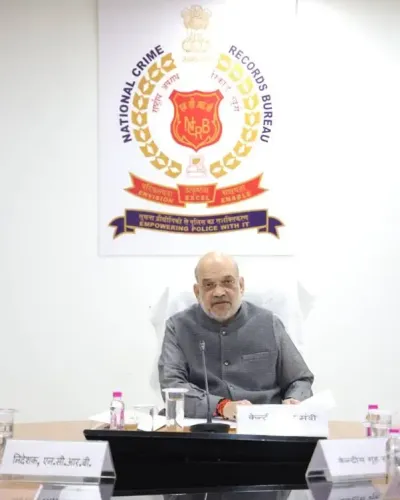
Amit Shah Launches ABHIGYAN App for Real-Time Fingerprint ID
Synopsis
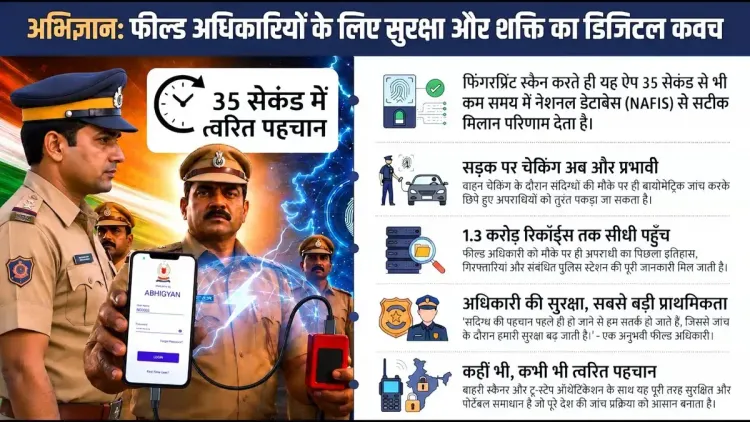
Union Home Minister Amit Shah launched ABHIGYAN, a mobile app by NCRB that gives on-field police officers real-time access to India's 1.3-crore fingerprint database NAFIS directly on their smartphones, secured by two-step authentication.
Key Takeaways
ABHIGYAN is a new mobile application developed by the National Crime Records Bureau (NCRB) , launched by Union Home Minister Amit Shah on June 19, 2026 .
The app is a portable version of NAFIS , India's centralised fingerprint repository, which was inaugurated nationwide in August 2022 .
It provides on-field police personnel direct smartphone access to a database of 1.3 crore fingerprints for real-time criminal identification.
The app is secured with two-step authentication and delivers fingerprint recognition results within seconds.
The launch builds on earlier digital policing initiatives including CCTNS (2009) and the Interoperable Criminal Justice System .
State police adoption rates and data privacy safeguards are expected to face scrutiny in forthcoming parliamentary sessions.
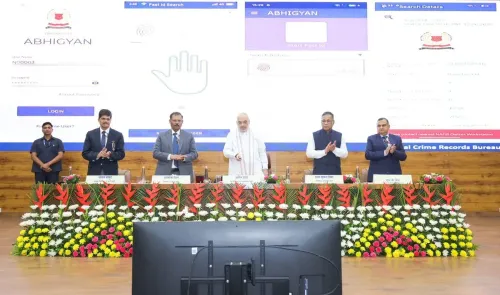
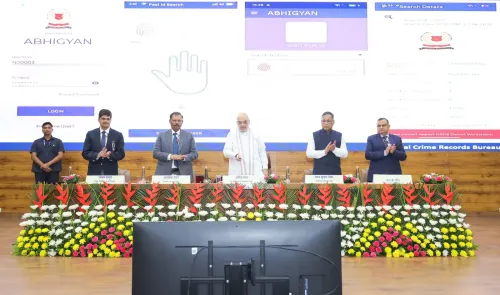
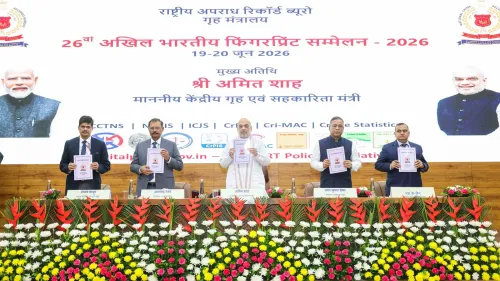
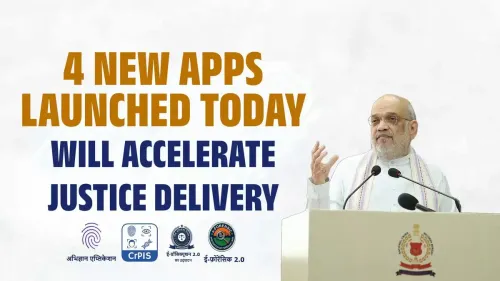
Union Home Minister Amit Shah on Friday, June 19, 2026, launched the ABHIGYAN mobile application developed by the National Crime Records Bureau (NCRB), bringing a portable version of the national fingerprint database directly to the smartphones of on-field police personnel across India.
Announcing the launch on X, Shah described ABHIGYAN as 'a highly powerful tool' equipped with fast identification, a portable setup, and access to crores of records. In his post, he wrote: 'ऑन-फील्ड पुलिस कर्मियों को सीधे उनके स्मार्टफोन पर अपराधियों के विशाल डेटाबेस तक पहुँचने की शक्ति देता है' — ('it gives on-field police personnel the power to access a vast database of criminals directly on their smartphones').
Context
ABHIGYAN is described as a portable version of NAFIS — the National Automated Fingerprint Identification System — which serves as India's centralised biometric repository for criminal identification. According to the Home Minister's post, the app draws on a database of 1.3 crore fingerprints and is secured with two-step authentication. It delivers real-time fingerprint recognition within seconds, directly on an officer's smartphone in the field.
NAFIS was inaugurated nationwide in August 2022 to replace older manual fingerprint systems with a centralised digital repository, marking a significant step in the modernisation of India's criminal justice infrastructure.
Policy Backdrop
The ABHIGYAN launch sits within a broader, decade-long effort to digitise India's policing ecosystem. Earlier milestones include the Crime and Criminal Tracking Network and Systems (CCTNS), initiated in 2009, and the Interoperable Criminal Justice System, both designed to reduce investigation timelines and improve conviction rates by connecting police stations, courts, and prisons on a common digital platform.
The Ministry of Home Affairs under Shah has accelerated this push since 2019, prioritising real-time biometric tools, data-driven policing, and tighter integration between central databases and state law enforcement agencies. Portable technology deployments of this nature have previously been piloted in states facing high volumes of cyber crime and organised crime cases.
Stakeholders and Impact
The primary beneficiaries are ground-level police personnel across India's state and central forces, who previously had to rely on station-level terminals or manual checks to access NAFIS records. With ABHIGYAN, an officer conducting a check at a crime scene, a checkpoint, or during an arrest can instantly verify a suspect's fingerprints against the national database without returning to a police station.
The two-step authentication mechanism is positioned as a safeguard for the sensitive biometric data the app handles. Civil liberties advocates and parliamentary committees have in recent sessions raised questions around data privacy frameworks governing such biometric tools, an issue that is likely to resurface as the app scales nationally.
What's Next
Attention will now turn to the pace of adoption across state police forces, which operate independently and will need to integrate ABHIGYAN into their existing workflows and device ecosystems. Integration with CCTNS dashboards and interoperability with state-level crime databases will be key technical benchmarks. Parliamentary scrutiny on data privacy safeguards governing the app's use is expected in forthcoming sessions, as India continues to legislate around personal data protection.
Point of View
Smartphone-native tool in 2026 — that progressively moves biometric policing power closer to the moment of encounter between officer and suspect. For the Home Ministry, the optics are clear: tangible, tech-forward deliverables that are easy to communicate to both the public and state governments. The harder test will be operational: whether state forces, with their varied device ecosystems and training capacities, can absorb the tool at scale. The data privacy question — largely unresolved in India's evolving legislative landscape — adds a layer of accountability that will likely follow this rollout into Parliament.
NationPress
19 Sept 2026
Frequently Asked Questions
What is the ABHIGYAN app launched by Amit Shah?
ABHIGYAN is a mobile application developed by the National Crime Records Bureau (NCRB) that gives on-field police officers real-time access to India's national fingerprint database, NAFIS, directly on their smartphones. It was launched by Union Home Minister Amit Shah on June 19, 2026.
What is NAFIS and how is it connected to ABHIGYAN?
NAFIS stands for National Automated Fingerprint Identification System, India's centralised biometric database for criminal identification launched nationwide in August 2022. ABHIGYAN is a portable mobile version of NAFIS, allowing field officers to query its records without needing a desktop terminal.
How many fingerprints are in the NAFIS database?
According to Union Home Minister Amit Shah's post announcing the launch, the NAFIS database accessed by ABHIGYAN contains 1.3 crore (13 million) fingerprint records.
Is the ABHIGYAN app secure?
Yes, the app is protected by two-step authentication, as stated in the Home Minister's announcement. This is intended to safeguard the sensitive biometric data the application handles.
Which ministry oversees NCRB and ABHIGYAN?
The National Crime Records Bureau (NCRB) functions under the Union Ministry of Home Affairs, headed by Amit Shah, which has been driving police modernisation and digital policing initiatives since 2019.