Amit Shah: CrPI App to Unify Biometric Data for Police

Synopsis
Union Home Minister Amit Shah on June 20, 2026, spotlighted the CrPI app developed by NCRB, which unifies face, iris, and DNA biometric matching on a single platform, reaching police stations nationwide through over 2,600 enrollment units to accelerate inter-state crime investigations.
Key Takeaways
The CrPI app , built by NCRB under the Ministry of Home Affairs, consolidates face, iris, and DNA matching on one unified platform.
Law enforcement can access the full biometric database within seconds , replacing slower manual processes.
The app maintains biological measurements of arrested and convicted individuals and uses video analytics for inter-state crime cases.
More than 2,600 enrollment units are being deployed to extend the app's reach to all police stations across India.
The initiative builds on earlier digital policing projects including CCTNS (2009) and NAFIS (2022) .
Union Home Minister Amit Shah described the rollout as the beginning of a new era of smart policing in India.
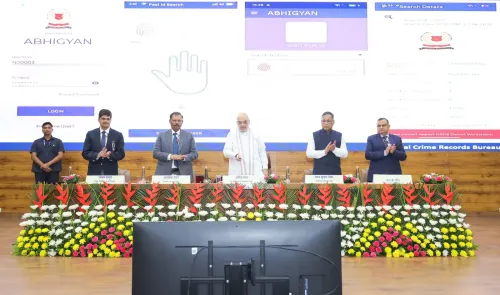
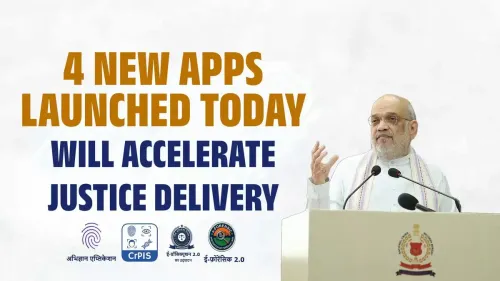
Union Home Minister Amit Shah on Saturday, June 20, 2026, highlighted the capabilities of the CrPI (Criminal and Prisoner Information) app, developed by the National Crime Records Bureau (NCRB) under the Ministry of Home Affairs, describing it as the beginning of a new era of smart policing in India.
Context
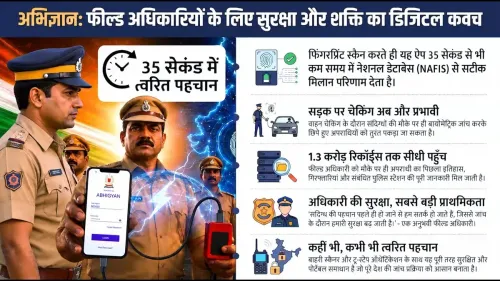
In his post, Shah stated that the CrPI app would bring face, iris, and DNA matching onto a single unified platform, enabling law enforcement personnel to access the entire biometric database within seconds. He described the app as capable of maintaining biological measurements of arrested and convicted individuals while using video analytics to accelerate action in inter-state crimes.
Shah noted that the app is reaching all police stations across the country through more than 2,600 enrollment units, calling it the start of a new chapter in smart policing. The post was accompanied by a video.
Policy Backdrop
The CrPI app is the latest step in India's long-running effort to digitise and centralise criminal records. The Crime and Criminal Tracking Network and Systems (CCTNS) project, approved in 2009, first sought to network police stations for digital crime records. The National Automated Fingerprint Identification System (NAFIS), launched in 2022, extended this by enabling centralised fingerprint matching nationwide.
The NCRB, functioning under the Ministry of Home Affairs since 1986, has been the nodal agency for compiling national crime data and maintaining criminal records. The CrPI app represents a consolidation of multiple biometric modalities — fingerprint, face, iris, and DNA — into one platform, addressing a long-standing coordination gap between state police forces.
Stakeholders and Impact
State police forces and central investigating agencies stand to be the primary beneficiaries of this platform. The ability to query a unified biometric database in seconds could significantly reduce the time taken to identify suspects, particularly in cases that cross state boundaries.
The video analytics feature flagged by Shah is aimed specifically at inter-state crimes, a category where coordination between multiple police jurisdictions has historically been slow. By centralising records and enabling rapid cross-matching, the app is intended to reduce dependence on manual record-keeping and inter-agency correspondence.
What's Next
The phased rollout of enrollment units to remaining police stations will be a key metric to watch as the app scales. Integration with existing infrastructure such as CCTNS will determine how seamlessly the CrPI app fits into the broader digital policing ecosystem already in place across Indian states.
As biometric data collection expands to cover more arrested and convicted individuals, questions around data governance, access controls, and inter-agency protocols are likely to come into sharper focus in the months ahead.
Point of View
Moving from networked records (CCTNS) to fingerprint identification (NAFIS) and now to multi-modal biometrics. Centralising face, iris, and DNA matching under one platform addresses a genuine operational gap in inter-state investigations, where delays in record-sharing have historically allowed suspects to evade detection across jurisdictions. For the BJP government, the rollout also carries political salience — positioning the Home Ministry as a driver of technology-led governance ahead of what remains a competitive law-and-order narrative. The long-term test will be whether enrollment coverage and data governance frameworks keep pace with the platform's technical ambitions.
NationPress
19 Sept 2026
Frequently Asked Questions
What is the CrPI app and who developed it?
The CrPI (Criminal and Prisoner Information) app was developed by the National Crime Records Bureau (NCRB) under the Ministry of Home Affairs. It is designed to bring face, iris, and DNA biometric matching onto a single unified platform accessible to police forces across India.
What can the CrPI app do for Indian police?
The CrPI app allows police to access a unified biometric database — including face, iris, and DNA records of arrested and convicted individuals — within seconds. It also uses video analytics to help speed up action in inter-state crime cases.
How many enrollment units does the CrPI app have?
According to Union Home Minister Amit Shah's post, the CrPI app is being rolled out through more than 2,600 enrollment units to reach all police stations across India.
How does CrPI relate to earlier projects like CCTNS and NAFIS?
CrPI builds on earlier digital policing initiatives: the Crime and Criminal Tracking Network and Systems (CCTNS), approved in 2009 to network police stations digitally, and the National Automated Fingerprint Identification System (NAFIS), launched in 2022 for centralised fingerprint matching. CrPI expands this by adding face, iris, and DNA matching on one platform.
What did Amit Shah say about the CrPI app?
Amit Shah said the app marks the beginning of a new era of smart policing in India. He highlighted its ability to unify biometric data access, maintain records of arrested and convicted persons, and use video analytics to accelerate inter-state crime investigations.