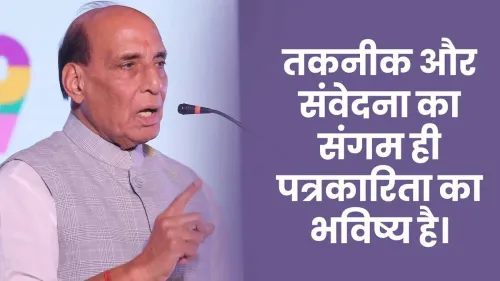
Amit Shah calls for AI, ML teams in states for faster justice

Synopsis
Union Home Minister Amit Shah on 19 June 2026 called on state governments to constitute dedicated AI and machine learning teams to convert data into intelligence, aiming to deliver prompt and accurate justice to citizens across India.
Key Takeaways
Amit Shah on 19 June 2026 publicly called for states to form special AI and ML teams for justice delivery.
Policing is a state subject under the Constitution, so the Centre's role is advisory and incentive-based.
The CCTNS (approved 2009 ) and ICJS already provide the digital data infrastructure on which AI tools would operate.
Three new criminal laws enacted in 2023 mandate electronic records, video trials and forensic reports, expanding the digital footprint of the justice system.
States with advanced digital infrastructure are better positioned to comply quickly, raising concerns about uneven implementation.
Follow-up Ministry of Home Affairs advisories or funding frameworks will determine whether the call translates into concrete action.
Union Home Minister Amit Shah on Friday, 19 June 2026, called for harnessing artificial intelligence and machine learning to transform raw data into actionable intelligence, urging state governments to constitute dedicated teams for the purpose so that citizens receive prompt and perfect justice.
Context
Shah's call came through a post on X in which he stated: 'Using AI and machine learning data should be turned into intelligence to deliver prompt and perfect justice to people, states need to constitute special teams for the purpose.' The statement frames AI not merely as a technological upgrade but as a tool for justice delivery — a significant framing that links data science directly to citizens' rights.
The Ministry of Home Affairs, which Shah heads, coordinates law-enforcement policy across India's 28 states and 8 Union Territories. Because policing is a state subject under the Constitution's Seventh Schedule, the Centre can only advise and incentivise — making Shah's public call a form of policy signalling to state governments.
Policy Backdrop
The push builds on more than a decade of central investment in criminal-justice digitisation. The Crime and Criminal Tracking Network and Systems (CCTNS), approved in 2009, was designed to digitise FIRs, case files and police workflows across the country, creating a nationwide networked crime database that could serve as the raw-data foundation for AI-driven analytics.
The Interoperable Criminal Justice System (ICJS) went a step further by integrating police, prison, prosecution and court databases for end-to-end case tracking. Together, CCTNS and ICJS represent the data infrastructure on which Shah's envisioned AI and ML teams would operate.
The Digital India programme, launched in 2015, provided the broader e-governance architecture, while three new criminal laws enacted in 2023 — replacing colonial-era codes — mandated electronic records, video trials and forensic reports in serious cases, further expanding the digital footprint of the justice system.
Stakeholders and Impact
State police forces are the primary audience for Shah's directive. Constituting specialised AI and ML teams would require states to recruit or retrain personnel with data-science skills, invest in computing infrastructure, and establish protocols for converting surveillance and case data into usable intelligence — a significant operational and budgetary undertaking.
The judiciary and prosecution stand to benefit if AI-driven tools can flag case backlogs, predict court dates, or surface patterns in criminal activity. For ordinary citizens, the promise is faster resolution of complaints and more evidence-based policing. Civil-liberties advocates, however, have historically flagged concerns about data privacy and algorithmic bias in law-enforcement applications.
The call also has a federal dimension: states with more advanced digital infrastructure — such as Telangana, Karnataka and Maharashtra — may be better positioned to act quickly, potentially widening the gap with less-resourced states.
What's Next
The immediate watch-point is whether the Ministry of Home Affairs follows Shah's public statement with formal advisories, funding allocations or a centrally sponsored scheme framework that gives states both the mandate and the resources to set up AI and ML teams. State governments may also issue executive orders constituting such units within their police departments.
As India's criminal-justice system continues its digital transition under the new criminal laws, Shah's statement signals that the Centre views AI and machine learning not as optional enhancements but as the next necessary layer in the architecture of data-driven governance — one that states are now expected to build.
Point of View
ICJS, Digital India) to nudge states toward standardised data practices. The framing of AI as a justice-delivery tool, rather than merely a law-enforcement tool, is politically significant: it positions technology adoption as a citizen-rights imperative, making it harder for states to resist without appearing anti-reform. The real test will be whether MHA backs the call with ring-fenced funding or a formal advisory, since without resources, the directive risks remaining aspirational.
NationPress
19 Sept 2026
Frequently Asked Questions
What did Amit Shah say about AI and machine learning for justice?
Shah said data should be turned into intelligence using AI and machine learning to deliver prompt and perfect justice to people, and called on state governments to constitute special teams for the purpose.
What is CCTNS and how does it relate to AI in policing?
The Crime and Criminal Tracking Network and Systems (CCTNS) , approved in 2009 , digitised FIRs and police workflows nationwide, creating the data foundation on which AI and ML analytics can be applied.
Can the Centre force states to set up AI teams for policing?
No. Policing is a state subject under India's Constitution, so the Ministry of Home Affairs can only advise, incentivise or fund states — it cannot mandate them to create AI and ML teams.
How do India's new criminal laws support AI in justice delivery?
The three criminal laws enacted in 2023 replaced colonial-era codes and made electronic records, video trials and forensic reports mandatory in serious cases, significantly expanding the digital data available for AI-driven analysis.
Which states are best placed to act on Shah's AI policing call?
States with more advanced digital infrastructure, such as Telangana, Karnataka and Maharashtra , are generally considered better positioned to set up AI and ML teams quickly, though uneven capacity across states remains a challenge.