Amit Shah at Fingerprint Meet: Use AI, ML to build crime intelligence
Synopsis
At the 26th All India Fingerprint Conference, Home Minister Amit Shah went beyond routine policing rhetoric — calling for dedicated AI and ML teams in every state to profile criminals and close cross-state jurisdictional loopholes. Paired with new forensic mandates requiring video-graphed evidence collection, the push marks a concrete policy shift toward technology-led criminal justice in India.
Key Takeaways
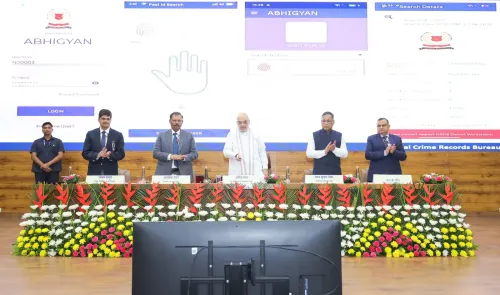
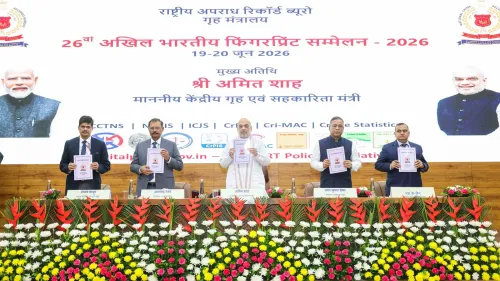
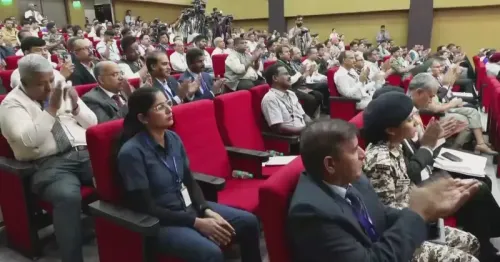
Home Minister Amit Shah addressed the 26th All India Fingerprint Conference–2026 in New Delhi on 19 June 2026 .
Shah called for AI and ML teams in every state to study crime patterns and identify repeat and international offenders.
He stressed the need to prevent criminals from exploiting jurisdictional gaps between states.
New criminal laws make it mandatory for forensic experts to visit crime sites in cases punishable by seven years or more .
Evidence collection at crime scenes must now be video-graphed to prevent tampering.
Shah also called for stronger action on cybercrime , third-party audits, and curbs on misuse of authority.
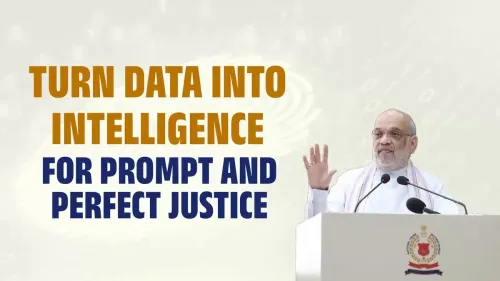
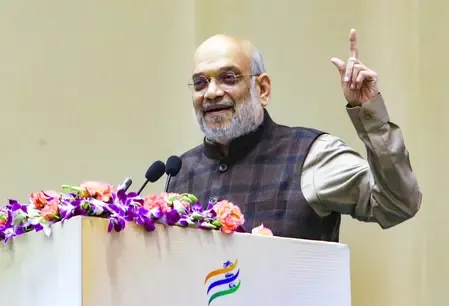
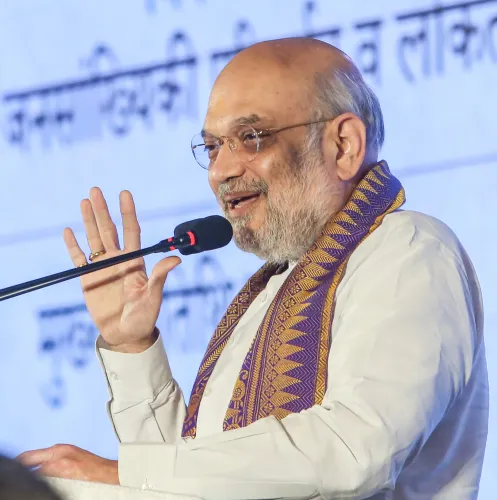
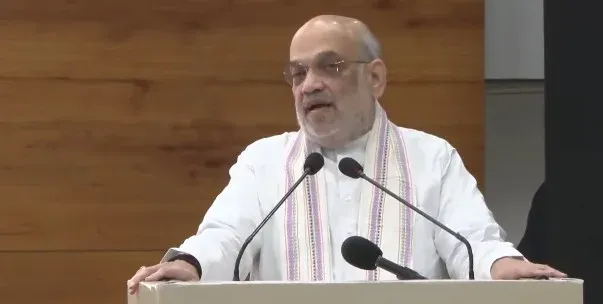
Union Home Minister Amit Shah on Friday, 19 June 2026, called on law enforcement agencies across India to harness Artificial Intelligence (AI) and Machine Learning (ML) to transform raw data into actionable crime intelligence. Speaking at the 26th All India Fingerprint Conference–2026 in New Delhi, Shah urged states to build dedicated AI teams capable of studying crime patterns, profiling repeat offenders, and tracking international criminals.
Key Directives from the Home Minister
Shah was direct in outlining what he expects from the system. “We need to build AI teams and use our software as an effective tool for crime analysis and to make the best use of all the provisions,” he said. He added that every state must deploy such teams specifically to identify repeat offenders and prevent criminals from exploiting jurisdictional gaps between states — a long-standing vulnerability in India’s fragmented law enforcement architecture.
Shah also flagged the urgency of countering cybercrime, calling for stronger third-party audits and rigorous checks on the misuse of authority within the system.
Criminal Justice System in Transformation
The Home Minister framed the conference in the context of a broader shift in India’s criminal justice landscape. “Today, as far as the criminal justice system is concerned, our country is going through a transformation phase. There was a time when the police station and law and order were considered the main tools for maintaining peace. Whenever there was a dispute, the station in-charge would immediately resolve it. If not, a case would be filed, and matters would remain pending for years,” Shah said.
He argued that this model is no longer sufficient and that data-driven intelligence must now underpin policing at every level. He also stressed that the system must fix accountability clearly in cases where attempts are made to disturb national security.
New Criminal Laws and Forensic Reforms
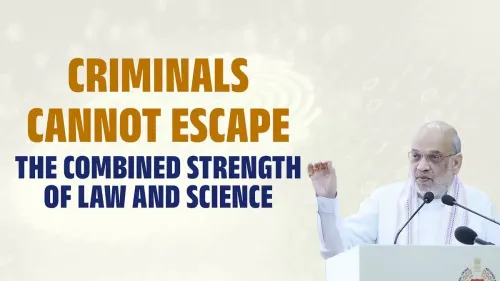
Shah highlighted provisions in India’s new criminal laws — which replaced older colonial-era statutes — as a structural upgrade for investigations. Under the new framework, forensic experts are required to visit crime scenes for serious offences, with mandatory evidence collection in cases punishable by seven years or more. The entire evidence-collection process at crime sites must now be video-graphed, a safeguard designed to prevent tampering and strengthen the evidentiary chain in court.
This dual mandate — expert presence and video documentation — is intended to raise the quality and reliability of investigations and support a fairer administration of justice, according to officials.
What This Signals for Policing
The Fingerprint Conference is one of India’s oldest forensic-science forums, and Shah’s address signals a clear policy push toward technology-led policing. Notably, the call for AI and ML integration comes as India’s National Crime Records Bureau (NCRB) continues to expand its digital databases. The emphasis on cross-state coordination also reflects growing concern over organised crime networks that operate across state lines, exploiting inconsistent enforcement.
As the Centre moves to operationalise the new criminal laws, the pressure on states to build technical capacity — including AI teams and forensic infrastructure — is set to intensify in the months ahead.
Point of View
But the prescription will only work if it comes with funding mandates and timelines — neither of which was announced. India’s police-to-population ratio remains among the lowest in the world, and layering AI on under-resourced forces risks producing dashboards without outcomes. The forensic video-documentation rule is a genuine structural fix, but its enforcement will depend on states that have historically lagged on forensic investment. The real test of this policy push is whether it translates into NCRB-linked performance benchmarks or remains a conference directive.
NationPress
19 Sept 2026
Frequently Asked Questions
What did Amit Shah say at the All India Fingerprint Conference 2026?
Home Minister Amit Shah called on all states to build dedicated AI and ML teams to convert data into crime intelligence, study crime patterns, and identify repeat and international offenders. He also highlighted new criminal law provisions mandating forensic expert visits and video-graphed evidence collection at crime scenes.
Why is AI and ML integration important for Indian policing?
AI and ML can help law enforcement identify patterns across large datasets — including fingerprint records, crime logs, and offender profiles — that human analysts would miss. Shah specifically cited the need to close jurisdictional gaps exploited by criminals operating across state lines.
What do the new criminal laws say about forensic evidence?
Under India’s new criminal laws, forensic experts are required to visit crime scenes for serious offences, and evidence collection in cases punishable by seven years or more must be video-graphed. This is designed to prevent evidence tampering and strengthen court cases.
What is the All India Fingerprint Conference?
The All India Fingerprint Conference is one of India’s oldest forensic-science forums, bringing together law enforcement officials, forensic experts, and policymakers to discuss advances in fingerprint technology and criminal identification. The 2026 edition was its 26th iteration.
What did Shah say about cybercrime?
Shah stressed the urgency of countering cybercrime and called for stronger third-party audits of digital systems and strict checks on the misuse of authority within law enforcement agencies.