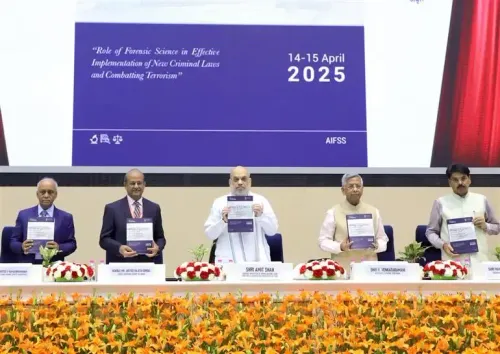
Amit Shah Addresses 26th All India Fingerprint Conference

Synopsis
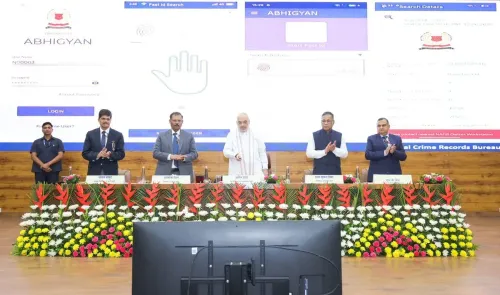
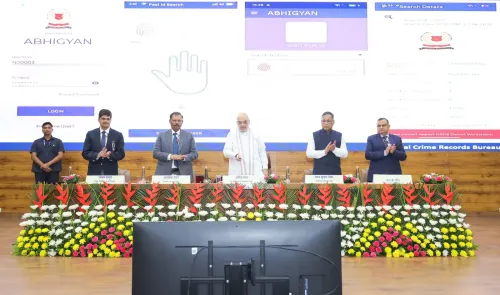
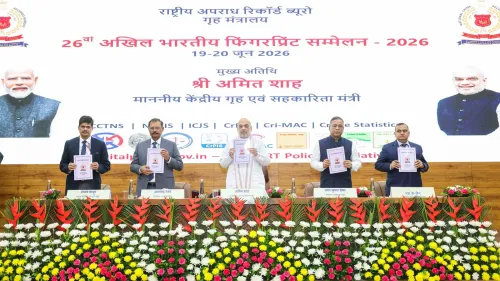
Union Home Minister Amit Shah addressed the 26th All India Fingerprint Conference–2026 in New Delhi on June 19, 2026. The annual MHA event brings together forensic experts and police officials to advance fingerprint science and its integration into India's criminal justice system.
Key Takeaways
Union Home Minister Amit Shah addressed the 26th All India Fingerprint Conference–2026 in New Delhi on June 19, 2026 .
The conference is an annual event under the Ministry of Home Affairs focused on fingerprint science and forensic policing.
The Criminal Procedure (Identification) Act, 2022 expanded legal powers for compulsory collection of biometric data including fingerprints.
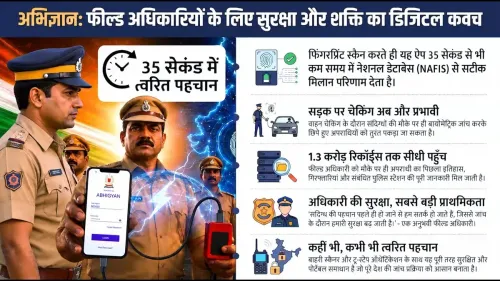
The National Crime Records Bureau (NCRB) operates the national Automated Fingerprint Identification System (AFIS) linking state police databases.
The government has prioritised integration of biometric tools with national crime databases under its police modernisation agenda.
Further announcements on forensic infrastructure and inter-state fingerprint data sharing are expected to follow from the conference.
Union Home Minister Amit Shah addressed the 26th All India Fingerprint Conference–2026 in New Delhi on Friday, June 19, 2026, underlining the government's continued push to modernise forensic capabilities across India's law enforcement agencies.
Context
The All India Fingerprint Conference is an annual national gathering organised under the Ministry of Home Affairs, bringing together fingerprint experts, forensic scientists, and senior police officials from across the country. The conference serves as a platform to review advances in fingerprint science and their operational integration into criminal investigations. Shah, who has helmed the Home Ministry since 2019, has consistently championed the use of technology in policing and internal security.
Policy Backdrop
The conference comes against the backdrop of the Criminal Procedure (Identification) Act, 2022, which significantly expanded legal provisions for the compulsory collection of fingerprints and other biometric measurements by police for criminal identification. The legislation marked a major shift in India's forensic jurisprudence, enabling wider use of biometric data in investigations and trials. The National Crime Records Bureau (NCRB), operating under the Ministry of Home Affairs, manages national crime databases and runs the country's Automated Fingerprint Identification System (AFIS), which links fingerprint records across states for inter-agency use.
Successive administrations have invested in integrating biometric tools within centralised national databases to improve the speed and accuracy of criminal identification. The present government has accelerated this agenda under broader police modernisation schemes, pushing for digitisation of criminal records and real-time data sharing between state police forces and central agencies.
Stakeholders and Impact
The primary stakeholders are state and central police forces, forensic laboratories, and the judiciary, all of which depend on reliable fingerprint evidence in investigations and prosecutions. Improved fingerprint infrastructure directly affects conviction rates and the efficiency of criminal justice delivery across the country. Forensic experts attending the conference represent a specialised community whose work underpins evidence-based policing at every level.
Citizens benefit indirectly through a more capable law enforcement ecosystem, while civil society groups have in the past raised questions about data privacy and the scope of biometric data collection under the 2022 Act. The government's position has been that stronger forensic tools are essential to reducing crime and improving accountability in the criminal justice system.
What's Next
Observers will watch for any announcements emerging from the conference regarding the expansion of AFIS integration with national crime databases, new forensic infrastructure investments, or updated protocols for inter-state sharing of fingerprint records. The Home Ministry's focus on forensic modernisation is expected to continue as part of its wider internal security agenda. Further policy directions, if announced during Shah's address, are likely to shape the roadmap for fingerprint science and forensic policing in India over the coming years.
Point of View
Not a ceremonial fixture. The address fits a deliberate arc: the Criminal Procedure (Identification) Act, 2022 created the legal architecture, and successive investments in AFIS and NCRB infrastructure are building the operational layer on top of it. The political logic is clear — a Home Minister who can point to measurable improvements in conviction rates and inter-state crime detection has a strong governance record to campaign on. The unresolved tension, however, is the balance between expanding biometric collection and the absence of a comprehensive data-protection framework governing its use.
NationPress
19 Sept 2026
Frequently Asked Questions
What is the All India Fingerprint Conference?
The All India Fingerprint Conference is an annual national event organised by the Ministry of Home Affairs that brings together fingerprint experts, forensic scientists, and senior police officials to review advances in fingerprint science and their use in criminal investigations across India.
Why did Amit Shah address the fingerprint conference?
As Union Home Minister, Amit Shah oversees the Ministry of Home Affairs, which organises the conference. His address reflects the government's emphasis on modernising forensic capabilities and digitising criminal records to strengthen law enforcement.
What is the Criminal Procedure Identification Act 2022?
The Criminal Procedure (Identification) Act, 2022 is a law that expanded the legal powers of police to compulsorily collect fingerprints, biometric data, and other measurements from accused persons for criminal identification and investigation purposes.
What does NCRB do with fingerprint data?
The National Crime Records Bureau (NCRB), under the Ministry of Home Affairs, maintains national crime databases and operates the Automated Fingerprint Identification System (AFIS), which links fingerprint records across state police forces to aid criminal identification.
What is India's Automated Fingerprint Identification System?
India's Automated Fingerprint Identification System (AFIS), managed by the NCRB, is a centralised digital platform that stores and matches fingerprint records from state and central police agencies, enabling faster identification of suspects and inter-state coordination in investigations.