Amit Shah Launches 4 Digital Apps to Speed Up Criminal Justice
Synopsis
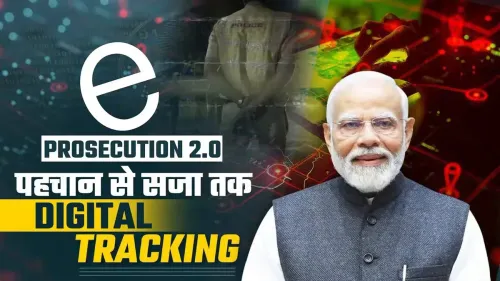
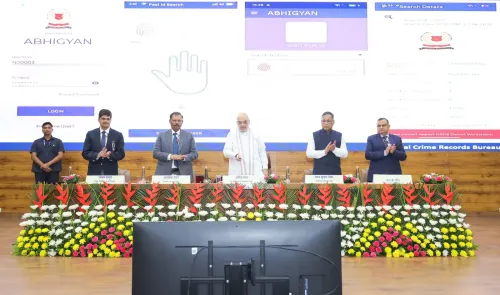
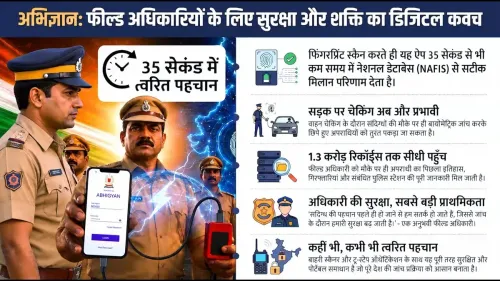
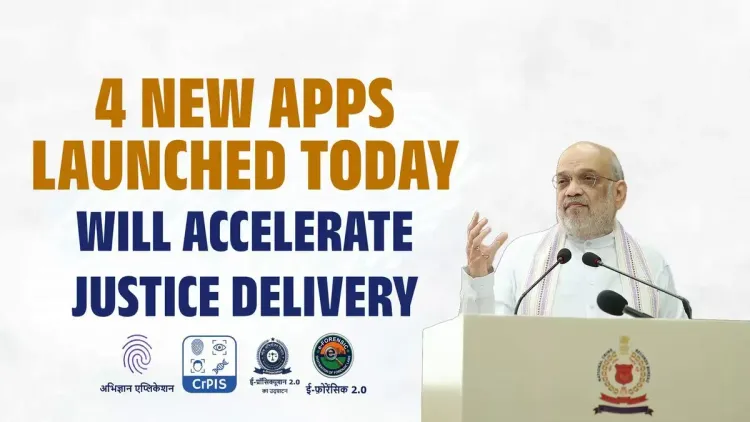
Union Home Minister Amit Shah on June 19, 2026 launched four new digital applications — NCRB-ABHIGYAN, CrPI Application, E-Prosecution 2.0 and E-Forensics 2.0 — to accelerate justice delivery under India's new criminal laws that replaced colonial-era statutes in July 2024.
Key Takeaways
Four apps launched on June 19, 2026 : NCRB-ABHIGYAN, CrPI Application, E-Prosecution 2.0, and E-Forensics 2.0.
Apps are designed to support India's new criminal laws that came into force on 1 July 2024 , replacing the IPC, CrPC and Indian Evidence Act.
All four platforms are developed under the National Crime Records Bureau (NCRB) , Ministry of Home Affairs.
Key stakeholders include state police forces, public prosecutors, forensic labs and citizens .
The launch builds on the CCTNS framework operational since 2009 , adding a new digital layer aligned to reformed criminal procedure.
State-wise onboarding and integration with existing CCTNS infrastructure will determine the pace of real-world impact.
Union Home Minister Amit Shah on Friday, June 19, 2026, announced the launch of four new digital applications aimed at accelerating justice delivery under India's new criminal laws, marking a significant step in the government's push to modernise the country's law-enforcement and prosecution ecosystem.
Shah stated that the four apps — NCRB-ABHIGYAN, CrPI Application, E-Prosecution 2.0, and E-Forensics 2.0 — 'will mitigate the hardship people have endured since independence in protecting their rights, by speeding up justice with the help of new criminal laws.'
Context
The launch comes nearly two years after India's three landmark criminal laws came into force on 1 July 2024, replacing colonial-era statutes: the Bharatiya Nyaya Sanhita replaced the Indian Penal Code (1860), the Bharatiya Nagarik Suraksha Sanhita replaced the Code of Criminal Procedure (1973), and the Bharatiya Sakshya Adhiniyam replaced the Indian Evidence Act (1872). These laws were passed by Parliament in December 2023 and explicitly mandate time-bound investigations and trials while expanding the scope of digital evidence.
The four applications are developed under the aegis of the National Crime Records Bureau (NCRB), the Ministry of Home Affairs' central repository for crime data and police IT infrastructure.
Policy Backdrop
India's effort to digitise its criminal justice chain has a long lineage. The Crime and Criminal Tracking Network and Systems (CCTNS), rolled out nationally from 2009 onward, was the foundational push to digitise First Information Reports (FIRs) and police workflows across states. The four new applications represent the next layer of this stack, designed to align digital infrastructure with the procedural requirements of the new criminal laws.
E-Prosecution 2.0 and E-Forensics 2.0 suggest iterative upgrades to existing platforms, signalling that the government is building on prior digital frameworks rather than starting from scratch. The CrPI Application and NCRB-ABHIGYAN are positioned as new tools to serve police forces and citizens respectively within the reformed legal framework.
Stakeholders and Impact
The primary beneficiaries of the four platforms span the entire criminal justice chain: state police forces responsible for investigation, public prosecutors managing case files in court, forensic laboratories handling evidence, and ultimately citizens seeking timely redress. Reducing manual, paper-based processes at each of these nodes is expected to cut case pendency, a chronic challenge in India's justice system.
For ordinary citizens, faster forensic processing and digitised prosecution workflows could translate into quicker trial timelines — a core promise of the 2023-24 criminal law reforms. State governments will be key implementation partners, and their pace of onboarding these applications will determine real-world impact.
What's Next
Attention will now turn to state-wise rollout and integration of the four applications with existing CCTNS databases. Parliamentary committees and audit bodies are likely to monitor adoption rates, interoperability with state police systems, and measurable reductions in case pendency. The success of this digital push will be a litmus test for whether the legislative ambition of the 2023-24 criminal law overhaul translates into ground-level justice delivery across India's 28 states and 8 Union Territories.
Point of View
Shah is reinforcing the political narrative that the replacement of colonial-era statutes is an ongoing, multi-layered project rather than a one-time legislative event. The real test will be state compliance: India's federal policing structure means that central technology mandates often face uneven adoption, and the gap between launch and last-mile implementation has historically been wide. How quickly state forensic labs and prosecution wings integrate these platforms will determine whether the reforms deliver on their promise of time-bound justice.
NationPress
19 Sept 2026
Frequently Asked Questions
What are the four apps launched by Amit Shah on June 19 2026?
The four apps are NCRB-ABHIGYAN, CrPI Application, E-Prosecution 2.0, and E-Forensics 2.0, all developed under the National Crime Records Bureau to support India's new criminal justice laws.
What are India's new criminal laws and when did they come into effect?
India's three new criminal laws — the Bharatiya Nyaya Sanhita, Bharatiya Nagarik Suraksha Sanhita, and Bharatiya Sakshya Adhiniyam — were passed in December 2023 and came into force on 1 July 2024, replacing the IPC, CrPC and Indian Evidence Act.
What is NCRB and what is its role in these apps?
The National Crime Records Bureau (NCRB) is the Ministry of Home Affairs' central body for crime statistics and police IT systems; it developed and will oversee the rollout of the four newly launched applications.
How will these apps help citizens in India?
By digitising prosecution case files, forensic evidence management and police investigation workflows, the apps aim to reduce delays in the justice system and help citizens get faster resolution to criminal cases.
What is CCTNS and how does it relate to the new apps?
CCTNS (Crime and Criminal Tracking Network and Systems) is a national platform for digitising FIRs and police workflows, operational since 2009; the four new apps are expected to integrate with CCTNS as the next layer of India's criminal justice technology stack.