Amit Shah Reviews Cyber Helpline 1930, Orders AI Upgrade
Synopsis
Union Home Minister Amit Shah chaired a review of the National Cyber Crime Helpline 1930 on June 17, 2026, ordering AI and IVR upgrades to call centres, rapid SOP implementation for time-bound victim relief, and robust action against mule accounts used in cyber fraud.
Key Takeaways
Amit Shah chaired a review meeting on the National Cyber Crime Helpline 1930 on June 17, 2026 .
Call centres across the country are to be modernised with AI and Interactive Voice Response (IVR) technology.
The MHA has assured full institutional support for the modernisation drive.
A revised SOP will mandate time-bound responses and swift restoration of money to cyber fraud victims.
Shah directed robust measures to identify and shut down mule accounts used to layer fraudulent funds.
The push is framed as advancing PM Modi 's vision of strengthened cybersecurity for citizens.
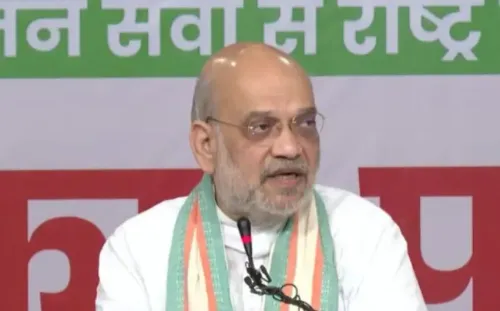
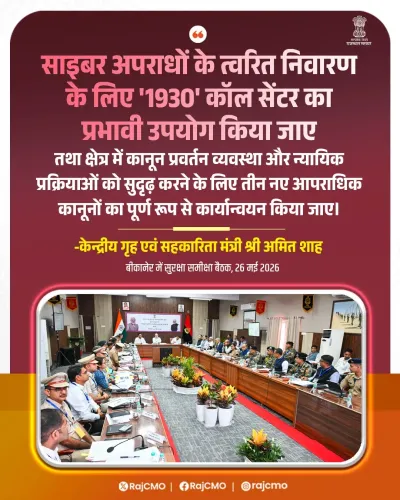
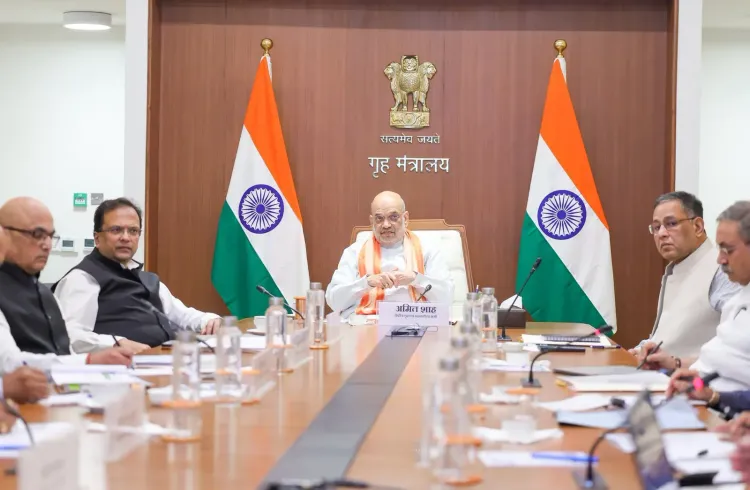
Union Home Minister Amit Shah on Wednesday, June 17, 2026, chaired a high-level review meeting on the National Cyber Crime Helpline 1930, issuing a series of directions to modernise call centres, fast-track victim relief, and crack down on mule accounts used to siphon fraud proceeds.
Context
Shah announced that call centres handling the 1930 helpline will be equipped with cutting-edge technologies including Artificial Intelligence (AI) and Interactive Voice Response (IVR) systems. He assured full support from the Ministry of Home Affairs (MHA) for the modernisation drive, framing the push as an acceleration of Prime Minister Narendra Modi's vision of strengthening cybersecurity and delivering prompt relief to citizens.
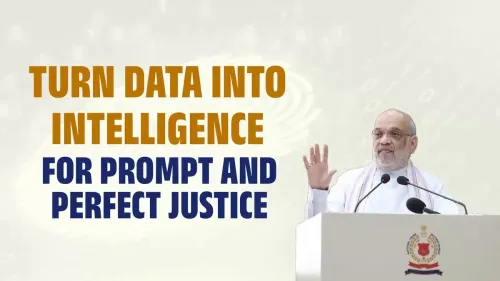
The minister also directed rapid implementation of a Standard Operating Procedure (SOP) to ensure time-bound responses to incoming calls and the swift restoration of money to victims of cyber fraud — two metrics that have drawn sustained attention as digital financial crime has risen sharply across the country.
Policy Backdrop
The 1930 helpline operates under the broader framework of the Indian Cyber Crime Coordination Centre (I4C), established in 2020 under the MHA to enable real-time coordination among police forces for cyber crime investigation and victim support. The centre sits at the heart of the government's architecture for combating online financial fraud, linking state police units, banks, and payment intermediaries.
Rising adoption of UPI and other digital payment rails has coincided with a surge in cyber financial frauds, placing the 1930 helpline under increasing operational pressure. Successive central directives have emphasised inter-state coordination, technology-enabled response, and the disruption of financial trails before fraudsters can move money out of reach.
A particular focus of Wednesday's meeting was the problem of mule accounts — bank accounts opened in the names of unsuspecting or complicit individuals and used by fraudsters to layer and withdraw stolen funds. Shah directed robust measures to identify and shut down such accounts, a step that security officials regard as critical to breaking the fraud supply chain.
Stakeholders and Impact
The most immediate beneficiaries of the upgraded helpline are cyber fraud victims, who currently depend on the speed of the 1930 response to freeze transactions before money is transferred beyond recovery. Every hour of delay in flagging a fraudulent transaction reduces the probability of fund restoration significantly.
The banking sector is the other key stakeholder: commercial banks, payment banks, and wallet operators are the entities that must act on freeze requests generated through the helpline. AI-driven triaging and IVR-based intake are expected to cut the time between a victim's first call and a formal freeze request reaching the relevant financial institution.
State governments and their police cyber cells will also be directly affected, as the modernisation of call centres — many of which are operated at the state level — will require coordinated investment and training supported by the MHA.
What's Next
The immediate watch-points are the rollout timelines for AI and IVR upgrades across state-level call centres and the formal notification of the revised SOP governing response windows and fund-recovery protocols. Parliamentary committees tracking the I4C framework are likely to seek performance data on call volumes, freeze success rates, and mule-account actions once the new systems go live.
With the MHA having committed full institutional support, the pace of implementation will depend on how quickly state police administrations can absorb the technology and procedural changes — making inter-governmental coordination the critical variable in turning Wednesday's directions into measurable relief for fraud victims.
Point of View
The framing of the push as advancing PM Modi's cybersecurity vision ties a technocratic governance measure to the ruling party's broader digital-India narrative ahead of what remains a high-salience public concern. The real test will be execution speed at the state level, where call centre capacity and police cyber cell readiness vary considerably.
NationPress
19 Sept 2026
Frequently Asked Questions
What is the National Cyber Crime Helpline 1930?
The National Cyber Crime Helpline 1930 is a dedicated toll-free number operated under the Ministry of Home Affairs that allows citizens to report cyber frauds and seek financial relief. Callers can trigger a freeze on fraudulent transactions if they report quickly enough after the crime.
What changes did Amit Shah order for the 1930 helpline?
Amit Shah directed that call centres be equipped with AI and IVR technologies, that a revised SOP be rapidly implemented to ensure time-bound responses, and that robust action be taken against mule accounts used to move stolen funds.
What are mule accounts and why are they a problem in cyber fraud?
Mule accounts are bank accounts — opened in the names of unsuspecting or complicit individuals — that fraudsters use to receive and withdraw stolen money. They are a critical link in the cyber fraud chain because they obscure the trail of funds and make recovery difficult.
What is the I4C and how does it relate to the 1930 helpline?
The Indian Cyber Crime Coordination Centre (I4C) , established in 2020 under the MHA , provides the institutional backbone for the 1930 helpline by coordinating in real time among state police forces, banks, and payment intermediaries to investigate cyber crimes and support victims.
How does AI help in responding to cyber fraud calls?
AI -driven systems can triage incoming calls faster, identify fraud patterns, and automatically route freeze requests to the relevant bank or payment platform — reducing the time between a victim's call and a financial institution acting on the alert, which is critical for fund recovery.