How Are Politicians and Officials in South Korea Mourning Former PM Lee Hae-chan?
Synopsis
The recent death of former Prime Minister Lee Hae-chan has led to a profound outpouring of grief from South Korean politicians and officials. His contributions to the nation and the circumstances surrounding his passing have sparked conversations about his legacy. This article explores the events and tributes following his untimely death.
Key Takeaways
Lee Hae-chan was a pivotal figure in South Korean politics.
His death has prompted a national outpouring of grief.
The funeral service reflects his family's wishes and contributions.
Lee was recognized as a 'kingmaker' in political circles.
He played a significant role in the pro-democracy movement.
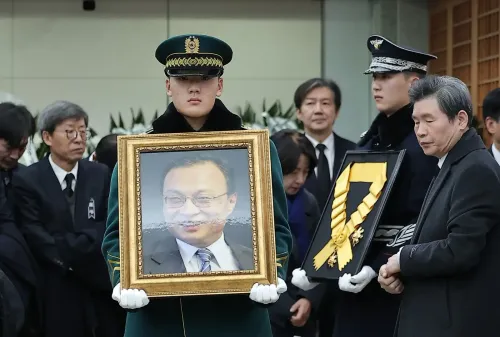
Seoul, Jan 27 (NationPress) On Tuesday, South Korea's politicians and government officials expressed their sorrow over the passing of former Prime Minister Lee Hae-chan following the return of his remains from Vietnam, where he tragically passed away earlier this week.
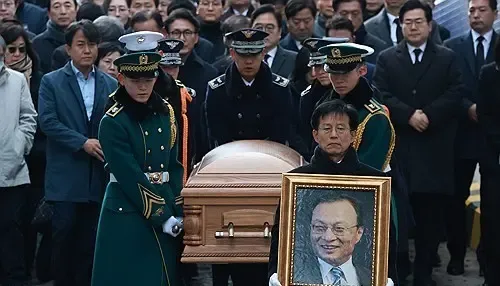
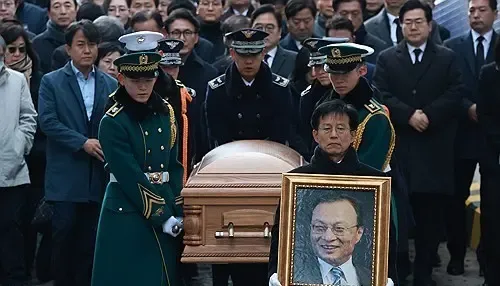
The casket, containing Lee's remains, arrived at a funeral home located at Seoul National University Hospital in central Seoul shortly after its repatriation via a Korean Air flight at Incheon International Airport, situated west of Seoul.
This flight not only transported Lee's body but also included grieving family members and a delegation of lawmakers from the ruling Democratic Party (DP) who had traveled to Vietnam after he fell ill.
Lee, who held the position of executive vice chairperson of the Peaceful Unification Advisory Council (PUAC), died in a hospital in Ho Chi Minh City on Sunday due to cardiac arrest.
The funeral service is scheduled to take place over five days until Saturday, with government honors, yet not as a state funeral, in accordance with the wishes of his family and his contributions to society.
Prime Minister Kim Min-seok, who leads Lee's funeral committee, along with National Assembly Speaker Woo Won-shik and other senior officials, were present at the funeral home to receive the casket, as reported by Yonhap news agency.
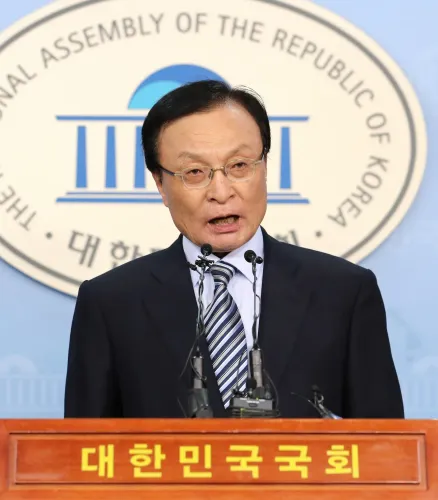
A former seven-term lawmaker, Lee served as prime minister during the Roh Moo-hyun administration from 2004 to 2006 and was appointed as executive vice chairperson of the PUAC in October of the previous year.
His political journey began through his involvement in the pro-democracy movement during South Korea's military regimes, emerging from student activism and opposition activities.
Lee was well-known for his close relationships with three former liberal presidents: Kim Dae-jung, Roh Moo-hyun, and Moon Jae-in, as well as with President Lee Jae Myung, earning him the title of 'kingmaker' for his role as a political ally and advisor.
A brief memorial service occurred at the airport before the casket's arrival at the funeral home, with honor guards responsible for transporting it to a hearse.
Point of View
It's essential to acknowledge the impact of Lee Hae-chan's contributions to South Korea. This loss resonates deeply within the political community and the nation at large. His legacy will continue to inspire future generations and shape the political landscape.
NationPress
1 Oct 2026
Frequently Asked Questions
What caused Lee Hae-chan's death?
Lee Hae-chan passed away from cardiac arrest while receiving treatment in a hospital in Ho Chi Minh City, Vietnam.
What position did Lee Hae-chan hold?
Lee Hae-chan served as the Prime Minister of South Korea from 2004 to 2006 and was the executive vice chairperson of the Peaceful Unification Advisory Council.
Where is Lee Hae-chan's funeral being held?
The funeral service is taking place at Seoul National University Hospital in Seoul, over five days with government honors.
What was Lee Hae-chan known for?
Lee Hae-chan was known for his close ties with several former liberal presidents and his significant role in the pro-democracy movement in South Korea.
Will there be a state funeral for Lee Hae-chan?
No, the family has requested that the funeral not be a state funeral, despite it being held with government honors.