How Did South Korea Honor Ex-PM Lee Hae-chan?
Synopsis
The nation mourns the loss of Lee Hae-chan, a significant figure in South Korea's democratic history, as dignitaries from various sectors gather to pay their respects. This article delves into the highlights of the funeral ceremony and Lee's impactful legacy.
Key Takeaways
Lee Hae-chan was a key figure in South Korea's democratic struggle.
His funeral saw attendance from high-ranking officials and dignitaries.
He endured imprisonment and torture for his beliefs.
Lee served as Prime Minister from 2004 to 2006.
His legacy will continue to influence South Korean politics.
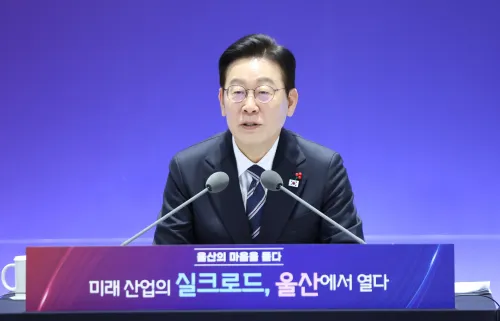
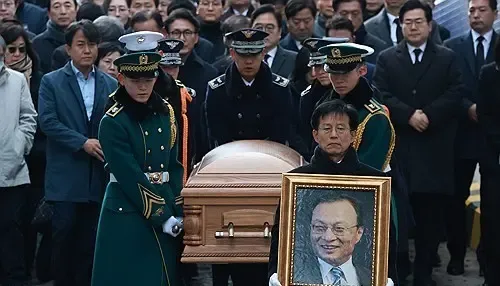
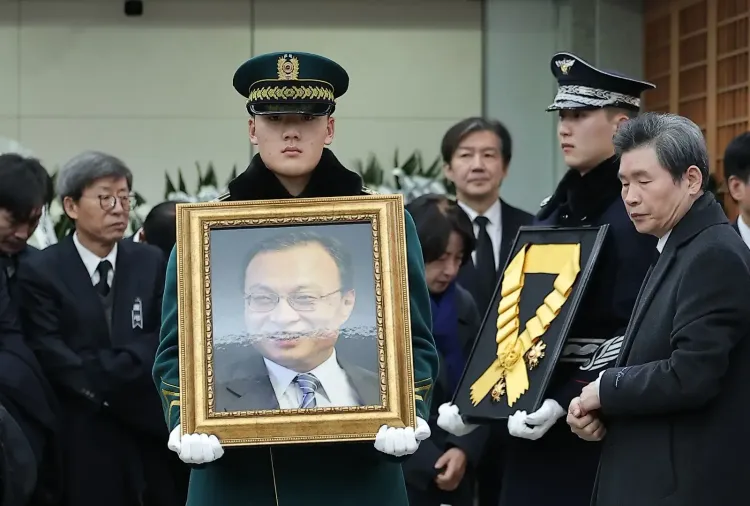
Seoul, Jan 31 (NationPress) A solemn farewell was extended to former Prime Minister of South Korea, Lee Hae-chan, during a funeral ceremony held on Saturday, attended by prominent figures including President Lee Jae-Myung.
The respected leader passed away at the age of 73 while on a business trip in Vietnam due to cardiac arrest. His remains were repatriated on Tuesday, initiating a five-day mourning period, which saw a significant outpouring of grief from the public as they paid their respects at a memorial set up at Seoul National University Hospital.
According to Yonhap news agency, the funeral service commenced at 9 a.m. within a conference hall located on the National Assembly grounds.
The front row was filled with dignitaries, including President Lee, First Lady Kim Hea-Kyung, National Assembly Speaker Woo Won-shik, and Prime Minister Kim Min-seok, alongside the bereaved family.
Prominent attendees also comprised of the ruling Democratic Party (DP) leader Jung Chung-rai, DP floor leader Han Byung-do, and Deputy Assembly Speaker Joo Ho-young, along with leaders from smaller parties such as the Rebuilding Korea Party and The Progressive Party.
In his speech as the head of the funeral committee, Cho Jung-sik, who serves as a special advisor to the president for political affairs, referred to Lee as "a remarkable figure in the history of democracy" and "a politician embodying an era."
Prime Minister Kim delivered a heartfelt eulogy, noting that both democracy and the nation owe a debt of gratitude to the late prime minister.
"He stood strong for democracy, enduring torture and imprisonment, thereby paving the way for future generations in politics by showcasing the strength of democratic ideals," he stated, visibly emotional as he described Lee as a 'role model' with whom he still had many questions.
Speaker Woo also honored Lee by reminiscing about their shared experience of incarceration in 1982, stemming from their involvement in pro-democracy protests against an authoritarian regime.
"The legacy of Lee Hae-chan is intertwined with the history of democracy in the Republic of Korea," he remarked.
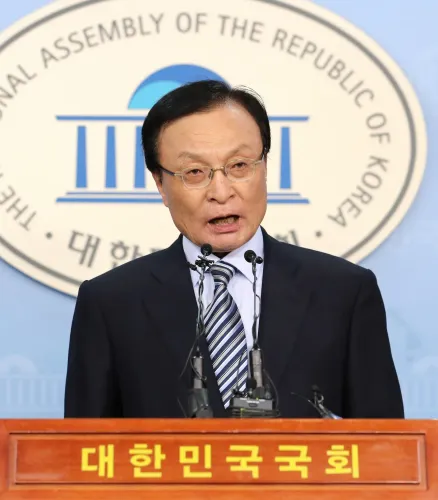
A pivotal figure in South Korea's democratic movement, Lee endured significant hardships, including torture and imprisonment. He served as a lawmaker for seven terms and provided counsel to several liberal presidents, including Kim Dae-jung, Roh Moo-hyun, Moon Jae-in, and Lee Jae-Myung.
From 2004 to 2006, he held the position of prime minister under Roh. At the time of his passing, he was the executive vice chairperson of the Peaceful Unification Advisory Council.
Post-funeral, Lee's remains will be cremated, with the ashes to be enshrined in a hall located in Sejong, a central city of South Korea.
Point of View
It is clear that the passing of Lee Hae-chan marks a significant moment in South Korea's political landscape. His contributions to democracy and governance will continue to resonate with future generations. The nation must honor his legacy by fostering the democratic values he championed.
NationPress
23 Sept 2026
Frequently Asked Questions
What were Lee Hae-chan's major contributions?
Lee Hae-chan was instrumental in South Korea's democratic movement, serving multiple terms as a lawmaker and advising several presidents on liberal policies.
Who attended Lee Hae-chan's funeral?
The funeral was attended by prominent figures such as President Lee Jae-Myung, First Lady Kim Hea-Kyung, and various leaders from the Democratic Party and other political factions.
What will happen to Lee Hae-chan's remains?
Lee's remains will be cremated, and his ashes will be placed in an enshrinement hall in Sejong City.