PRAHAAR: A Landmark Shift in India's Counter-Terrorism Strategy
Synopsis
Discover how PRAHAAR, India's first national counter-terrorism policy, redefines the nation's approach to combating terrorism with a firm commitment to a zero-tolerance stance. This pivotal strategy marks a significant transition in the fight against terror networks.
Key Takeaways
PRAHAAR signifies India's first comprehensive counter-terrorism policy.
The strategy reflects a zero-tolerance approach to terrorism.
It includes seven key pillars aimed at enhancing national security.
Recent anti-terror operations illustrate the effectiveness of this new strategy.
International cooperation is a key component of PRAHAAR.
New Delhi, Feb 25 (NationPress) The Ministry of Home Affairs (MHA) has introduced 'PRAHAAR'—India's inaugural national counter-terrorism policy and framework, emphasizing the nation's zero-tolerance stance against terrorism, whether originating internally or externally.
This comprehensive document establishes a robust structure for India's resolute stance against terrorism, detailing measures already implemented over the years and outlining future strategies.
For many years, the nation has endured numerous assaults from terrorism, fueled by foreign sponsorship and extremist groups, alongside their respective affiliates orchestrating violence within Indian borders. These groups have persistently devised, coordinated, and executed terror attacks in India, with global terror organizations like Al Qaeda and the Islamic State of Iraq and Syria (ISIS) attempting to instill fear through sleeper cells.
Previously, India's response to cross-border terrorism primarily involved compiling dossiers, issuing diplomatic protests, and appealing to the international community.
However, with the advent of PRAHAAR, the government's approach is being reshaped to confront terror proxies and their orchestrators directly, reaffirming India’s new zero-tolerance strategy aimed at dismantling terror networks and neutralizing sleeper cells supported by global entities.
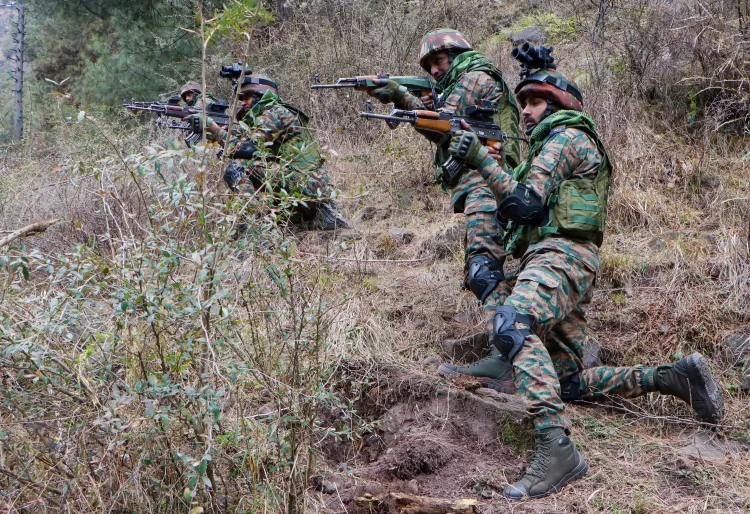
This strategic overhaul was evident in two recent anti-terror operations. In Kishtwar, Jammu and Kashmir, a senior Jaish-e-Mohammad (JeM) commander was neutralized, while in Tamil Nadu, an ISI-linked sleeper cell was dismantled. These operations signify a new, institutionalized counter-terrorism approach as detailed in PRAHAAR.
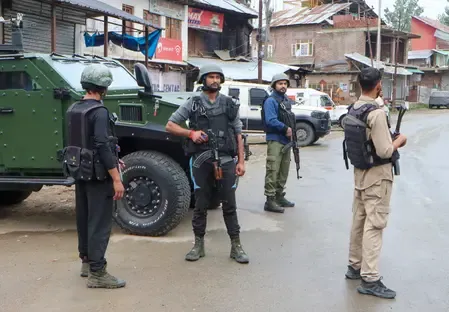
In Kishtwar, security forces executed a 36-hour operation, showcasing India's advanced military capabilities. A prominent JeM commander named Saifullah was eliminated alongside two foreign mercenaries.
The security forces' precise response in neutralizing these terrorists, leveraging intelligence and drone surveillance, marked a significant shift in anti-terror strategy. Real-time drone monitoring and specialized K9 units were deployed to flush out terrorists from their hideouts in challenging terrains.
This action demonstrated India’s unwavering resolve that terror proxies will no longer find refuge in the valley, and any aggression from across the border will incur severe consequences.
In Tiruppur, Tamil Nadu, eight ISIS operatives, mainly Bangladeshi nationals, were apprehended, revealing the perilous and nefarious plans of ISI's hybrid warfare.
The handler of this module, based in Bangladesh, aimed to infiltrate India's labor-intensive sectors by forging identity documents and orchestrating IED attacks in crowded areas.
The integration of the multi-agency center (AMC) has proven crucial in helping security forces identify and eliminate sleeper cells.
The eight-page policy, now available on the MHA portal, states that India faces threats from terrorism across all three domains: land, water, and air, and emphasizes the development of capabilities to safeguard critical sectors of the Indian economy, such as power, railways, aviation, ports, defense, space, and atomic energy, from state and non-state actors.
Furthermore, Indian border guarding forces and immigration authorities have been equipped with cutting-edge tools and technologies to secure the borders.
PRAHAAR represents India's first cohesive national counter-terrorism policy and signifies a strategic shift from reactive, fragmented responses to a more systematic and proactive strategy built on seven core pillars:
- Proactive prevention: Prioritizing intelligence gathering to enable pre-emptive threat neutralization.
- Proportionate response: Conventional military responses are now liberated from the limitations of potential escalation.
- Aggregating capacity: Standardizing anti-terror mechanisms across states to eliminate 'jurisdictional gaps' previously exploited by terror organizations.
- Rule of law: Providing multiple levels of legal recourse for accused individuals through a comprehensive justice system, with conviction rates now at an impressive 95%.
- Targeting the ecosystem: Taking aggressive action against financial backers and ‘over-ground workers’ (OGWs) who provide crucial support to terrorist activities.
- Aligning and shaping international efforts: Enhancing multilateral cooperation through mutual legal assistance treaties (MLATs) while advocating for the denial of safe havens and restricting global terror funding.
- Recovery and resilience: Promoting public-private partnerships to ensure swift recovery post-terror incidents.
Point of View
The implementation of PRAHAAR represents a crucial evolution in India's approach to counter-terrorism. It signifies a commitment to a more proactive and structured strategy, ensuring that the nation is better equipped to tackle internal and external threats effectively.
NationPress
1 Oct 2026
Frequently Asked Questions
What are the key pillars of PRAHAAR?
The seven pillars of PRAHAAR include proactive prevention, proportionate response, aggregating capacity, rule of law, targeting the ecosystem, aligning international efforts, and recovery and resilience.
How does PRAHAAR impact India's security?
PRAHAAR marks a strategic shift towards a more organized and proactive counter-terrorism approach, enhancing India's capability to preemptively neutralize threats.
What recent operations demonstrate the effectiveness of PRAHAAR?
Recent operations in Kishtwar and Tamil Nadu showcase the effectiveness of PRAHAAR, with the neutralization of key terrorists and dismantling of sleeper cells.
How does PRAHAAR address international cooperation in counter-terrorism?
PRAHAAR emphasizes strengthening multilateral cooperation through mutual legal assistance treaties and calls for global efforts to deny safe havens and restrict terror funding.