Is There a Need for a Uniform Anti-Terror Structure in States?
Synopsis
At a recent national conference in New Delhi, the urgent need for a standardized anti-terror framework across states was underscored, reflecting Prime Minister Modi's commitment to a zero-tolerance approach towards terrorism. Learn about the discussions around enhancing India's counter-terrorism capabilities and the pivotal actions proposed.
Key Takeaways
Need for a standardized anti-terror framework across states.
Emphasis on zero tolerance towards terrorism by the Central government.
Adoption of digital forensics in counter-terror investigations.
Importance of international cooperation in tackling cyber threats.
Regular training for security personnel to enhance preparedness.
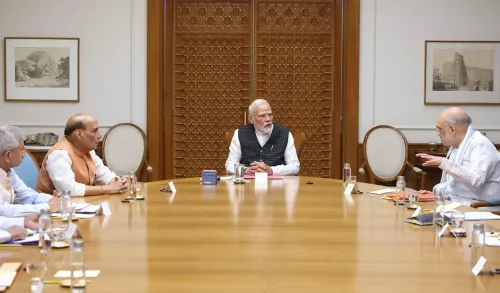
New Delhi, Dec 28 (NationPress) The necessity to bolster the nation’s anti-terror capabilities through a standardized anti-terror framework across states emerged as a significant conclusion from a national conference, which underscored Prime Minister Narendra Modi's commitment to a zero tolerance policy against terrorism, according to an NIA official on Sunday.
The 5th Anti-Terror Conference held by the National Investigation Agency (NIA), which wrapped up on Saturday, featured extensive discussions under the recently launched Track-2 format on vital matters such as digital device data, big data analytics, and exposing digital anonymity, as reported by the official.
The conference reaffirmed the Central government’s stance of zero tolerance towards terrorism in all its forms, along with a commitment to enhance the nation’s anti-terror framework.
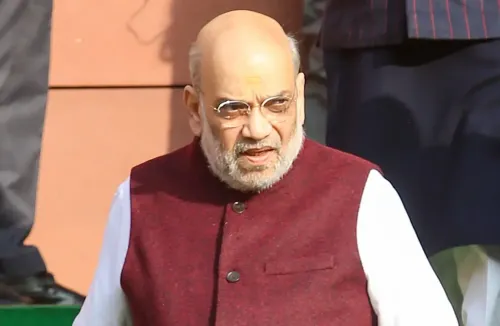
Inaugurated on Friday by Home Minister Shah, the two-day event saw him urging states to promptly establish a uniform Anti-Terror Squad (ATS) structure to bolster India’s counter-terrorism efforts.
He stressed the importance of a strong, consistent operational capacity across the country, stating that without it, intelligence inputs would not be effectively utilized and coordinated counter-actions would falter.
Home Minister Shah praised the operational successes achieved by various agencies and state police forces in recent terror incidents, specifically referencing the Pahalgam attack and the Delhi Red Fort blast.
Regarding the Pahalgam attack, he noted that the agencies had executed thorough investigations that made the nation proud.
He highlighted the tracking and neutralization of three terrorists involved, stating, “This is the first terrorist incident where we punished those who planned the act through Operation Sindoor and neutralized the terrorists through Operation Mahadev.”
He characterized these operations as “a decisive response from the Government of India, security forces, and the citizens of India against terrorist planners based in Pakistan.”
Addressing the rapidly changing technology and terrorism landscape, the Home Minister emphasized the necessity for ongoing evaluation and adjustment of counter-terror strategies.
He also pointed out the need to tackle international aspects such as cyber warfare, hybrid warfare, multi-layered security challenges, and the seamless flow of intelligence among agencies at both the Central and state levels.
Highlighting the need to enhance investigative and prosecutorial capabilities, HM Shah urged states to conduct regular training sessions for security and police personnel.
On this occasion, the Home Minister congratulated officers and personnel awarded service medals for exceptional performance and honored over 36,000 CAPFs and police personnel who made the ultimate sacrifice in the line of duty.
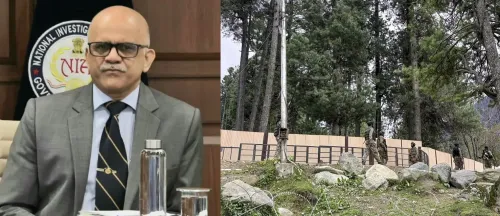
In his closing remarks on Saturday evening, Union Home Secretary Govind Mohan noted that institutionalizing the conference strengthens India's zero tolerance stance against terrorism, whether it be cross-border, narco-terrorism, or cyber-enabled threats.
He stressed the importance of increased vigilance against risks stemming from radicalization, recruitment, and the exploitation of vulnerable youth for violent purposes.
Mohan commended the NIA’s impressive conviction rate of over 90%, stating that the Centre aims to elevate conviction rates throughout all police forces in the country.
The conference concentrated on lessons learned from investigations, pre-emptive disruption of terror modules, and experiences from various security threats, including Left Wing Extremism (LWE) and hybrid threats to national security.
It served as a platform to evaluate emerging threats such as deepfakes and hybrid warfare, while emphasizing the significance of digital forensics and data analytics in counter-terrorism efforts.
Discussions also encompassed strategies to combat terror financing, maritime terrorism, illicit trafficking, and the evolving legal frameworks regarding counter-terrorism.
The inaugural session was attended by heads of state police forces, central police organizations, and central armed police forces, along with over 150 delegates from various state and UT police units and central agencies. Union Ministers of State Nityanand Rai and Bandi Sanjay Kumar were also present, as stated.
Point of View
This conference underscores a significant commitment to enhancing India's security framework, reflecting a proactive approach towards counter-terrorism. The focus on uniformity and collaboration among state forces is vital in addressing contemporary threats, ensuring that the nation stands united against the scourge of terrorism.
NationPress
6 Oct 2026
Frequently Asked Questions
What was the main outcome of the NIA conference?
The conference emphasized the need for a standardized anti-terror structure across states to strengthen India's counter-terrorism capabilities.
Who inaugurated the conference?
The conference was inaugurated by Home Minister Amit Shah.
What operations were highlighted during the conference?
Operations Sindoor and Mahadev were highlighted as decisive responses to terrorism in the Pahalgam attack.
What was the NIA's conviction rate mentioned?
The NIA's conviction rate is over 90%.
What topics were discussed at the conference?
Topics included digital forensics, terror financing, and the evolving challenges of hybrid warfare.