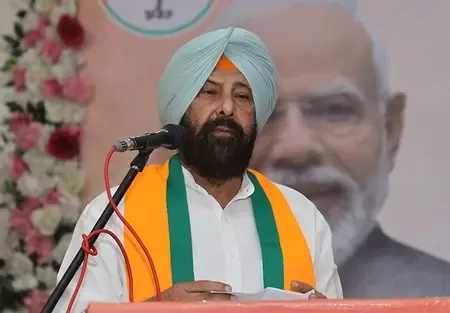
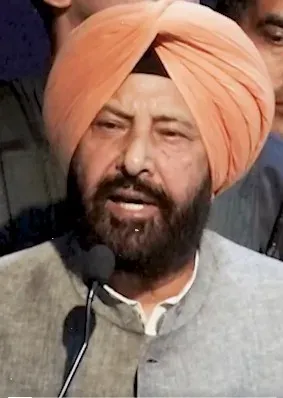
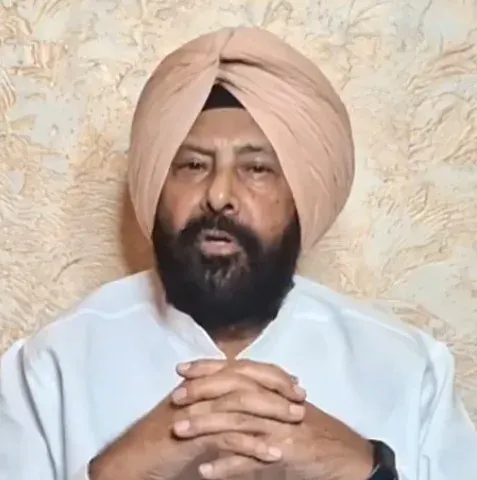
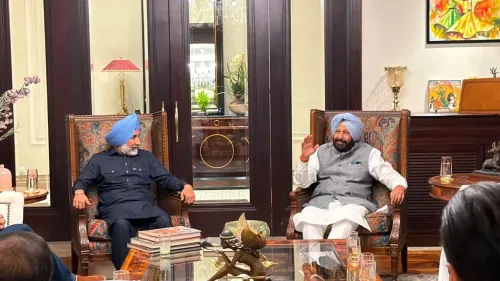
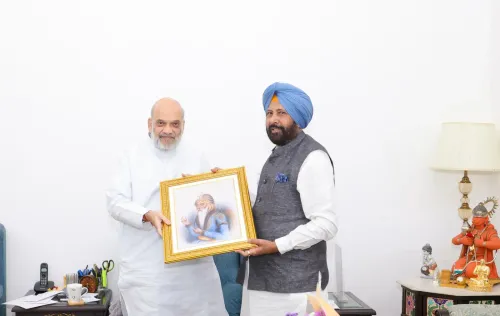
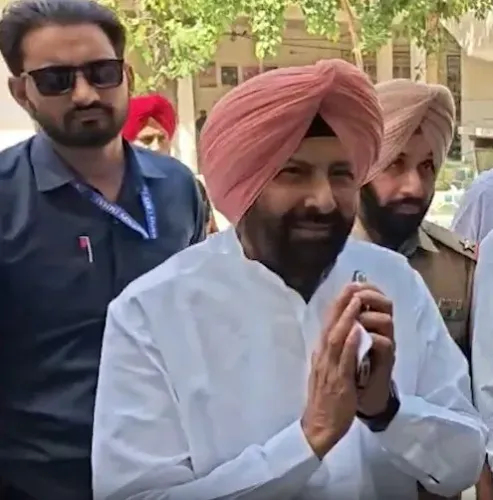
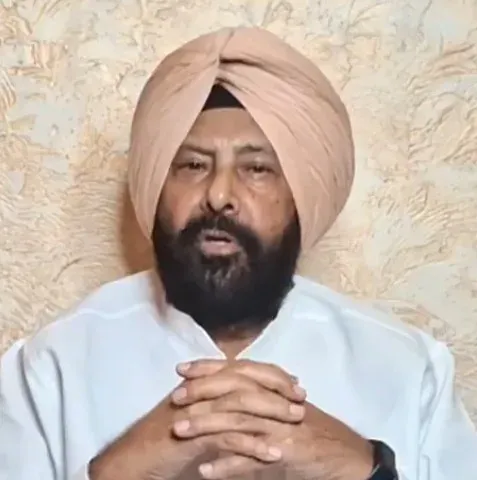
Punjab BJP chief Kewal Singh Dhillon writes to World Bank's Ajay Banga on rural crisis
Synopsis
Punjab BJP President Kewal Singh Dhillon has written directly to World Bank chief Ajay Banga, seizing on Banga's remarks about Punjab's rural economy to mount a pointed attack on the AAP government — alleging a governance vacuum on livelihoods, drug abuse, and agrarian transition. The letter also extends a personal invitation to Banga to engage with ground realities in the state.
Key Takeaways
Punjab BJP President Kewal Singh Dhillon wrote to World Bank Group President Ajay Banga on 23 June , engaging with his remarks on Punjab's rural economy.
Dhillon warned that one-time land-sale wealth cannot replace sustainable livelihoods for Punjab's rural youth.
He accused the AAP government of failing to provide alternative livelihoods, skill development, or financial support to communities moving away from agrarian systems.
Dhillon reiterated the BJP 's commitment to tackling drug abuse through law enforcement, de-addiction support, and community participation.
Dhillon invited Banga to engage directly with him to ground the World Bank's understanding in Punjab's lived realities.
Punjab Bharatiya Janata Party (BJP) President Kewal Singh Dhillon has written to World Bank Group President Ajay Banga, engaging with Banga's recent remarks on the state's rural economy and urging direct dialogue on Punjab's deepening agrarian challenges. The letter, dispatched from Chandigarh on 23 June, frames the World Bank chief's observations as an opening for substantive conversation rather than political point-scoring.
What Dhillon's Letter Said
Dhillon acknowledged that Banga's assessment had accurately captured ground realities that the BJP in Punjab had consistently flagged. He warned that one-time wealth generated from land sales could not serve as a substitute for sustainable livelihoods or long-term rural transformation — a concern he said demanded urgent attention from the state government.
The BJP leader stressed that rural families in Punjab must not be reduced to narrow stereotypes. Instead, he argued, their struggles must be understood within the context of deep economic and social transitions underway in agrarian society — transitions that require both political will and administrative action at the state level.
Punjab's Agrarian Legacy and Governance Failures
Dhillon invoked Punjab's historic role in securing India's food security — a contribution made, he noted, at significant personal, social, and environmental cost over generations. He argued that this legacy deserved recognition, empathy, and decisive policy action, rather than what he described as silence from the ruling Aam Aadmi Party (AAP) government.
'Punjab's families are not facing an individual crisis in isolation; they are navigating a larger economic transition. Many rural communities are moving away from traditional agrarian systems without adequate alternative livelihoods, skill development pathways, or financial support mechanisms. This is a failure of governance that the AAP government must own,' Dhillon said.
Drug Menace and Social Responsibility
Addressing the issue of drug abuse — a persistent concern in Punjab — Dhillon reiterated the BJP's commitment to eliminating the problem. He characterised it not merely as a political talking point but as a social responsibility requiring strong law enforcement, de-addiction infrastructure, and community participation. He alleged that all three remained absent under the current AAP administration.
Invitation to Banga and the Road Ahead
Dhillon formally invited Ajay Banga to engage directly with him so that the World Bank's understanding of Punjab's challenges and strengths is grounded in lived realities rather than aggregate data alone. Expressing confidence in the state's future, Dhillon said Punjab possessed the resilience, capability, and human capital to drive its own resurgence. 'Punjab will rise again, and Punjabis will remain at the centre of that resurgence,' he added.
This comes amid a broader political contest in Punjab, where the BJP has been seeking to sharpen its opposition narrative against the AAP government ahead of future electoral cycles. Banga's remarks — coming from the head of a multilateral institution — have provided the party an external validation point for arguments it has long advanced on agrarian distress and rural unemployment.
Point of View
Credible voice to validate a long-standing opposition narrative on Punjab's rural distress. What the letter does not address is the BJP's own record in Punjab during its previous tenures, when agrarian debt, stubble burning, and rural unemployment were equally unresolved. The drug crisis Dhillon cites has roots that predate AAP's tenure by decades. Selective accountability, directed only at the incumbent, weakens an otherwise legitimate policy argument about the need for structural rural reform in Punjab.
NationPress
22 Sept 2026
Frequently Asked Questions
Why did Punjab BJP chief Kewal Singh Dhillon write to World Bank President Ajay Banga?
Dhillon wrote to Banga to engage with the World Bank chief's recent remarks on Punjab's rural economy, using them as a basis to highlight what the BJP describes as governance failures by the AAP state government. The letter also invited Banga to visit Punjab and engage directly with its ground realities.
What did Ajay Banga say about Punjab's rural economy?
According to Dhillon's letter, Banga had made observations about Punjab's economic realities, including concerns about the economic vulnerability of the state's youth and the risks of relying on one-time land-sale wealth rather than sustainable livelihoods. The specific remarks by Banga have been referenced but not quoted verbatim in the letter.
What governance failures does the BJP allege against the AAP government in Punjab?
The BJP alleges that the AAP government has failed to provide rural communities with alternative livelihoods, skill development pathways, and financial support as they transition away from traditional agrarian systems. It also accuses the government of inadequate action on drug abuse, citing the absence of strong law enforcement, de-addiction support, and community participation programmes.
Who is Kewal Singh Dhillon?
Kewal Singh Dhillon is the President of the Punjab unit of the Bharatiya Janata Party (BJP). He has been a vocal critic of the AAP government led by Chief Minister Bhagwant Mann on issues including rural distress, drug abuse, and agrarian policy.
What is the significance of Punjab's agrarian history in this context?
Punjab has historically been India's breadbasket, playing a central role in the country's food security — particularly through the Green Revolution. Dhillon's letter argues that this contribution, made at significant personal, social, and environmental cost, entitles the state to greater national recognition and decisive policy support rather than what he characterised as governmental neglect.