Punjab BJP demands fuel tax cut to shield farmers from ₹3/litre burden
Synopsis
With global crude prices nearly doubling and the sowing season underway, Punjab BJP is pressing Chief Minister Bhagwant Mann to cut state fuel taxes by ₹3 per litre — mirroring the Centre's ₹10 per litre reduction — warning that inaction will hit farmers hardest when they can least afford it.
Key Takeaways
Punjab BJP demanded a ₹3 per litre state fuel tax reduction on 16 May to ease the burden on farmers and common people.
BJP General Secretary Anil Sarin urged Chief Minister Bhagwant Mann to follow the Centre's example of absorbing rising fuel costs.
The BJP-led Central government cut fuel taxes by ₹10 per litre on 27 March and did not raise prices for over four years from April 2022.
Global crude prices have reportedly surged from around $70 per barrel to nearly $120–130 per barrel due to geopolitical tensions.
India's fuel price increase of around 3% compares favourably with rises of 50% in the US, 60% in Pakistan, and 20% in Europe, according to BJP.
The AAP government in Punjab has not yet publicly responded to the demand.
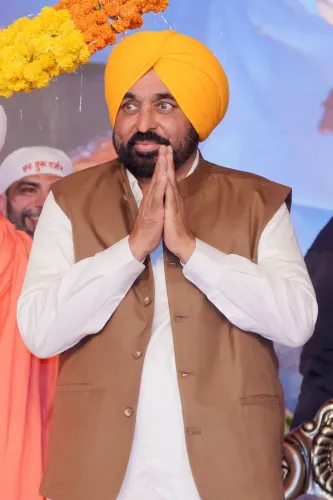
The Bharatiya Janata Party (BJP)'s Punjab unit on Saturday, 16 May demanded that Chief Minister Bhagwant Mann reduce state taxes on petrol and diesel by ₹3 per litre, arguing that the Aam Aadmi Party (AAP) government's inaction is imposing additional financial hardship on farmers and common people during a critical sowing season.
What the BJP Demanded
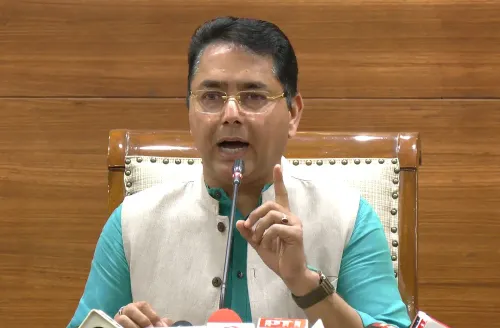
BJP General Secretary Anil Sarin, speaking at a media address alongside party state media head Vineet Joshi in Chandigarh, urged the Punjab government to follow the Centre's lead. He pointed out that the BJP-led Central government had reduced fuel taxes by ₹10 per litre on 27 March, absorbing the burden of rising global crude prices without passing the cost on to consumers.
Sarin argued that Chief Minister Mann should similarly absorb the ₹3 per litre increase attributed to state-level tax hikes, providing immediate relief to Punjab's farming community ahead of the sowing season.
The Central Government's Record, According to BJP
Sarin said that despite the Russia-Ukraine war and other international disruptions, the BJP-led Centre did not raise petrol or diesel prices for over four years from April 2022. He contrasted this with what he described as the AAP government in Punjab raising state taxes on fuel after March 2022, imposing an additional burden of nearly ₹3 per litre on consumers.
Global Crude Surge and India's Insulation
Sarin noted that due to prevailing geopolitical tensions, global crude oil prices have risen from around $70 per barrel to nearly $120–130 per barrel. He cited comparative fuel price increases to underscore India's relative insulation: fuel prices rose by nearly 50% in the United States, 20% in Europe, 60% in Pakistan, and 16% in Bangladesh, while India saw an increase of only around 3%, according to the BJP leader.
Impact on Punjab Farmers
The BJP's demand comes at a particularly sensitive time for Punjab's agrarian economy. The sowing season places heavy demand on diesel for irrigation pumps and farm machinery, making fuel costs a direct input cost for farmers. Critics of the AAP government argue that any delay in passing on tax relief risks compounding rural distress at a time when input costs are already elevated.
What Happens Next
The AAP government in Punjab has not yet responded publicly to the BJP's demand. The ball is now in Chief Minister Mann's court — whether he absorbs the state-level fuel tax burden will be closely watched by farming communities across Punjab ahead of the peak sowing period.
Point of View
Farmer-facing grievance that is hard to dismiss. But the framing deserves scrutiny: the party attributes India's relatively modest fuel price increase entirely to Central policy, without acknowledging that global crude has not uniformly translated into retail prices across different state tax regimes. The AAP government, for its part, faces a genuine fiscal bind — Punjab's finances are strained, and cutting state fuel taxes reduces a key revenue stream. The real question is whether either side will move beyond political posturing to offer farmers a durable input-cost solution, or whether this remains a pre-election pressure campaign dressed up as agrarian relief.
NationPress
23 Sept 2026
Frequently Asked Questions
What has Punjab BJP demanded regarding fuel taxes?
Punjab BJP has demanded that Chief Minister Bhagwant Mann reduce state taxes on petrol and diesel by ₹3 per litre to provide relief to farmers and common people during the sowing season. The party cited the Central government's ₹10 per litre tax cut on 27 March as a model to follow.
Why is the timing of this demand significant?
The demand comes during Punjab's sowing season, when farmers rely heavily on diesel for irrigation and farm machinery. Elevated fuel costs directly increase agricultural input costs, making the issue particularly sensitive for Punjab's farming-dependent economy.
How much did the Central government reduce fuel taxes?
According to BJP, the Central government reduced fuel taxes by ₹10 per litre on 27 March, and had not raised petrol or diesel prices for over four years from April 2022 despite global crude price pressures.
How have global fuel prices changed compared to India?
According to BJP leader Anil Sarin, global crude prices have risen from around $70 per barrel to nearly $120–130 per barrel. Fuel prices reportedly increased by around 50% in the US, 60% in Pakistan, 20% in Europe, and 16% in Bangladesh, while India saw an increase of only around 3%.
Has the AAP government in Punjab responded to the BJP's demand?
As of 16 May, the AAP government in Punjab had not publicly responded to the BJP's demand for a state fuel tax reduction. Chief Minister Bhagwant Mann's administration is yet to indicate whether it will absorb the ₹3 per litre burden.