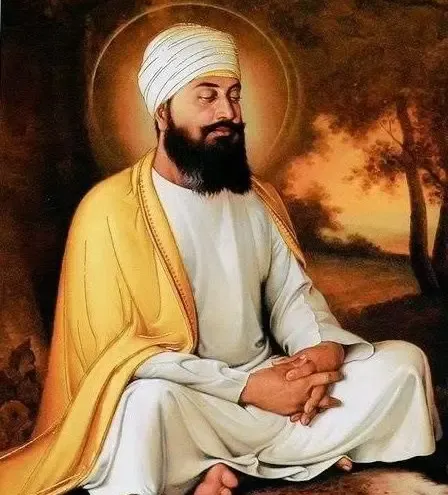
How Did Punjab’s Tableau Pay Tribute to Guru Tegh Bahadur?
Synopsis
Experience a heartfelt homage to the ninth Sikh Guru, Guru Tegh Bahadur, through Punjab's stunning tableau at the Republic Day Parade. This artistic display encapsulated his legacy of courage, religious freedom, and compassion, making it a must-see tribute for everyone interested in history and spirituality.
Key Takeaways
Punjab's tableau at the Republic Day Parade honors Guru Tegh Bahadur's legacy.
The display symbolizes fearlessness and religious freedom .
It highlights the importance of compassion in Sikh teachings.
Features a replica of Gurudwara Sis Ganj Sahib .
Reminds us of the need for justice and tolerance in society.
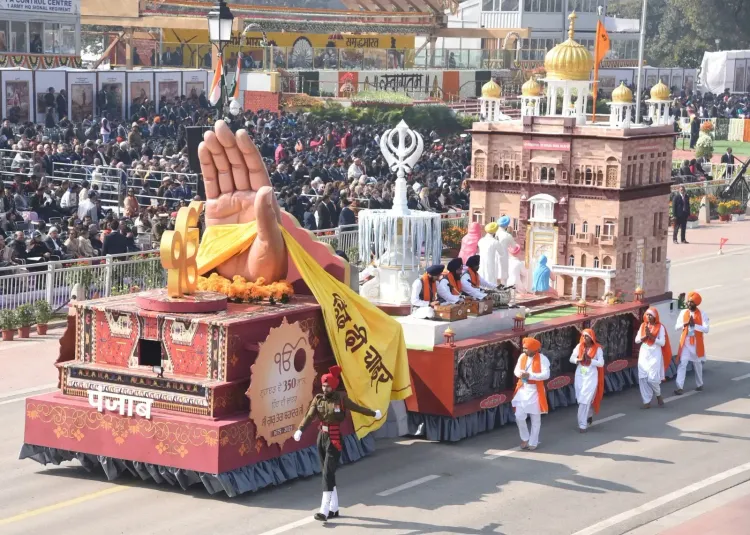
New Delhi, Jan 27 (NationPress) The tableau from Punjab at the Republic Day Parade on Kartavya Path served as a profound homage to the ninth Sikh Guru, Guru Tegh Bahadur. This artistic display seamlessly intertwined spirituality, historical significance, and artistic creativity, forming a compelling visual story. The presentation not only marked the 350th anniversary of the Guru’s martyrdom but also emphasized his enduring message of bravery, religious liberty, and compassion for all.
At the heart of the tableau was a sculpted hand radiating a divine light, symbolizing fearlessness, mercy, and the Guru’s steadfast resolve to uphold human dignity. Above this emblematic figure floated the sacred phrase “Ek Onkar” (God is One), showcased in a rotating format to illustrate the timeless and universal nature of Sikh teachings.
As reported by Khalsa Vox, a flowing banner adorned with the words “Hind Di Chadar” -- a title given to Guru Tegh Bahadur for his selfless advocacy for the oppressed -- gracefully draped across the central structure. This element highlighted his significant role as a champion of religious freedom and a protector of those persecuted for their faith.
The rear part of the tableau recreated a serene spiritual environment, where Raagi Singhs were depicted performing Shabad Kirtan, infusing the atmosphere with devotional harmony. The backdrop featured the sacred Khanda Sahib monument, enhancing the sanctity of the display. This scene also reflected the historic square adjacent to Gurudwara Sis Ganj Sahib in Delhi, where daily devotional singing continues in honor of the Guru’s supreme sacrifice.
A notable replica of Gurudwara Sis Ganj Sahib marked the location where Guru Tegh Bahadur attained martyrdom. The side panels paid tribute to his loyal companions -- Bhai Mati Dass, Bhai Sati Dass, and Bhai Dyala -- whose unwavering faith and courage in the face of death exemplify devotion and moral fortitude.
Through this evocative tableau, Punjab illuminated a spiritual legacy that transcends both religious and regional lines. The exhibition served as a reminder to viewers that Guru Tegh Bahadur’s principles of justice, tolerance, and freedom of belief continue to motivate humanity, inspiring future generations to advocate for truth, compassion, and the rights of others.
Point of View
This tableau is a significant representation of Punjab's rich cultural heritage and the enduring legacy of Guru Tegh Bahadur. It serves as a reminder of the values of justice and religious freedom that resonate deeply within our society.
NationPress
23 Sept 2026
Frequently Asked Questions
What is the significance of Guru Tegh Bahadur?
Guru Tegh Bahadur is revered as the ninth Sikh Guru, known for his unwavering commitment to protecting religious freedom and standing against oppression.
What does 'Hind Di Chadar' mean?
'Hind Di Chadar' translates to 'the shield of India,' a title given to Guru Tegh Bahadur for his selfless defense of marginalized communities.
What elements were featured in Punjab's tableau?
The tableau featured symbolic representations of Guru Tegh Bahadur’s life, including a divine hand, the phrase 'Ek Onkar', and depictions of devotional singing.
How does the tableau reflect Sikh philosophy?
The tableau emphasizes key Sikh teachings such as compassion, justice, and the importance of standing up for one's beliefs.
Where is Gurudwara Sis Ganj Sahib located?
Gurudwara Sis Ganj Sahib is located in Delhi and marks the site of Guru Tegh Bahadur's martyrdom.