Is Putin’s Visit to Delhi a New Era Amidst the Ukraine Conflict?
Synopsis
Vladimir Putin’s visit to India is deemed a significant milestone amidst ongoing tensions with Ukraine, as former diplomat Deepak Vohra elaborates on the enduring ties between Russia and India. This pivotal meeting highlights the importance of mutual support in the face of global challenges.
Key Takeaways
Putin's visit signifies a new chapter in India-Russia relations amidst the Ukraine conflict.
Defense ties are crucial , but the partnership extends to various sectors.
Mutual respect and trust have been the foundation of this enduring relationship.
India's strategy emphasizes self-reliance in defense manufacturing.
Global perspectives on India's foreign policy are evolving amidst geopolitical shifts.
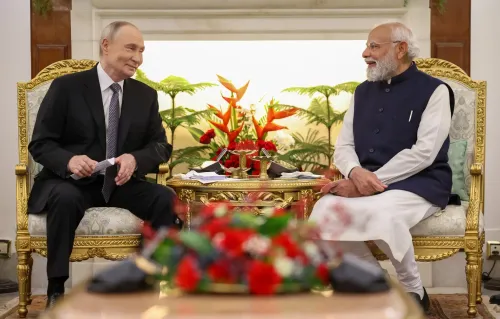
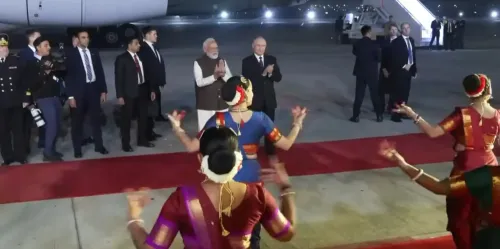
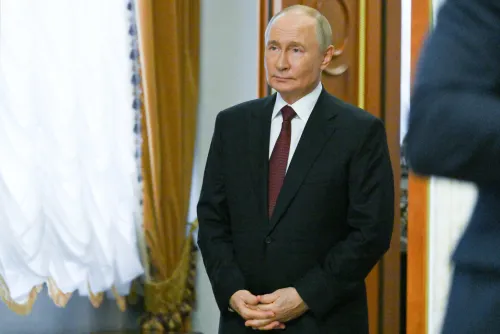
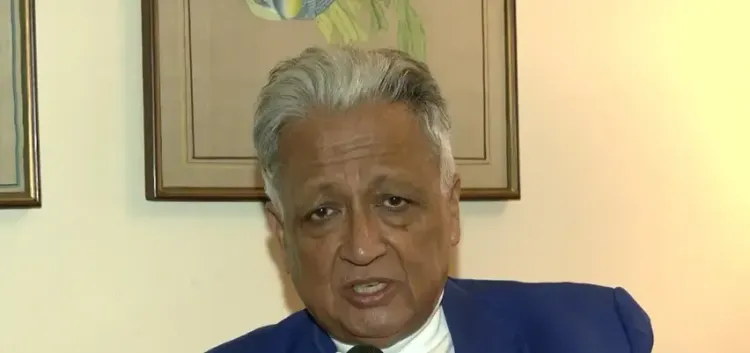
New Delhi, Dec 4 (NationPress) As Russian President Vladimir Putin embarks on a two-day journey to India, former Indian Ambassador to Poland, Deepak Vohra, remarked on Thursday that this visit carries immense significance, particularly as Russia remains embroiled in its ongoing conflict with Ukraine.
He noted that President Putin's presence in India conveys a strong message that Russia is not diplomatically isolated and that India continues to be a vital ally.
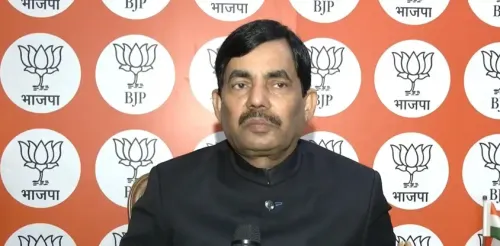
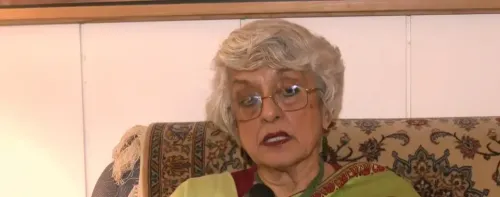
Speaking to IANS, Vohra stated, “We often refer to every visit as a new chapter — it’s a recurring theme with every leader's arrival. However, this visit, amidst Russia’s challenges in Ukraine, truly signifies a transformative chapter. The rhetoric from both sides has been intense — Ukraine asserts, ‘We will take action,’ and Russia counters, ‘Attempt it, and I will obliterate you.’ When a leader travels abroad during such tumultuous times, it reflects two things: first, a trust in his nation’s systems, and second, a desire to show the world that he is not isolated. China, Iran, and North Korea are not his only allies; he aims to showcase that the world’s largest democracy, the third-largest economy, a formidable military power, and a nation respected for its diplomatic prowess stands with him.
Vohra emphasized that the partnership between India and Russia goes beyond mere headlines or fleeting political narratives.
“This is likely his 17th or 18th interaction with Prime Minister Narendra Modi. What does this signify? People may label it as a historic moment or a game changer. Yet, in five days, it will be forgotten, and another leader’s visit will take the spotlight. The truth is, our friendship spans decades. People often claim India became independent — that’s misleading. India was partitioned. From then until now, neither the Soviet Union nor Russia has ever posed a threat to India’s core interests, nor have we acted against theirs. This trust is the cornerstone of our relationship.”
He went on to highlight that while defense ties are crucial, the collaboration is much broader. “While there’s a lot of talk about defense — Sukhoi-57, S-400 — defense is merely one aspect. Our cooperation spans energy — not just oil but also nuclear energy, a pivotal element of our bilateral relations. Furthermore, we engage in medicine, space exploration, agriculture, education, and cultural exchanges.”
Recalling a personal anecdote, Vohra shared, “Years ago, while stationed in Paris, I attended a dinner where music played in the background. Suddenly, I heard ‘Mera Joota Hai Japani.’ The Soviet Union had a deep affection for Raj Kapoor and Mithun Chakraborty. That emotional bond was significant.”
He contrasted the technological approaches of Russia and the United States. “I once inquired from my father about the differences between Americans and Soviets. He said Americans were courteous, saying, ‘Press this button, it works; press that, it breaks — call us, we’ll assist.’ But Soviets were like teachers — they said, ‘Join us; we will guide you.’ They never regarded us as inferiors. Even now, our so-called allies in the U.S. withhold complete technology — not even source codes.”
He humorously remarked, “Our neighbor — I refer to it as Jihadistan, you call it Pakistan — has ships that have aged and require repairs. The Americans repaired them, charged money, but never shared the know-how. That’s the distinction.”
Vohra remarked that India’s initiative for local defense production aligns with Russia’s collaborative model. “Sukhoi aircraft and S-400 systems will soon be manufactured in India — that’s self-reliant India. Critics who argue we merely ‘purchase’ from Russia will have no basis for their claims.”
On India’s ongoing acquisition of discounted Russian crude despite Western disapproval, he asserted, “Certain nations urged us to halt Russian oil purchases. Why should we comply? Are they our guardians? We prioritize India’s best interests. The global landscape has shifted. Those who once acted as sovereigns are now equals.”
Addressing the international scrutiny surrounding the visit, Vohra noted that many nations are observing closely, some with unease. “Europe has seen a decline in economic and geopolitical power, yet their arrogance persists. Recently, ambassadors from Britain, France, and Germany published an article in India labeling Putin a dictator and questioning India’s decision to host him. Who are they to meddle in India’s affairs? We never interfere in their domestic issues.”
He remarked that nations like Japan and Australia, which appreciate India’s strategic significance, are observing cautiously, while Russia’s adversaries are concerned that Putin seems more empowered than isolated.
Vohra also criticized U.S. President Donald Trump’s tariff policies. “Trump imposed tariffs of 25% and 50% on Indian goods, leading to fears of economic downturn. But look at the figures — India’s economy is thriving. My message to Trump is: if you think tariffs weaken us, raise them to 500% — then witness how rapidly we grow. Trump should cease pretending to grasp economics.”
He highlighted that Russia has never imposed sanctions on India, unlike the U.S. and Europe. “The more they attempt to pressure us, the more we diversify our partnerships. This is diplomacy in its essence.”
Quoting Chanakya, he stated that geopolitics is dictated by strategic interests, not emotions. “Chanakya said, ‘The enemy of my enemy is my friend,’ and ‘The enemy of my friend is my enemy.’ The Western nations must recognize this: if Russia is your adversary, it does not automatically classify Russia as India’s enemy.”
He concluded by affirming that India’s relationship with Russia is deeply embedded and resilient. “Russia has stood by India during its most challenging times and continues to treat us with dignity. That is why the ties between India and Russia remain robust — not due to fleeting convenience, but because they are founded on trust, history, and shared strategic interests.
Point of View
It is crucial to recognize the lasting implications of diplomatic visits such as Putin's to India. These meetings are not merely ceremonial; they are rooted in a history of cooperation and mutual respect. The world is watching closely, and it is imperative for India to navigate these waters carefully, balancing its strategic interests while upholding its sovereignty.
NationPress
29 Sept 2026
Frequently Asked Questions
What is the significance of Putin's visit to India?
Putin's visit is significant as it highlights the enduring partnership between Russia and India amid global tensions, particularly regarding the Ukraine conflict.
How does the India-Russia relationship extend beyond defense?
The relationship encompasses various sectors, including energy, medicine, space exploration, agriculture, education, and cultural exchanges.
What message does Putin's visit send to the world?
It conveys that Russia is not diplomatically isolated and underscores India's role as a crucial partner in global affairs.
How does India respond to Western pressure regarding Russian imports?
India prioritizes its national interests and continues to engage with Russia despite Western objections.
What historical context supports the India-Russia relationship?
The relationship is built on decades of trust, with Russia never threatening India's core interests, making it a stable partnership.