Has Raipur Introduced the Police Commissionerate System with Sanjeev Shukla as Its First Commissioner?
Synopsis
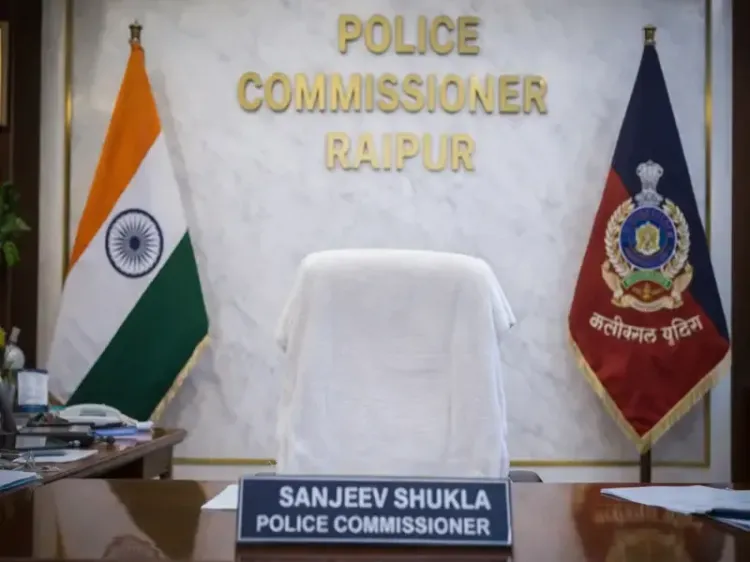
The Chhattisgarh government has initiated the police commissionerate system in Raipur, appointing Sanjeev Shukla as its first commissioner. This reform aims to modernize urban policing and enhance law enforcement standards in the state's capital, responding to the city's rapid growth and increasing urban challenges.
Key Takeaways
Raipur adopts a police commissionerate system for better urban policing.
Sanjeev Shukla appointed as the first Police Commissioner.
System aims to enhance law enforcement and community safety.
Reforms include significant police transfers to support the new structure.
Community welcomes the initiative for improved policing.
New Delhi, Jan 22 (NationPress) The government of Chhattisgarh has officially launched the police commissionerate system in Raipur, the capital of the state, representing a pivotal move towards enhancing urban policing and law enforcement in this rapidly expanding city.
This initiative aligns Raipur with contemporary metropolitan policing frameworks that have been adopted in various other cities across India.
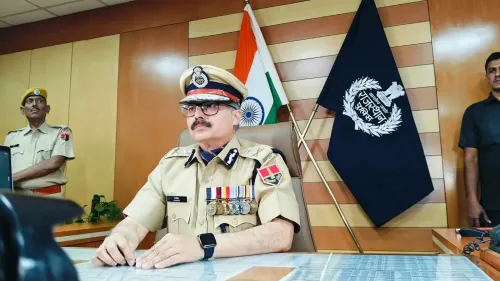
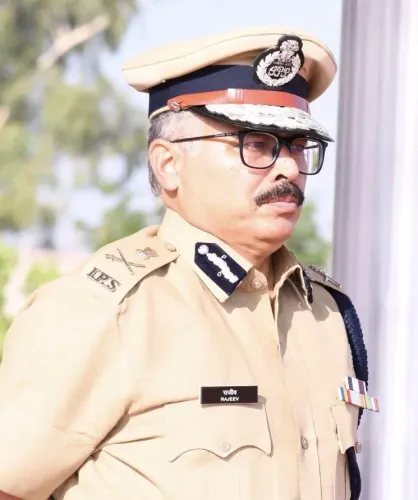
Senior IPS officer Sanjeev Shukla has been designated as the inaugural Police Commissioner of Raipur.
Prior to this appointment, he held the position of Inspector General of Police for the Bilaspur Range.
Given his extensive experience in managing law enforcement, crime investigations, and oversight duties throughout the state, Shukla's leadership is anticipated to steer the commissionerate effectively.
The official order released on Thursday also initiated numerous transfers to reorganize the police force in support of the new structure.
Ramgopal Garg, former Inspector General of Police for the Durg Range, now assumes the role of Inspector General of Police for Bilaspur Range.
Abhishek Shandilya transitions from the Rajnandgaon Range to take up the Inspector General of Police position for the Durg Range.
Balaji Rao Somawar shifts from his role as Inspector General of Police for Law and Order at Police Headquarters in Raipur to become Inspector General of Police for the Rajnandgaon Range.
Amit Tukaram Kamble, previously Deputy Inspector General of Police in Kanker, has been appointed as Additional Commissioner of Police for Raipur City.
Lal Umed Singh transfers from Senior Superintendent of Police in Raipur to Senior Superintendent of Police in Jashpur.
Shashi Mohan Singh moves from Senior Superintendent of Police in Jashpur to the equivalent position in Raigarh.
Divyang Patel transitions from Superintendent of Police in Raigarh to Superintendent of Police for Railways in Raipur.
Umesh Prasad Gupta, the former Commandant of the Fourteenth Battalion in Balod, is now the Deputy Commissioner of Police for the Central zone in Raipur City.
Sandeep Patel shifts from Commandant of the Sixteenth Battalion in Narayanpur to Deputy Commissioner of Police for the West zone in Raipur City, while Mayank Gurjar moves from Commandant of the Fifteenth Battalion in Dantewada to Deputy Commissioner of Police for the North zone in Raipur City.
Vikas Kumar, who previously served as Superintendent of Police for the State Intelligence and Investigation Bureau at Police Headquarters in Raipur, is now the Deputy Commissioner of Police for Traffic and Protocol in Raipur City.
Rajnala Smriti transfers from Superintendent of Police for the Special Task Force in Bastar to Deputy Commissioner of Police for Crime and Cyber in Raipur City.
Shweta Srivastava Sinha moves from Superintendent of Police for Railways in Raipur to Superintendent of Police for Raipur Rural.
Ishu Agrawal, who served as City Superintendent of Police at Azad Chowk in Raipur, is now the Assistant Commissioner of Police for Azad Chowk in Raipur City.
This commissionerate system empowers the Police Commissioner with greater autonomy and direct responsibility for sustaining law and order, preventing crime, and managing traffic within the urban locales of the capital, which have experienced considerable population growth and urbanization.
The reform is designed to expedite decision-making, enhance responses to city-specific crimes, and bolster coordination among police units.
Following extensive discussions and cabinet approvals, this initiative aims to adapt commissionerate-style policing—once primarily reserved for larger metropolitan areas—to fulfill the requirements of state capitals like Raipur.
The adjustments are part of the ongoing efforts by the Vishnu Deo Sai-led BJP government to modernize policing, enhance public safety, and promote efficient governance in rapidly urbanizing regions.
This development has been positively received by civic organizations and local residents alike, who view it as a step towards more responsive and accessible policing capable of tackling significant events and everyday urban challenges.
Point of View
The introduction of the police commissionerate system in Raipur reflects a broader trend in India towards enhancing urban policing. This reform is expected to improve law enforcement efficiency and responsiveness in the face of urban challenges. It is a commendable step by the Chhattisgarh government to adapt policing to modern demands, ensuring safety and security for its citizens.
NationPress
7 Oct 2026
Frequently Asked Questions
What is the police commissionerate system?
The police commissionerate system is a modern policing framework that grants police commissioners enhanced autonomy and direct responsibility for law enforcement within urban areas.
Who is Sanjeev Shukla?
Sanjeev Shukla is a senior IPS officer appointed as the first Police Commissioner of Raipur, with previous experience as Inspector General of Police for the Bilaspur Range.
What are the expected benefits of implementing this system in Raipur?
The implementation of the commissionerate system is expected to improve decision-making, enhance responses to urban crime, and strengthen coordination among police units.
How does this reform align with policing trends in India?
This reform aligns with contemporary urban policing trends in India, where several metropolitan areas have adopted similar systems to better manage law enforcement in growing cities.
What is the reaction from the community regarding this change?
The change has been positively received by civic organizations and local residents, who see it as progress towards more responsive and effective policing.