Rajasthan Civil Code 2026: CM Bhajanlal Sharma invokes Article 44 at Independence Day address
Synopsis
Rajasthan CM Bhajanlal Sharma used the 80th Independence Day stage in Bikaner to announce the Rajasthan Civil Code-2026, invoking Article 44 of the Constitution — a move that places Rajasthan among the first states to formally pursue state-level UCC legislation. Paired with a ₹91,000 crore water project and a pivot to power surplus, the speech was as much a governance report card as a political statement.
Key Takeaways
Rajasthan Civil Code-2026 to be introduced under Article 44 of the Constitution, providing a uniform legal framework for all state citizens.
Ram Jal Setu Link Project worth approximately ₹91,000 crore underway; work orders of ₹26,000 crore already issued, covering 17 districts .
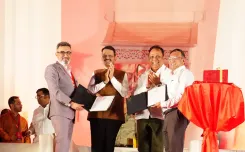
A ₹34,000 crore MoA signed to bring Yamuna water to Rajasthan, benefiting approximately 75 lakh people in the Shekhawati region .
HPCL Rajasthan Refinery Project at Pachpadra valued at ₹79,459 crore ; Mahi-Banswara Nuclear Power Project also cited as a growth anchor.
Rajasthan now ranks first nationally in solar power capacity and second in renewable energy capacity , and tops PM-KUSUM Components A and C .
CM Sharma reiterated the Developed Rajasthan by 2047 vision, underpinned by security, water, energy, and economic development.
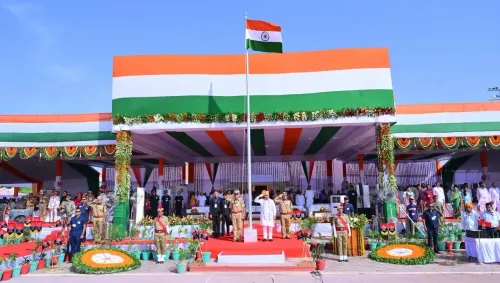
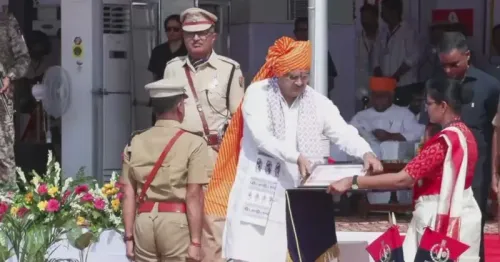
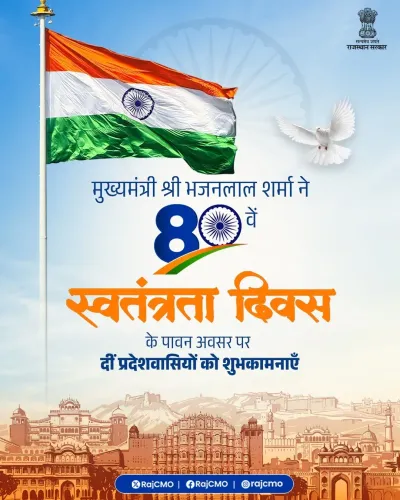
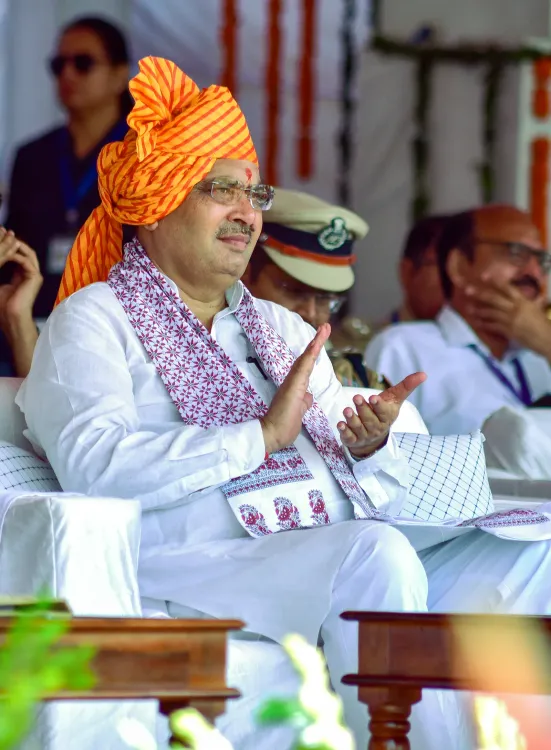
Rajasthan Chief Minister Bhajanlal Sharma on 15 August 2025 announced that his government is actively working to introduce the Rajasthan Civil Code-2026, framing the proposed legislation as a fulfilment of the constitutional mandate under Article 44, which directs states to work towards a Uniform Civil Code for all citizens. The announcement came during the 80th Independence Day state-level ceremony at Karni Singh Stadium in Bikaner, where Sharma hoisted the National Flag.
What the Rajasthan Civil Code Proposes
Sharma said the proposed code would establish a uniform legal framework applicable to all citizens of Rajasthan, regardless of religion or community. The move positions Rajasthan as one of the few states to pursue a state-level civil code, following Uttarakhand's earlier attempt at similar legislation. The Chief Minister did not specify a tabling date in the state legislature but indicated that the drafting process is underway in alignment with constitutional provisions.
Security Laws and Zero-Tolerance Policy
Sharma also highlighted two pieces of legislation his government has enacted or invoked on the security front. The Rajasthan Disturbed Areas Act, he said, is designed to prevent forced migration and coerced property transactions in communally sensitive zones, ensuring residents are not displaced from their homes or ancestral land. Separately, the Prohibition of Unlawful Religious Conversion Act targets conversions carried out through inducement or fraud. The Chief Minister said the government's zero-tolerance stance on crime and corruption has contributed to a measurable decline in criminal incidents across the state.
Infrastructure and Economic Growth Drivers
On the development front, Sharma pointed to two flagship projects as anchors of Rajasthan's economic future. The HPCL Rajasthan Refinery Project at Pachpadra, valued at ₹79,459 crore, and the Mahi-Banswara Nuclear Power Project were cited as transformative investments. He credited the 'double-engine' government — a reference to aligned BJP administrations at the Centre and in the state — for accelerating these initiatives. Sharma also noted that India's growing global stature under Prime Minister Narendra Modi, particularly its digital public infrastructure and UPI platform, is creating a favourable environment for state-level growth ambitions.
Water Security: Two Major Projects
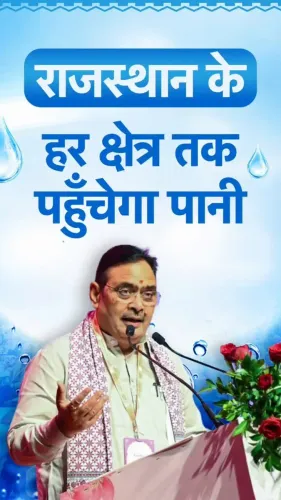
Describing water as the foundation of Rajasthan's life, economy, and future, Sharma said water security has been made a government priority. The Ram Jal Setu Link Project, estimated at approximately ₹91,000 crore, is being implemented at pace, with work orders worth around ₹26,000 crore already issued. The project is expected to deliver drinking water and irrigation to people across 17 districts. Additionally, a Memorandum of Agreement worth approximately ₹34,000 crore has been signed to channel Yamuna river water into Rajasthan, which would provide long-term drinking water security to an estimated 75 lakh people in the Shekhawati region.
Energy: From Power Buyer to Power Supplier
Sharma said Rajasthan has undergone a structural shift in its energy profile, transitioning from a power-purchasing state to a power-supplying state. According to the Chief Minister, Rajasthan now ranks first nationally in solar power capacity and second in renewable energy capacity overall. The state also tops the country in PM-KUSUM Components A and C, a scheme supporting solar pumps and grid-connected solar plants for farmers. The Independence Day event in Bikaner was accompanied by cultural performances by folk artists and schoolchildren from across Rajasthan and other states, reflecting India's cultural diversity.
Sharma concluded by reiterating his government's commitment to the twin goals of a Developed Rajasthan and a Developed India by 2047, with security, water availability, energy infrastructure, and economic growth as the four pillars of that vision.
Point of View
No draft text, no legislative timeline was offered. Invoking Article 44 is constitutionally sound, but state-level civil codes occupy contested legal territory, and Uttarakhand's experience shows that enactment and enforcement are two very different milestones. The speech's broader development narrative — solar leadership, water mega-projects, nuclear energy — reflects a BJP state government keen to demonstrate that 'double-engine' governance delivers tangible outcomes ahead of the next electoral cycle. Whether the Civil Code headline overshadows or complements that development story will depend on how quickly the government moves from announcement to legislation.
NationPress
30 Sept 2026
Frequently Asked Questions
What is the Rajasthan Civil Code-2026?
The Rajasthan Civil Code-2026 is a proposed state legislation announced by Chief Minister Bhajanlal Sharma on 15 August 2025, aimed at creating a uniform legal framework for all citizens of Rajasthan. It is being framed under Article 44 of the Indian Constitution, which directs states to work towards a Uniform Civil Code.
What is Article 44 of the Indian Constitution?
Article 44 is a Directive Principle of State Policy that instructs the state to endeavour to secure a Uniform Civil Code for citizens throughout the territory of India. It is non-justiciable but carries constitutional weight as a policy direction.
What is the Ram Jal Setu Link Project?
The Ram Jal Setu Link Project is a water infrastructure initiative in Rajasthan estimated to cost approximately ₹91,000 crore. Work orders worth around ₹26,000 crore have already been issued, and the project is expected to provide drinking water and irrigation to people across 17 districts of the state.
How has Rajasthan's energy sector changed under the current government?
According to Chief Minister Sharma, Rajasthan has transitioned from being a power-purchasing state to a power-supplying state. The state now ranks first nationally in solar power capacity and second in overall renewable energy capacity, and leads the country in PM-KUSUM Components A and C.
What other major projects did CM Sharma highlight on Independence Day?
Sharma highlighted the ₹79,459 crore HPCL Rajasthan Refinery Project at Pachpadra and the Mahi-Banswara Nuclear Power Project as major economic growth drivers. He also announced a ₹34,000 crore Memorandum of Agreement to bring Yamuna water to Rajasthan, targeting long-term drinking water security for approximately 75 lakh people in the Shekhawati region.