Should Illegal Temples Be Removed from Roads and Sidewalks in Jaipur?
Synopsis
The Rajasthan High Court has taken a strong stance against illegal temples in Jaipur, ordering their removal and the relocation of idols. This decision highlights the importance of maintaining public spaces and adhering to legal guidelines. As the court prepares for further hearings, the implications of this ruling may resonate widely across the state.
Key Takeaways
Rajasthan High Court mandates removal of illegal temples.
Idols must be relocated to legally existing temples.
Jaipur Municipal Corporation is responsible for compliance.
Public spaces must be preserved for community use.
Next hearings will determine further actions.
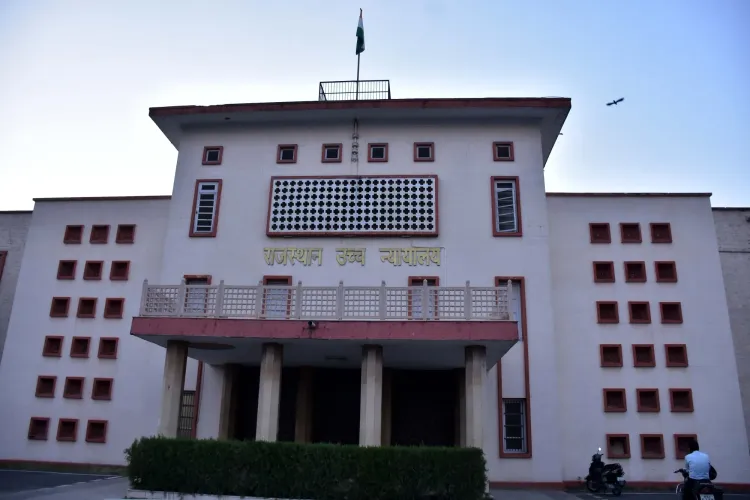
Jaipur, Jan 29 (NationPress) The Rajasthan High Court has mandated the removal of unlawfully constructed temples from sidewalks, roads, and various other public locations in Jaipur. The court has also instructed the state government to relocate idols to nearby temples that are legally established.
A division bench, comprising Justices Sanjeev Prakash Sharma and Sangeeta Sharma, issued this order on Thursday while addressing a public interest litigation (PIL) initiated by Sunny Meena.
The court directed the Jaipur Municipal Corporation Commissioner to present an affidavit at the next hearing, outlining measures taken to eliminate such illegal structures from public areas throughout the city.
Furthermore, the High Court has called upon the government to formulate necessary guidelines for the demolition of illegitimate temples and for the relocation of idols to authorized temples. The next hearing is set for February 4.
This case arose from a PIL concerning a temple built on a public thoroughfare in Pratap Nagar Sector-7 in Jaipur. Labeling the construction as illegal, the bench ordered its removal within seven days and demanded action against officials who permitted this encroachment.
In his petition, Meena claimed that multiple shops and a temple had been illegally erected on a public road in Pratap Nagar Sector-7, alleging that commercial activities were disguised as religious practices.
After the PIL was filed, the Municipal Corporation demolished the unauthorized shops but neglected to take action against the temple.
The civic body and other respondents contended that the temple was longstanding and tied to public faith. However, the petitioner provided recent photographs indicating new construction at the site, prompting the court to instruct the Deputy Commissioner of the Municipal Corporation to dismantle the temple and transfer the idol to another legal temple within a week.
During proceedings, Housing Board counsel Ajay Shukla informed the court that the Pratap Nagar area had been transferred to the Municipal Corporation.
The bench highlighted that the responsibility for issuing construction permits and addressing illegal constructions lies with the Municipal Corporation.
In the meantime, State Minister Jawahar Singh Bedham stated that the state government will evaluate the ruling as it is currently under judicial consideration.
Point of View
It is crucial to recognize that the Rajasthan High Court's decision underscores the importance of lawful governance and public order. While the cultural significance of places of worship cannot be understated, the rule of law must prevail to ensure public spaces remain accessible and safe for all citizens.
NationPress
19 Sept 2026
Frequently Asked Questions
What prompted the Rajasthan High Court's decision?
The decision was prompted by a public interest litigation claiming illegal constructions of temples on public roads.
What actions will the Jaipur Municipal Corporation take?
The Jaipur Municipal Corporation is required to submit an affidavit detailing the steps taken to remove illegal structures.
When is the next hearing scheduled?
The next hearing is scheduled for February 4.