Rajasthan Police busts cyber-slavery racket, 5 arrested in Cambodia-Myanmar network
Synopsis
Rajasthan Police's Cyber Crime Wing has cracked an international cyber-slavery pipeline stretching from Beawar to scam compounds in Cambodia, Laos, Myanmar and Vietnam — with I4C data suggesting over 500 Rajasthanis were trafficked. Five accused, including an alleged HR recruiter and a crypto wallet operator, were nabbed; three were intercepted in Kolkata mid-departure to Myanmar.
Key Takeaways
Rajasthan Police's Cyber Crime Wing busted an international cyber-slavery and human trafficking network on 3 August .
Five accused from Beawar , Rajasthan, were arrested — three of them intercepted in Kolkata while allegedly preparing to travel to Myanmar .
Victims were lured with monthly salaries of USD 800–1,000 , then had their passports confiscated and were forced to work 9 a.m. to 11.30 p.m. daily in scam compounds.
I4C data indicates more than 500 people from Rajasthan travelled to scam compounds in Cambodia, Laos, Myanmar, and Vietnam .
Fraud proceeds were routed through mule accounts, converted to cryptocurrency via Binance , and transferred to handlers allegedly based in China and Cambodia .
Investigators are tracing the international financial trail; further arrests are expected.
Rajasthan Police's Cyber Crime Wing has dismantled an international cyber-slavery and human trafficking network that allegedly lured Indian youths to scam compounds across Cambodia, Laos, Myanmar, and Vietnam under the pretext of high-paying jobs, before forcing them to carry out online fraud targeting Indian citizens. Five accused have been arrested in the operation, launched on the directions of Director General of Police Rajiv Kumar Sharma based on inputs from the Indian Cyber Crime Coordination Centre (I4C) and technical intelligence.
How the Racket Operated
According to Additional Director General of Police (Cyber Crime) Vijay Kumar Singh, the accused recruited young Indians by promising monthly salaries of USD 800–1,000. Once victims reached Southeast Asian countries, their passports were allegedly confiscated and they were compelled to work at cyber scam centres, executing fake investment scams, cryptocurrency fraud, and so-called 'digital arrest' scams.
Recruits were reportedly forced to work from 9 a.m. to 11.30 p.m. daily. Those who attempted to leave the compounds allegedly faced physical assault, threats, and financial penalties running into thousands of dollars. Investigators said victims were first trained at overseas scam facilities before being deployed to target Indian citizens through fake social media profiles — primarily impersonating women on platforms such as Facebook.
Scale of the Problem: Over 500 from Rajasthan Alone
Data analysed by I4C indicated that more than 500 people from Rajasthan had travelled to scam compounds in Cambodia, Laos, Myanmar, and Vietnam. Police confirmed that many have yet to return. Those who managed to come back reported being subjected to physical assault, intimidation, and prolonged working hours while being coerced into organised cyber fraud.
The money extracted from victims was routed through mule bank accounts before being converted into cryptocurrency and transferred to handlers allegedly based in China and Cambodia.
Who Was Arrested and What They Allegedly Did
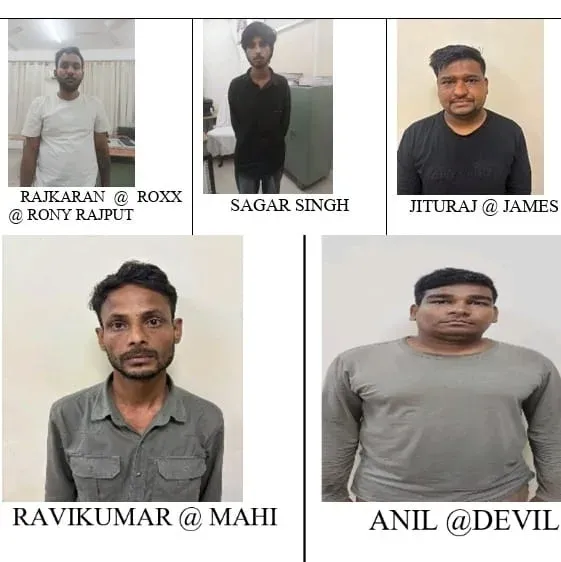
Police first arrested Rajkaran alias Ronnie (ROXX) and Sagar Singh, both residents of Beawar. Analysis of their mobile phones, passports, and digital devices reportedly uncovered evidence of foreign handler communications, VPN usage, cryptocurrency transactions through Binance, fake GPS locations, and links to an international cybercrime network.
Based on their interrogation, police subsequently arrested Jeeturaj alias James, Ravi Kumar alias Mahi, and Anil Kumar alias Devil — all residents of Beawar — from Kolkata, where they were allegedly preparing to travel to Myanmar on tourist visas.
Rajkaran allegedly worked as an HR recruiter at a scam compound in Poipet, Cambodia, and recruited Indian youths after returning to Rajasthan. Sagar Singh allegedly identified potential victims through fake female social media profiles before passing them to senior operators. Jeeturaj allegedly operated cryptocurrency wallets, facilitated USDT transfers to overseas handlers, arranged Indian SIM cards and mule accounts, and helped recruit Indian youths. Ravi Kumar allegedly trained recruits in online fraud techniques at Cambodian scam centres and was preparing to shift operations to Myanmar. Anil Kumar allegedly worked for nearly a year in a Cambodian scam compound before being intercepted in Kolkata while attempting to travel to Myanmar under the guise of a construction job.
Evidence Seized and Investigation Status
Police have seized passports, visa documents, mobile phones, and digital evidence from all five accused. Investigators are now tracing the international financial trail and working to identify additional members of the transnational network. Officials said further arrests are likely as the investigation progresses.
The operation was conducted by a Cyber Crime Police team under the supervision of SP (Cyber Crime) Sumit Mehrada and led by DSP/SHO Gajendra Sharma, with Inspector Neeraj Kumar, ASI Rakesh Kumar Samota, and other officers participating.
This bust comes amid a broader national crackdown on Southeast Asia-based cyber scam compounds that have ensnared thousands of Indians over the past two years, with the Centre and state agencies increasingly coordinating through I4C to disrupt trafficking-to-fraud pipelines.
Point of View
Trained, and redeployed across borders. The I4C figure of 500-plus Rajasthanis in Southeast Asian scam compounds is almost certainly an undercount, given how many victims never report out of shame or fear. The deeper accountability question is about the tourist-visa loophole: all five accused allegedly used or planned to use tourist visas for Myanmar, pointing to a systemic gap in outbound travel screening that neither the Centre nor state governments have yet closed.
NationPress
18 Sept 2026
Frequently Asked Questions
What is the cyber-slavery racket busted by Rajasthan Police?
It is an international human trafficking and cyber fraud network that allegedly recruited Indian youths with promises of high-paying jobs, then transported them to scam compounds in Cambodia, Laos, Myanmar, and Vietnam, where their passports were seized and they were forced to commit online fraud. Rajasthan Police's Cyber Crime Wing arrested five accused in the operation on 3 August, acting on inputs from the Indian Cyber Crime Coordination Centre (I4C).
How many people from Rajasthan were affected?
According to data analysed by I4C, more than 500 people from Rajasthan had travelled to scam compounds in Cambodia, Laos, Myanmar, and Vietnam. Police confirmed that many have not yet returned, and those who did reported physical assault, intimidation, and forced participation in cyber fraud.
Who are the five accused arrested in this case?
The five accused are Rajkaran alias Ronnie (ROXX), Sagar Singh, Jeeturaj alias James, Ravi Kumar alias Mahi, and Anil Kumar alias Devil — all residents of Beawar, Rajasthan. The first two were arrested initially; the remaining three were intercepted in Kolkata while allegedly preparing to travel to Myanmar on tourist visas.
What types of fraud were victims forced to carry out?
Victims were allegedly compelled to execute fake investment scams, cryptocurrency fraud, and 'digital arrest' scams, targeting Indian citizens. They operated through fake social media profiles — often impersonating women on Facebook — to gain targets' trust before persuading them to invest in fraudulent schemes. Proceeds were laundered through mule bank accounts and converted to cryptocurrency.
What happens next in the investigation?
Investigators are tracing the international financial trail and working to identify additional members of the transnational network. Police have seized passports, visa documents, mobile phones, and digital evidence, and officials have said further arrests are likely as the probe progresses.