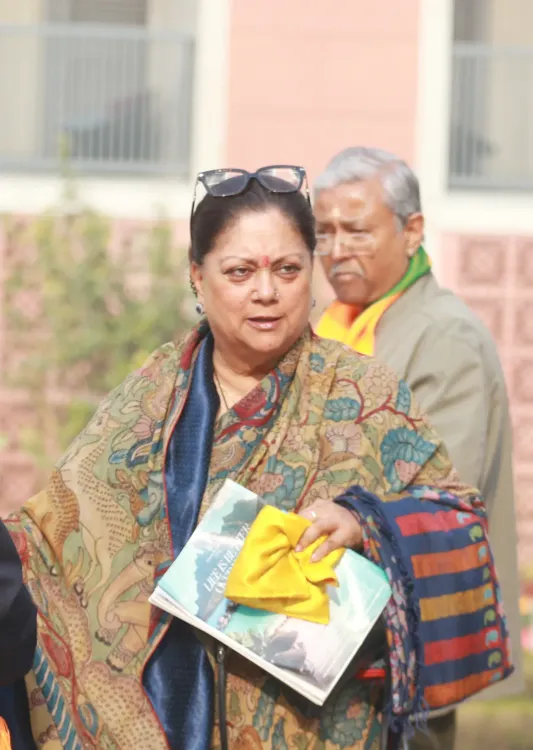
Vasundhara Raje at Rajasthan Assembly at 75: Politics today driven by vendetta
Synopsis
At the Rajasthan Assembly's 75th anniversary, Vasundhara Raje did something rare: a senior BJP leader openly indicted today's political culture as vendetta-driven — and backed it with the story of a Congress office visit she made as Chief Minister after an Opposition MP's death. The contrast she drew between that era and the present is a pointed message to her own party as much as to the Opposition.
Key Takeaways
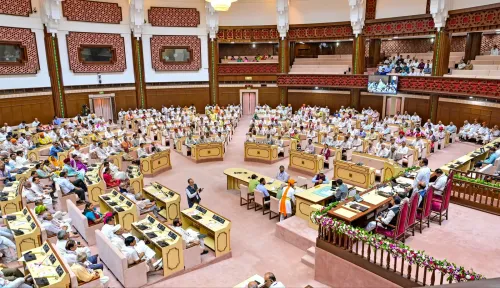
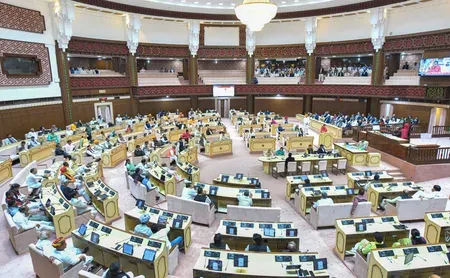
Vasundhara Raje spoke at the Rajasthan Legislative Assembly's 75th Amrit Mahotsav celebrations in Jaipur on 15 July .
She recalled visiting the Congress office after the death of former MP Abrar Ahmed , defending the gesture as an act of humanity above politics.
Raje invoked former PM P.V.
Narasimha Rao 's decision to send Atal Bihari Vajpayee to Geneva to represent India against Pakistan's human rights allegations as a model of national interest over party loyalty.
She warned that today's politics is increasingly driven by vendetta and that the quality of public discourse has deteriorated.
Raje praised CM Bhajan Lal Sharma 's 'One State, One Election' initiative and cited her own legacy including 50% women's reservation in Panchayati Raj bodies and the Eastern Rajasthan Canal Project .
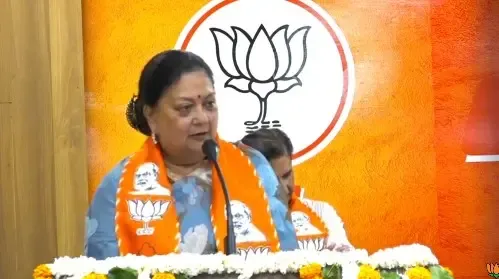
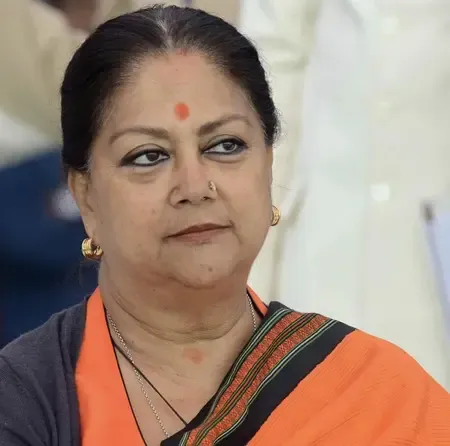
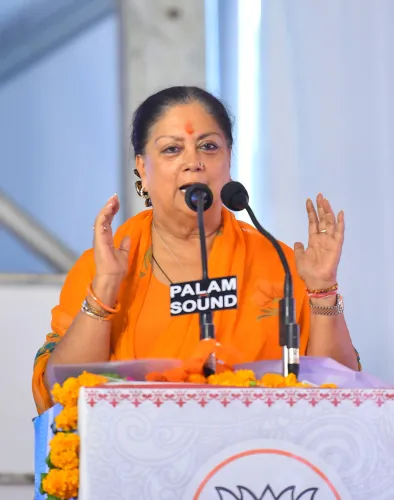
Former Rajasthan Chief Minister Vasundhara Raje on Wednesday, 15 July said that the spirit of humanity must always transcend political differences, recalling how she once visited the Congress party office following the death of former Member of Parliament Abrar Ahmed — a gesture that drew criticism at the time but one she defended as an act of basic compassion. She was speaking at the Rajasthan Legislative Assembly's 75th Amrit Mahotsav celebrations in Jaipur.
A Different Era of Legislative Debate
Raje reflected on a period in Rajasthan politics when ideological rivalries did not erode personal respect. She noted that whenever senior legislators including Gulab Chand Kataria, Rajendra Rathore, CP Joshi, Pradyuman Singh, Ghanshyam Tiwari, Dr. Nathu Singh Gurjar, and Rajpal Shekhawat rose to speak in the Assembly, members across party lines listened with undivided attention.
She also singled out Rao Rajendra Singh, Kali Charan Saraf, and B.D. Kalla as exemplary parliamentarians who elevated the quality of legislative discourse through eloquence and constructive argument.
Historical Parallels: Shekhawat-Joshi and Vajpayee at Geneva
Drawing on history to make her point, Raje compared the relationship between former Chief Minister Bhairon Singh Shekhawat and his political rival Haridev Joshi to that of Alexander and Porus — adversaries who nonetheless maintained a code of dignity. The analogy underscored her view that fierce competition need not come at the cost of mutual respect.
She also recalled that former Prime Minister P.V. Narasimha Rao had chosen former Prime Minister Atal Bihari Vajpayee — a leader from the rival Bharatiya Janata Party (BJP) — to represent India at Geneva to counter Pakistan's allegations of human rights violations. The decision, she argued, illustrated how national interest once commanded a higher loyalty than partisan advantage.
Concern Over Today's Political Climate
Raje expressed sharp concern about the present state of political culture, saying that public life today is increasingly shaped by vendetta rather than vision, and that the quality of democratic discourse has visibly deteriorated. She urged sitting legislators to revive the traditions of healthy debate, cross-party respect, and constitutional values that once defined the Rajasthan Assembly.
Notably, these remarks came from a senior BJP leader — adding weight to the critique, given that it was directed inward as much as outward.
Appreciating Current Leadership and Her Own Legacy
Raje also acknowledged Chief Minister Bhajan Lal Sharma for introducing the 'One State, One Election' initiative in Rajasthan.
Reflecting on her own tenures, she cited several governance milestones: 50 per cent reservation for women in Panchayati Raj institutions, round-the-clock domestic power supply, the Eastern Rajasthan Canal Project, river-linking initiatives, and the institution of the Best Legislator Award. She described these as measures aimed at strengthening governance and expanding opportunities for Rajasthan's citizens.
As the Rajasthan Assembly marks 75 years, Raje's address served as both a tribute to a more collegial past and an implicit call to action for a legislature she believes has drifted from its democratic ideals.
Point of View
Not an aberration. The fact that a senior BJP leader is publicly lamenting vendetta politics — at a state function, on record — signals either a genuine ideological discomfort or a carefully calibrated positioning ahead of future political moves. Either way, it is a message that mainstream coverage is likely to underplay.
NationPress
14 Oct 2026
Frequently Asked Questions
What did Vasundhara Raje say at the Rajasthan Assembly's 75th Amrit Mahotsav?
Vasundhara Raje said that politics today is increasingly driven by vendetta and that the quality of democratic discourse has deteriorated. She called on legislators to revive traditions of healthy debate and cross-party mutual respect, drawing on examples from Rajasthan's legislative history.
Why did Vasundhara Raje visit the Congress office after Abrar Ahmed's death?
Raje visited the Congress party office following the demise of former MP Abrar Ahmed as an act of compassion and humanity, arguing that such values must rise above political boundaries. She acknowledged that many had questioned whether it was appropriate for a Chief Minister to make such a visit.
What historical example did Raje cite about national interest over party politics?
Raje recalled that former Prime Minister P.V. Narasimha Rao, a Congress leader, had entrusted former Prime Minister Atal Bihari Vajpayee of the BJP to represent India at Geneva to counter Pakistan's allegations of human rights violations. She cited this as an example of national interest once overriding partisan considerations.
What governance achievements did Vasundhara Raje highlight from her tenure?
Raje cited 50 per cent reservation for women in Panchayati Raj institutions, 24-hour domestic power supply, the Eastern Rajasthan Canal Project, river-linking initiatives, and the institution of the Best Legislator Award as landmark decisions from her time as Chief Minister of Rajasthan.
What is the 'One State, One Election' initiative that Raje praised?
The 'One State, One Election' initiative was introduced by current Rajasthan Chief Minister Bhajan Lal Sharma. Raje appreciated the move at the 75th Amrit Mahotsav celebrations, though she did not elaborate on its specific provisions during her address.