Rajnath Singh: Defence investment drives security and economic growth
Synopsis
At the Vibrant Gujarat Regional Conference in Vadodara, Defence Minister Rajnath Singh made the case that defence investment is not a cost but an economic multiplier — and that Gujarat, home to the Tata-Airbus C-295 plant and K-9 Vajra production, is best placed to prove it. The pitch to industry signals a deliberate effort to anchor India's private-sector defence push in one of its most industrially capable states.
Key Takeaways
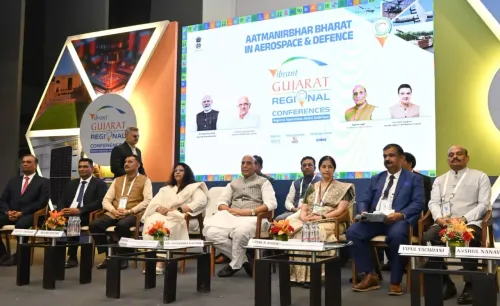
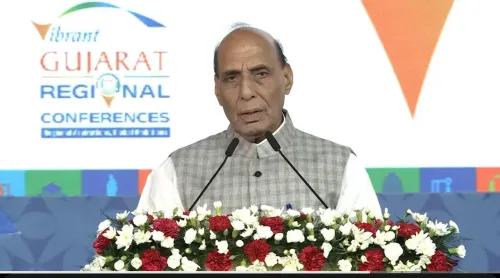
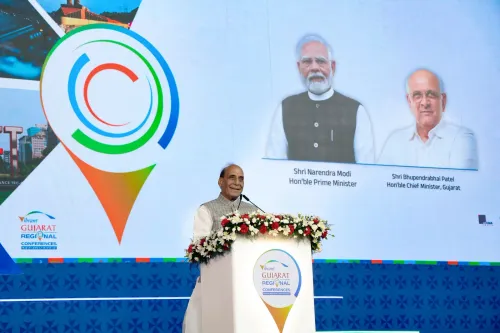
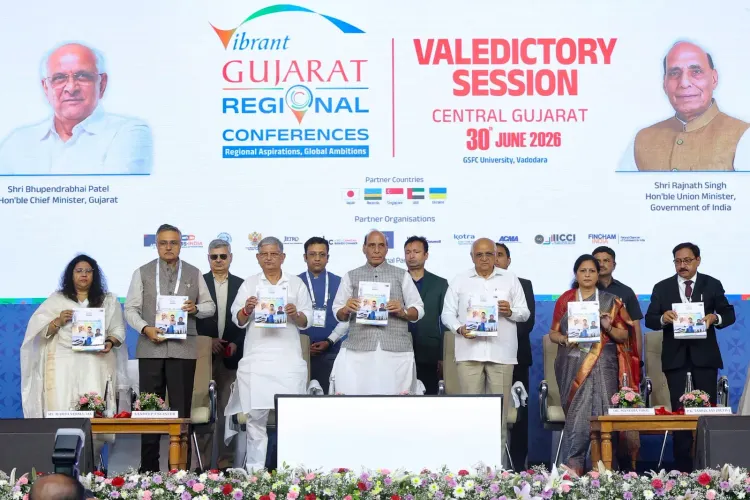
Defence Minister Rajnath Singh addressed the Vibrant Gujarat Regional Conference (VGRC) valedictory session in Vadodara on 30 June .
Singh said defence investment generates multiplier benefits across logistics, infrastructure, R&D, employment, and industrial development .
Government reforms cited include the Srijan Portal , iDEX , Green Channel Certification , liberalised FDI norms, and simplified defence licensing .
The Tata-Airbus C-295 plant in Vadodara was described as India's first private-sector military aircraft manufacturing facility and 'a historic milestone.' Singh said Gujarat's chemicals, petrochemicals, electronics, shipbuilding, and renewable energy sectors make it ideal for a defence manufacturing hub .
The Ministry of Defence regularly holds seminars and webinars to facilitate industry engagement on investment and policy.
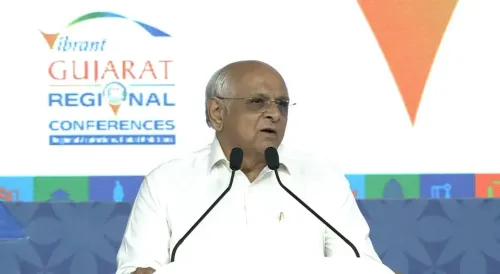
Defence Minister Rajnath Singh on Tuesday, 30 June declared that every rupee invested in the defence sector yields dividends far beyond national security — fuelling industrial development, employment generation, infrastructure expansion, and technological innovation. He made the remarks while addressing industrialists, entrepreneurs, and investors at the valedictory session of the Vibrant Gujarat Regional Conference (VGRC) in Vadodara.
Defence Manufacturing as an Economic Pillar
Singh positioned defence manufacturing as a central plank of India's broader economic development strategy, arguing that the sector's multiplier effect extends well into civilian industry. 'Every investment made in defence becomes the foundation not only of national security but also of economic growth, industrial progress and national prosperity,' he said.
He noted that defence corridors and manufacturing clusters generate cascading opportunities across logistics, infrastructure, research and development, and technology — reinforcing the country's wider industrial ecosystem. 'The creation of defence corridors generates new opportunities in infrastructure, logistics, industry and employment. The promotion of research and development, technology and innovation strengthens the entire industrial base,' Singh added.
Policy Reforms Opening Doors for Industry
The minister outlined a raft of structural reforms the government has undertaken to draw private capital into defence. These include simplified defence licensing procedures, liberalised foreign direct investment (FDI) policies, and the establishment of dedicated defence industrial corridors.
Singh also highlighted enabling platforms such as the Srijan Portal, iDEX (Innovations for Defence Excellence), Defence Testing Infrastructure, Green Channel Certification, and Self-Certification — all designed to widen access for MSMEs and start-ups. 'Our objective is to create a defence ecosystem where innovation, industry and self-reliance together will strengthen the security capabilities of a new India even more than before,' he said.
Gujarat's Strategic Role in India's Defence Ambitions
Singh singled out Gujarat as a state with the industrial depth to emerge as a major defence manufacturing hub, citing its robust industrial base, skilled workforce, and entrepreneurial culture. He pointed to the Tata-Airbus C-295 aircraft manufacturing project in Vadodara — described as India's first private-sector military aircraft manufacturing facility — as 'a historic milestone in India's aerospace journey.'
He also referenced the production of the K-9 Vajra self-propelled artillery system in Gujarat, which he said had meaningfully strengthened the armed forces' operational capabilities. Beyond these flagships, Singh noted that Gujarat's strengths in chemicals, petrochemicals, electronics, shipbuilding, and port infrastructure position it to supply specialised materials, avionics, sensors, communication systems, and naval equipment to advanced defence programmes.
Renewable Energy and Future Defence Technologies
In a forward-looking observation, Singh highlighted Gujarat's growing footprint in renewable energy and green hydrogen, suggesting these sectors could feed into next-generation defence technologies. The convergence of clean energy and defence manufacturing, he implied, represents an emerging frontier for the state.
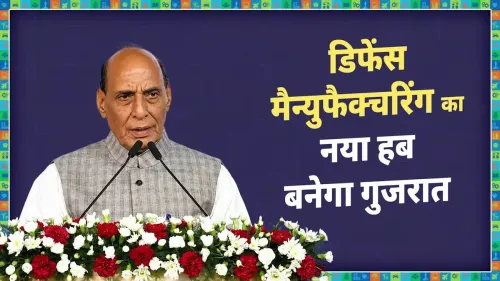
'Gujarat possesses the entire ecosystem required for a defence manufacturing hub, and I firmly believe that Gujarat can become a major hub for defence manufacturing,' he stated.
Call to Industry and Innovators
Closing his address, Singh urged Gujarat's industrialists and young innovators to leverage the state's trifecta of industry, innovation, and entrepreneurship in service of India's defence manufacturing goals. The Ministry of Defence, he added, regularly organises seminars and webinars to keep industry informed of investment opportunities and evolving government policy. With guidelines tightening around indigenisation targets and the government's Aatmanirbhar Bharat push showing measurable momentum, the VGRC address signals that Gujarat is being positioned as a key node in India's self-reliance architecture.
Point of View
K-9 Vajra, and now a minister-level push at VGRC suggests the Centre is deliberately building Gujarat into a defence-industrial anchor state, with implications for how future corridor investments and FDI approvals are routed. What remains unquantified is the actual jobs and output generated by existing defence corridors relative to their announced potential — a gap that industry bodies have flagged repeatedly. The reform stack (iDEX, Srijan, Green Channel) is real, but MSME participation in defence contracts remains thin. The ecosystem rhetoric will need to be matched by procurement pipeline visibility if private capital — especially from smaller firms — is to follow the minister's call.
NationPress
29 Sept 2026
Frequently Asked Questions
What did Rajnath Singh say at the Vibrant Gujarat Regional Conference?
Defence Minister Rajnath Singh said at the VGRC valedictory session in Vadodara on 30 June that investment in the defence sector generates benefits well beyond national security, including industrial development, employment, infrastructure, and technological innovation. He also made a strong pitch for Gujarat to become a major defence manufacturing hub.
What is the Tata-Airbus C-295 project in Vadodara?
The Tata-Airbus C-295 project in Vadodara is India's first private-sector military aircraft manufacturing facility, cited by Singh as a historic milestone in the country's aerospace journey. It represents a landmark in the government's push to involve private industry in defence production.
Which government reforms has the Centre introduced to boost private defence investment?
The government has simplified defence licensing, liberalised FDI policies, and established defence industrial corridors. It has also launched platforms such as the Srijan Portal, iDEX, Defence Testing Infrastructure, Green Channel Certification, and Self-Certification to expand opportunities for MSMEs and start-ups.
Why is Gujarat being positioned as a defence manufacturing hub?
Gujarat has a strong industrial base in chemicals, petrochemicals, electronics, shipbuilding, and ports, along with a skilled workforce and entrepreneurial culture. Singh noted that these sectors can supply specialised materials, avionics, sensors, and naval equipment, and that the state already hosts landmark projects like the C-295 plant and K-9 Vajra production.
What is the K-9 Vajra and where is it made?
The K-9 Vajra is a self-propelled artillery system manufactured in Gujarat. Singh referenced its production as evidence of the state's existing defence manufacturing capability and its contribution to strengthening the Indian armed forces.