Is India Really a Peace-Loving Nation That Won't Tolerate Evil-Doers?
Synopsis
In a compelling address, Defence Minister Rajnath Singh underscores India's commitment to peace while warning against threats to national integrity. This statement comes as tensions with Pakistan persist, reflecting India's readiness to defend its sovereignty. With a focus on unity and modernization, Singh calls on future generations to uphold the values of national integrity and leadership.
Key Takeaways
India is committed to peace but will defend against threats.
Operation Sindoor highlights India's military readiness.
Economic growth has positioned India as a major global player.
Unity and integrity are crucial for future generations.
Modernization in defense is a priority for the government.
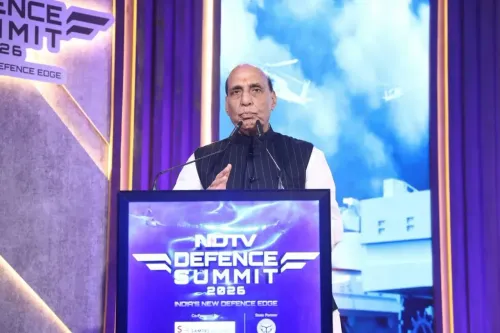
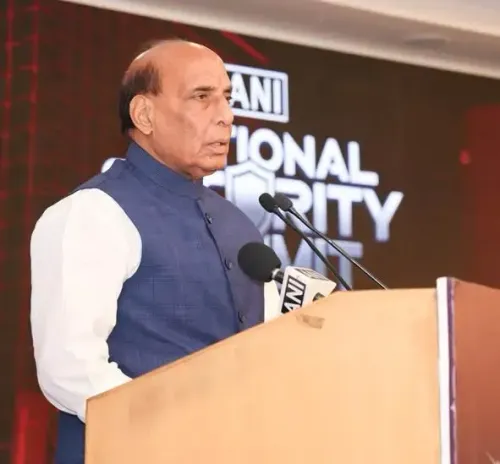
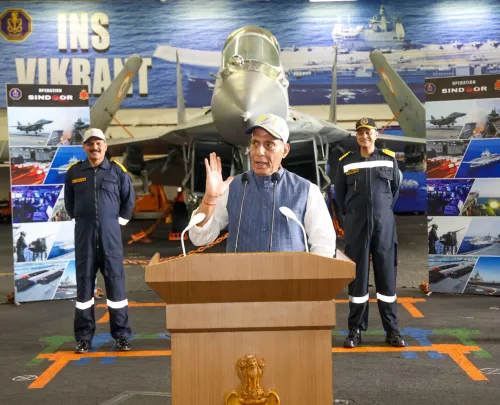
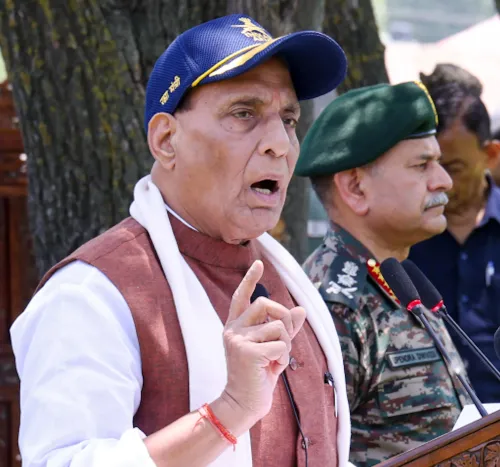
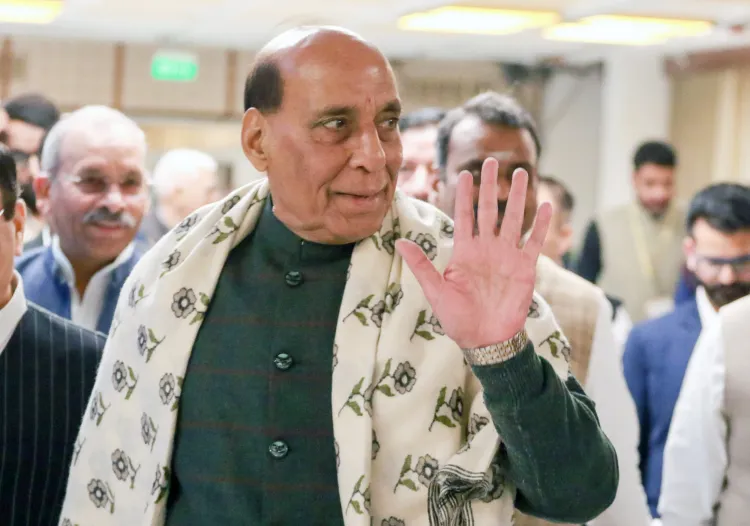
Ahmedabad, Dec 2 (NationPress) In a powerful statement directed at its neighboring country, Defence Minister Rajnath Singh emphasized on Tuesday that India is fundamentally a peace-loving nation that does not instigate conflict. However, he asserted that the country is fully prepared to take decisive action against anyone who threatens peace and harmony.
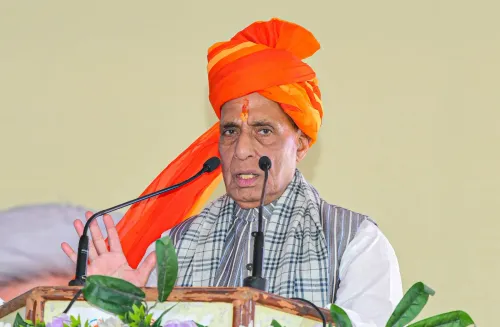
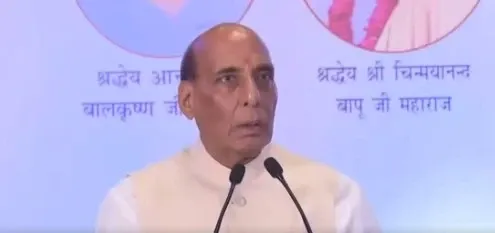
"India is a peace-loving nation. We provoke no one. But if provoked, we do not spare anyone who casts an evil eye on our motherland," Rajnath Singh warned, sending a clear message to Pakistan while addressing attendees at a Sardar Sabha event in Vadodara during the ‘Unity March’ organized by MY Bharat in honor of the 150th birth anniversary of Vallabhbhai Patel.
The Defence Minister pointed to Operation Sindoor as conclusive evidence that India responds effectively to those who disregard the principles of peace and goodwill.
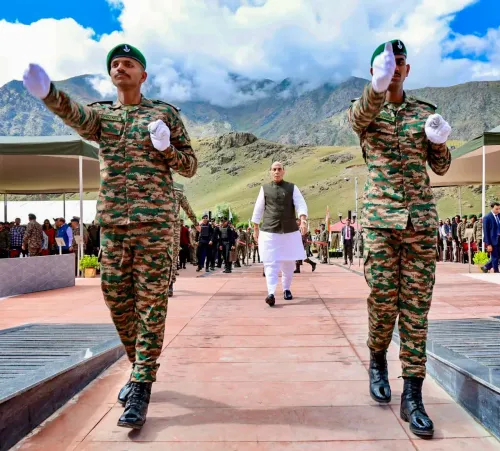
He commended the armed forces for their successful operation, highlighting that their bravery and skill are now recognized worldwide.
Drawing parallels between India’s resolute actions against terrorism and Patel's unyielding leadership during the integration of Hyderabad, Singh reinforced the significance of strong leadership in safeguarding the nation.
He also noted that the vision of 'One India, Best India' articulated by Patel has been furthered under Prime Minister Modi, pointing to the abrogation of Article 370 as a pivotal step in integrating Jammu & Kashmir into the national framework.
According to Singh, India’s transformation from the 11th to the 4th position in the global economic hierarchy since 2014 is a testament to the Union government's approach of 'Minimum Government, Maximum Governance.'
He expressed that the government is uniting India through cultural, social, and economic cohesion, striving towards the goal of Viksit Bharat 2047.
On defence, Singh indicated a commitment to modernize in line with Patel's vision, mentioning a substantial increase in defence exports—34 times higher over the last 11 years—and reiterated ambitions of achieving Rs 3 lakh crore in defence production and Rs 50,000 crore in exports by 2029 under the Make-in-India initiative.
He also emphasized the government's intent to enhance accountability through the proposed Constitution (130th Amendment) Bill, which stipulates that officials arrested on serious charges and denied bail within 30 days will automatically lose their positions.
Encouraging the youth to uphold the values of unity and integrity, Singh asserted that the duty to protect the nation's sovereignty lies with the upcoming generation. "We must not only adopt Patel's values but also prepare future generations to embody them," he stated.
Point of View
The statements made by Defence Minister Rajnath Singh reflect a strong stance on India's commitment to national security and peace. The emphasis on unity and the call for future generations to uphold these values is a timely reminder of the ongoing challenges that the nation faces. This approach aligns with the broader vision of strengthening India's position on the global stage while ensuring internal harmony.
NationPress
30 Sept 2026
Frequently Asked Questions
What did Rajnath Singh say about India's approach to peace?
Rajnath Singh stated that India is a peace-loving nation that does not provoke anyone but is ready to protect its sovereignty and respond to threats.
What was the context of Singh's remarks?
His remarks were made during a Unity March in Vadodara, organized to commemorate the 150th birth anniversary of Vallabhbhai Patel.
What is Operation Sindoor?
Operation Sindoor is cited by Singh as a decisive response to those who disregard peace, showcasing India's military readiness.
How has India's economic position changed recently?
India has improved its global economic ranking from 11th to 4th place since 2014, attributed to the government's model of 'Minimum Government, Maximum Governance.'
What is the goal of Viksit Bharat 2047?
Viksit Bharat 2047 aims to create a developed and unified India, focusing on cultural, social, and economic integration.