Why Did the Prayer Meet Delay the Rajya Sabha's Debate on Election Reforms?
Synopsis
The Rajya Sabha's debate on election reforms was momentarily paused due to a prayer meet. Union Minister Kiren Rijiju announced that the remaining discussions will continue on Monday. The debate has sparked intense arguments about electoral integrity, voter disenfranchisement, and the role of the Election Commission, indicating a deep political rift on the matter.
Key Takeaways
The debate on election reforms is highly contentious.
Concerns regarding voter disenfranchisement are significant.
Technological safeguards are pivotal in defending electoral processes.
The political divide on electoral integrity is pronounced.
Next week's discussions are expected to be intense.
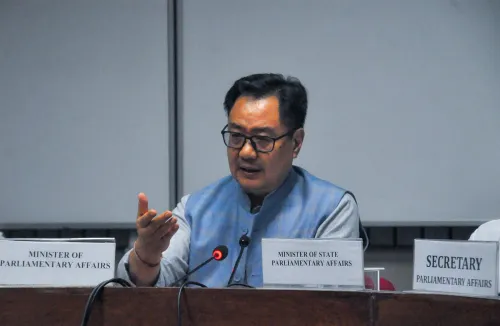
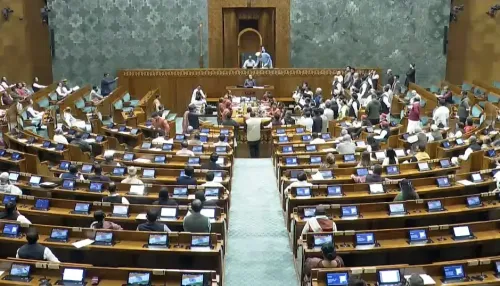
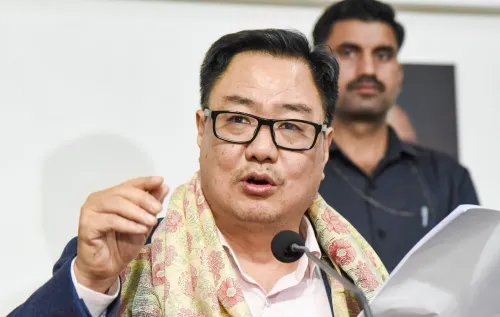
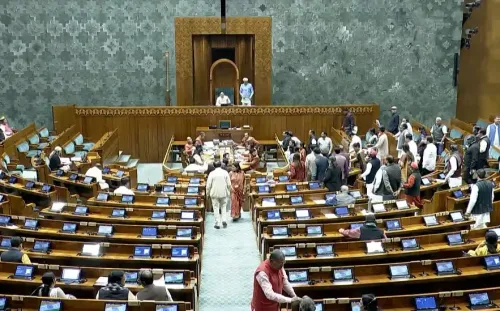
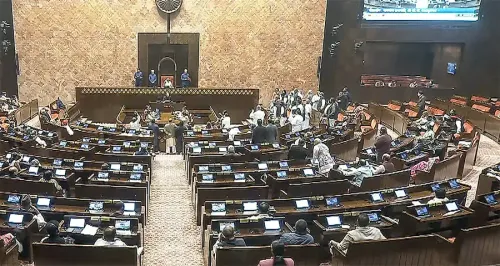
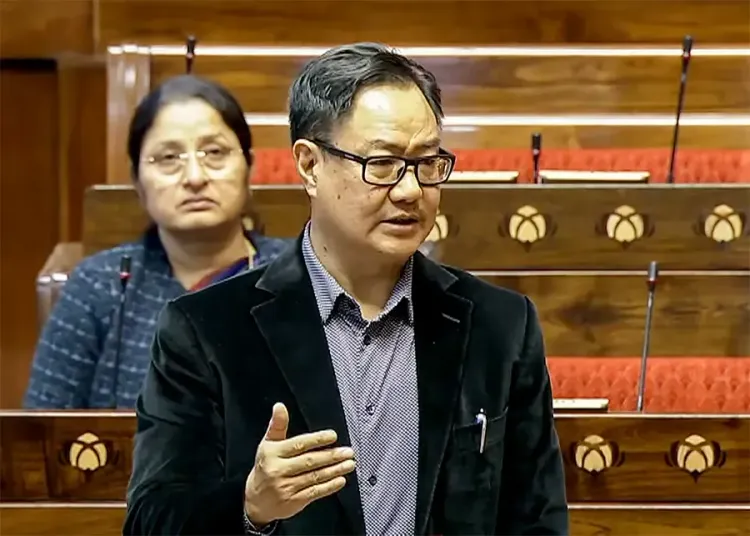
New Delhi, Dec 11 (NationPress) The ongoing debate in the Rajya Sabha concerning election reforms faced a temporary halt on Thursday. Union Minister Kiren Rijiju declared that the remaining discussion will be resumed on Monday at 1 p.m.
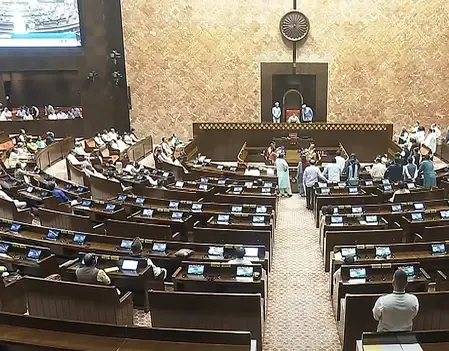
This decision was made due to a scheduled prayer meet in Parliament, necessitating members to pause their contributions. Rijiju informed the House that despite several members having spoken on the matter, the debate could not be concluded within the designated time.
"Given that Parliamentarians need to attend the prayer meet, the continuation of the discussion on election reforms will be on Monday at 1 p.m.," he stated, urging members to come back after the weekend. Notably, the debate on Friday will not occur, as that day is reserved for private member bills.
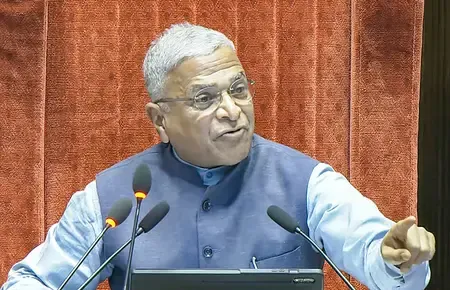
Deputy Chairperson Harivansh Narayan Singh subsequently adjourned the House at 4 p.m. until Friday.
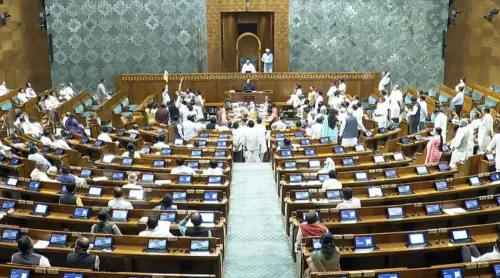
The ongoing debate on election reforms has emerged as one of the most contentious discussions this session, with opposition MPs voicing concerns regarding voter disenfranchisement, transparency in electoral rolls, and the credibility of the Election Commission's processes.
Key figures such as AAP's Sanjay Singh, Congress leaders Ajay Maken and Jairam Ramesh, along with BJP MPs like Sudhanshu Trivedi and J.P. Nadda have all contributed, presenting sharply divergent views on the state of India's democracy.
Opposition members have accused the ruling party of arbitrary deletions of voter names, inconsistencies in turnout figures, and the misuse of central agencies, while ruling party MPs defend the integrity of India’s electoral system, emphasizing technological safeguards like EVMs, voter IDs, and CCTV monitoring.
This exchange highlights the profound political divide regarding how elections should be conducted and monitored within the country.
By rescheduling the debate, Kiren Rijiju aimed to ensure that all members who had submitted notices and prepared interventions receive sufficient time to articulate their perspectives.
The session on Monday is anticipated to feature further intense discussions, with both sides likely to sharpen their stances on electoral integrity, reforms, and the role of constitutional authorities.
As the debate is set to resume next week, election reforms remain a crucial topic on the agenda, promising another round of vigorous discussions in the Upper House.
Point of View
It is essential for all political parties to engage constructively, ensuring that the voices of the electorate are heard and protected. The rescheduled discussions promise to be a pivotal opportunity for meaningful dialogue.
NationPress
27 Sept 2026
Frequently Asked Questions
What caused the delay in the Rajya Sabha's debate on election reforms?
The delay was due to a scheduled prayer meet that required members to adjourn their discussions temporarily.
When will the Rajya Sabha resume the debate on election reforms?
The debate will resume on Monday at 1 p.m.
What key issues are being discussed in the election reforms debate?
Key issues include voter disenfranchisement, transparency in electoral rolls, and the credibility of the Election Commission's processes.
Which political figures have been involved in this debate?
Politicians from various parties, including AAP's Sanjay Singh, Congress leaders Ajay Maken and Jairam Ramesh, and BJP MPs Sudhanshu Trivedi and J.P. Nadda, have participated.
What are the technological safeguards mentioned in the debate?
Technological safeguards include Electronic Voting Machines (EVMs), voter IDs, and CCTV monitoring.