Ramaphosa urges Africa to unite on lawful migration amid xenophobic violence
Synopsis
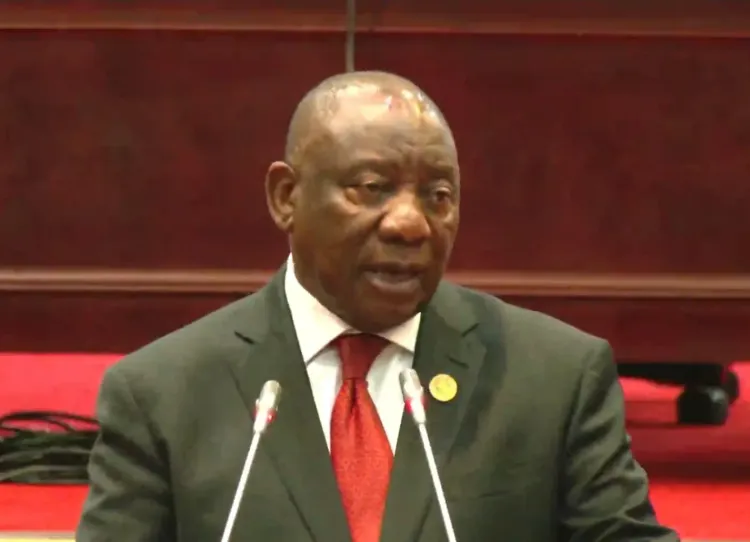
Speaking before the Pan-African Parliament in Johannesburg, President Cyril Ramaphosa condemned the killing of foreign nationals and called on Africa to collectively address the root causes of migration — framing vigilante violence not just as a law-and-order failure, but as a continental governance crisis. The remarks come as South Africa faces another wave of xenophobic attacks, raising uncomfortable questions about a cycle that has repeated itself since 2008.
Key Takeaways
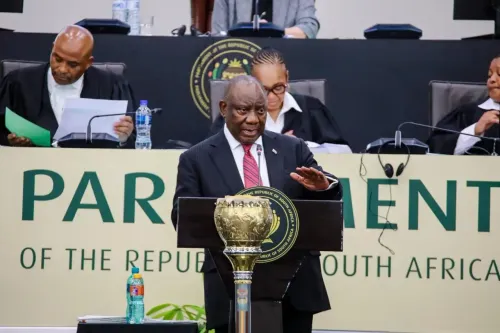
President Cyril Ramaphosa addressed the First Ordinary Session of the Seventh Legislature of the Pan-African Parliament in Johannesburg on 27 July .
Ramaphosa condemned vigilantism and violence against foreign nationals, calling for 'firm, fair, and effective immigration management' alongside defence of human dignity.
He identified conflict, poverty, governance failures, and instability as the root causes driving migration across Africa.
UN resident coordinator Nelson Muffuh backed a policy-driven approach, rejecting stigma and exclusion as solutions.
South Africa has seen a fresh wave of attacks on migrant communities, with several people killed and migrant-owned businesses forcibly closed by vigilante groups.
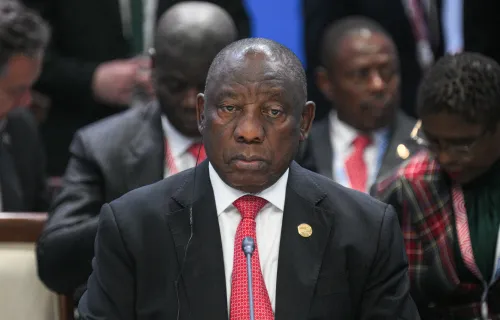
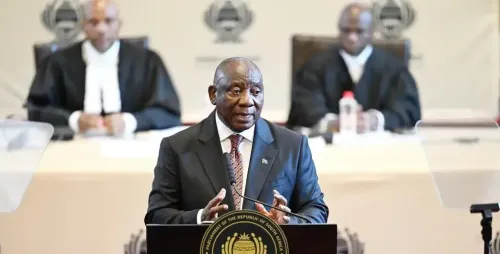
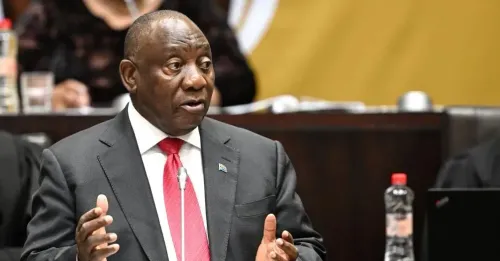
South African President Cyril Ramaphosa on Monday, 27 July called on African nations to collectively promote lawful and orderly migration while tackling the root causes that compel people to flee their home countries. He made the appeal in Johannesburg at the opening of the First Ordinary Session of the Seventh Legislature of the Pan-African Parliament, as South Africa grapples with a surge in attacks against foreign nationals.
Ramaphosa Condemns Violence Against Foreign Nationals
Expressing regret over the mistreatment and killing of foreign nationals on South African soil, Ramaphosa acknowledged that such incidents were partly fuelled by misinformation and deep-seated prejudice. He was unequivocal in his government's position: 'As the South African government, we have taken a firm stance against any form of intimidation, vigilantism, or violence directed at foreign nationals,' he said. 'Our response must combine firm, fair, and effective immigration management with an unwavering defence of human dignity and the rule of law.'
Ramaphosa also acknowledged the concerns of South Africans regarding the social and economic pressures linked to illegal migration — a tension that critics argue has been exploited to justify vigilante action. South Africa has witnessed a marked rise in attacks on migrant communities in recent months, with several people killed and migrant-owned businesses forcibly shut down by vigilante groups.
Call for Pan-African Cooperation on Migration
The president urged African countries to collectively address the structural drivers of migration, citing conflict, instability, governance failures, poverty, and social discord as the core push factors. He stressed that the continent must work to silence the guns, strengthen inclusive governance, and expand economic opportunities — framing migration not as a security threat alone, but as a symptom of deeper developmental failures.
Ramaphosa said migration must be managed in a manner that upholds the rights and dignity of all people, respects international conventions, and fosters social cohesion — a position that aligns with the African Union's broader frameworks on free movement.
UN Resident Coordinator Backs Regional Approach
Nelson Muffuh, the United Nations resident coordinator in South Africa, reinforced the call for policy-driven solutions. 'Challenges relating to migration and displacement cannot be addressed through stigma, exclusion or vigilantism, but through sound public policy, regional cooperation and adherence to the rule of law,' Muffuh said. He noted that human mobility has long been woven into Africa's history and development trajectory.
Context: Rising Xenophobic Attacks in South Africa
The Pan-African Parliament session comes at a fraught moment for South Africa's relationship with the broader continent. The country has experienced repeated waves of xenophobic violence over the past two decades, with earlier episodes in 2008 and 2019 drawing international condemnation. The current cycle of attacks has once again strained diplomatic ties and raised questions about the government's capacity — and political will — to protect non-citizens. Notably, this is one of the first times Ramaphosa has addressed the issue directly before a continental legislative body, signalling a shift toward multilateral engagement on what has historically been treated as a domestic law-and-order matter.
What Happens Next
The Pan-African Parliament session is expected to deliberate on a regional migration framework that could set binding cooperation norms for member states. Whether South Africa's domestic enforcement machinery will align with any such framework remains to be seen, particularly given the political sensitivities around immigration ahead of future electoral cycles.
Point of View
But it also exposes a persistent contradiction: South Africa has condemned xenophobic violence after every cycle since 2008, yet the attacks keep recurring. The question is no longer one of intent but of institutional capacity and political cost — cracking down on vigilante groups that enjoy localised support is electorally uncomfortable. Framing migration as a continental governance problem is correct in principle, but it risks diffusing accountability away from Pretoria. Regional cooperation frameworks are only as strong as the weakest enforcement link, and South Africa's domestic track record on protecting foreign nationals remains the most glaring gap.
NationPress
26 Oct 2026
Frequently Asked Questions
What did President Ramaphosa say about migration at the Pan-African Parliament?
President Cyril Ramaphosa called on African nations to work together to promote lawful and orderly migration while addressing root causes such as conflict, poverty, and governance failures. He also condemned vigilantism and violence against foreign nationals in South Africa, pledging a firm government stance against such acts.
Why are foreign nationals being attacked in South Africa?
According to Ramaphosa, the attacks are partly fuelled by misinformation and prejudice, compounded by public concerns over the social and economic impact of illegal migration. South Africa has experienced repeated waves of xenophobic violence since 2008, with the current cycle involving killings and forced closures of migrant-owned businesses.
What is the Pan-African Parliament and why was this session significant?
The Pan-African Parliament is a legislative body of the African Union, representing member states across the continent. The First Ordinary Session of its Seventh Legislature, held in Johannesburg, provided Ramaphosa with a continental platform to address migration — one of the most sensitive cross-border issues in the region.
What did the UN say about migration in South Africa?
Nelson Muffuh, the UN resident coordinator in South Africa, said migration challenges cannot be solved through stigma, exclusion, or vigilantism. He called for sound public policy, regional cooperation, and adherence to the rule of law, noting that human mobility has historically been central to Africa's development.
What could happen next following Ramaphosa's speech?
The Pan-African Parliament session is expected to deliberate on a regional migration cooperation framework. Whether South Africa's domestic enforcement will align with any resulting norms remains uncertain, particularly given political sensitivities around immigration policy.