RBI hikes repo rate 25 bps to 5.5% after 44 months; industry urges data-driven path ahead
Synopsis
For the first time in 44 months, the RBI has raised its repo rate — by 25 bps to 5.5% — and signalled more action is possible, but not inevitable. Industry body PHDCCI backed the move while sounding a clear warning: future hikes must follow the data, not precede it. With global crude prices volatile and domestic food inflation sticky, the real test is whether supply-side policy can take pressure off monetary tightening.
Key Takeaways
The RBI raised the policy repo rate by 25 bps to 5.5% — its first hike in 44 months .
Stance shifted from neutral to calibrated tightening ; the SDF stands at 5.25% and MSF/Bank Rate at 5.75% .
PHDCCI President Rajeev Juneja called the hike in line with industry expectations given global central bank actions.
PHDCCI CEO Dr Ranjeet Mehta urged that further tightening remain data-dependent and not choke credit to productive sectors.
India's growth remains resilient, backed by private consumption, investment, exports, and strong IIP and PMI readings.
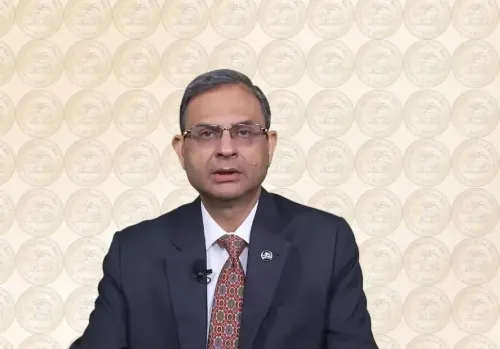
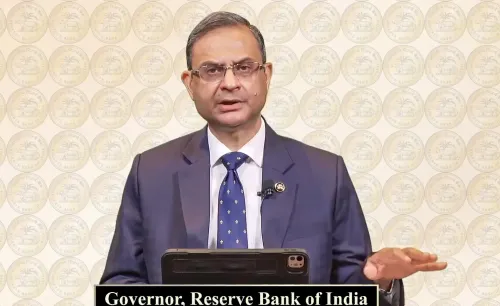
The RBI Governor has ruled out near-term rate cuts but left open the possibility of a pause or further hikes .
The Reserve Bank of India (RBI) on Wednesday, 7 October raised its policy repo rate by 25 basis points (bps) to 5.5% — its first rate hike in 44 months — while shifting its stance from neutral to calibrated tightening, as the central bank responded to surging global uncertainty, volatile crude prices, and persistent domestic food-price pressures. Industry body PHD Chamber of Commerce and Industry (PHDCCI) called the move broadly in line with expectations but stressed that any further tightening must be anchored in data rather than pre-committed to a fixed trajectory.
What the RBI Decided
The RBI Monetary Policy Committee (MPC) voted to lift the repo rate to 5.5%, citing a sudden re-escalation of global uncertainties, volatility in crude oil markets, and softening but still-resilient global growth. The Standing Deposit Facility (SDF) now stands at 5.25%, while the Marginal Standing Facility (MSF) and Bank Rate were revised upward to 5.75%. The stance shift to calibrated tightening signals the committee's readiness to act further — but without locking itself into automatic hikes.
What Industry Said
Rajeev Juneja, President of PHDCCI, said the rate action was consistent with what the industry had anticipated, given co-ordinated tightening by major central banks globally. 'The policy rate hike after 44 months is in line with industry expectations, given the global scenario and the decision of rate hikes in major central banks across the World. The Governor's strong stance of no rate cuts in the near future but chances of pause or rate hikes add to the cautious approach being taken by the RBI,' Juneja said.
Dr Ranjeet Mehta, Chief Executive Officer and Secretary General of PHDCCI, flagged the complex inflation environment. 'The shift to calibrated tightening with global energy prices, geopolitical developments and domestic food-price pressures are creating uncertainty around the inflation trajectory,' he said. Mehta added that the immediate priority must be to ensure that 'monetary tightening remains data-dependent while maintaining adequate credit flows to productive sectors.'
Supply-Side Fixes Needed Alongside Rate Action
PHDCCI's statement underscored that monetary policy alone cannot resolve inflation rooted in supply disruptions. Faster improvement in supply-side capacity, logistics networks, food management systems, and energy security will be critical to complement the RBI's tightening measures, the chamber said. Without these structural fixes, rate hikes risk dampening growth without fully taming prices.
Growth Remains Resilient, For Now
Despite the hawkish pivot, PHDCCI noted that India's economic growth remains resilient, underpinned by private consumption, strong investment activity, and robust exports. Sound system-level parameters among Scheduled Commercial Banks and Non-Banking Financial Companies (NBFCs) provide an additional buffer. High-frequency indicators — including the Index of Industrial Production (IIP) and both Manufacturing and Services PMI — continue to signal positive momentum, the chamber noted. Notably, the resilience of these indicators will be closely watched in the coming months as higher borrowing costs begin to filter through the economy.
What Comes Next
The RBI Governor's guidance rules out near-term rate cuts but leaves open the possibility of a pause or further hikes depending on incoming data — a stance that will keep markets and industry on alert for each inflation and growth print. The next MPC meeting outcome, and the trajectory of global crude prices and domestic food inflation, will be decisive in determining whether the 5.5% repo rate proves to be a ceiling or a waypoint in the current cycle.
Point of View
But it is not committing to a pre-set hiking path. That nuance matters enormously. India's inflation challenge is partly supply-driven: food prices and energy costs do not respond to rate hikes the way demand-side inflation does. PHDCCI's call to protect credit flows to productive sectors is not special pleading — it is a legitimate concern that tightening bluntly could crowd out the very investment that keeps supply expanding. The real question is whether the MPC has the institutional discipline to pause when data warrants, rather than shadowing the US Fed reflexively.
NationPress
7 Oct 2026
Frequently Asked Questions
Why did the RBI hike the repo rate after 44 months?
The RBI raised the repo rate by 25 bps to 5.5% in response to a sudden re-escalation of global uncertainties, volatile crude oil prices, and domestic food-price pressures — even as global growth remains resilient but declining. The move aligns with rate hikes by major central banks worldwide.
What is 'calibrated tightening' and what does it mean for borrowers?
Calibrated tightening means the RBI is prepared to raise rates further if inflation data demands it, but is not locked into automatic hikes — each decision will be assessed meeting by meeting. For borrowers, it signals that lending rates are likely to rise gradually, increasing the cost of home, auto, and business loans in the near term.
What did PHDCCI say about the RBI rate hike?
PHDCCI called the 25-bps hike broadly in line with industry expectations. However, the chamber urged that all future monetary tightening be strictly data-dependent and that adequate credit flows to productive sectors be preserved to avoid a growth slowdown.
Where do key RBI policy rates stand after the hike?
After the hike, the repo rate stands at 5.5%, the Standing Deposit Facility (SDF) at 5.25%, and the Marginal Standing Facility (MSF) and Bank Rate at 5.75%. The stance has moved from neutral to calibrated tightening.
Will the RBI cut rates anytime soon?
According to the RBI Governor's guidance, rate cuts are not on the table in the near future. The MPC has left open the possibility of either a pause or additional hikes, depending on how inflation and growth data evolve in coming months.