What’s Next for RBI After the Union Budget and India-US Trade Deal?
Synopsis
With the Union Budget 2026 and the India-US trade deal freshly inked, all eyes are on the RBI's Monetary Policy Committee meeting. Will the repo rate hold steady amidst rising inflation? Discover the insights and expectations as the financial landscape shifts.
Key Takeaways
RBI's repo rate is currently at 5.25% .
Inflation is expected to rise, influencing the RBI's decisions .
Central Bank is likely to maintain a neutral stance .
Liquidity measures will inject over Rs 2 lakh crore into the banking system.
Bond purchases are expected to continue in the upcoming quarters.
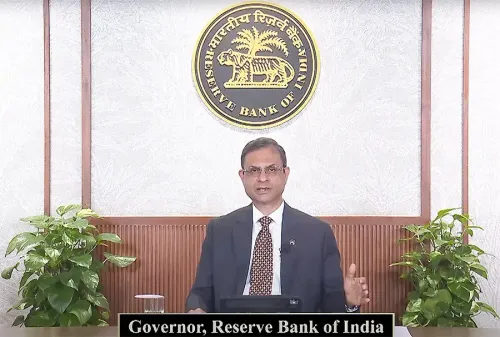
New Delhi, Feb 4 (NationPress) Following the Union Budget 2026 and the groundbreaking India-US trade agreement, attention now shifts to the Reserve Bank of India’s (RBI) three-day Monetary Policy Committee (MPC) meeting commencing Wednesday, culminating in a pivotal repo rate decision on Friday.
Analysts predict that the MPC, led by RBI Governor Sanjay Malhotra, is likely to refrain from further policy rate cuts. Instead, the Central Bank is expected to implement direct actions to address liquidity challenges, bond market stability, and currency risks.
The RBI has already decreased the repo rate by 125 basis points since February 2025, bringing it down to 5.25 percent.
With inflation projected to rise (especially with the new base year series debuting on February 12), there appears to be minimal justification for additional cuts, analysts argue.
“Given the current repo rate of 5.25 percent and anticipated inflation around 4 percent (pending confirmation from the new series), the existing real rate of 125 bps seems appropriate,” noted Yes Bank.
The RBI should maintain a pause, keeping its stance at “neutral” while preserving its capacity to respond to any downturn in growth, the note added.
“We foresee bond purchases persisting throughout this quarter and into April-June 2026. With the FY27 Budget revealing record borrowings, the Central Bank may choose to be adaptive in its money market operations to manage borrowing costs effectively,” stated Radhika Rao, Executive Director and Senior Economist at DBS Bank.
The RBI recently unveiled a suite of liquidity-boosting measures, injecting over Rs 2 lakh crore into the banking system to alleviate liquidity pressures. The Central Bank indicated it will utilize a blend of open market bond purchases, foreign exchange swaps, and variable rate repo operations to improve liquidity conditions, actions prompted by a review of the current financial landscape.
Point of View
The RBI’s decisions during this critical time of economic adjustment are paramount. Balancing inflation control with the need for economic growth is a tightrope walk. Our focus remains on ensuring that the RBI acts prudently, safeguarding financial stability while fostering an environment conducive to growth.
NationPress
29 Sept 2026
Frequently Asked Questions
What is the repo rate?
The repo rate is the rate at which the Reserve Bank of India lends money to commercial banks. It is a tool used to control inflation and manage liquidity in the economy.
How does the repo rate affect consumers?
Changes in the repo rate can influence interest rates on loans and deposits. A lower repo rate generally leads to cheaper loans for consumers, while a higher rate can increase borrowing costs.
What impact does the RBI's decision have on the stock market?
RBI's monetary policy decisions can significantly affect investor sentiment and market performance. A stable or lower repo rate may boost stock prices, while increases could lead to declines.