Maharashtra monsoon red alert: Mumbai records 60% July rainfall in 3 days
Synopsis
Mumbai absorbed 60% of its entire July rainfall quota in just three days — and the IMD says it is not done yet. With red alerts across six districts, a river breach in Raigad, a landslide in Junnar, 1,000-plus residents stranded in Vasai, and dam storage at barely a quarter of capacity despite the deluge, Maharashtra is caught in a paradox: drowning in rain yet critically short on water reserves.
Key Takeaways
Mumbai recorded 60% of its average July monthly rainfall in just the first 3 days of the month.
A red alert has been issued for Mumbai , Thane , Palghar , Raigad , Ratnagiri , and Sindhudurg districts; heavy rain forecast until 6 July .
Andheri Subway closed; Western Railway trains delayed 15–20 minutes due to waterlogged tracks at Nalasopara .
Over 1,000 residents and 150 families stranded in Vasai's Mithagar settlement; APMC market in Navi Mumbai fully submerged.
The Amba River in Raigad breached its danger level, cutting off villages; a landslide blocked Ingloon Ghat in Junnar .
Maharashtra's dam storage stands at just 25.56% of capacity, against 49.76% on the same date last year.
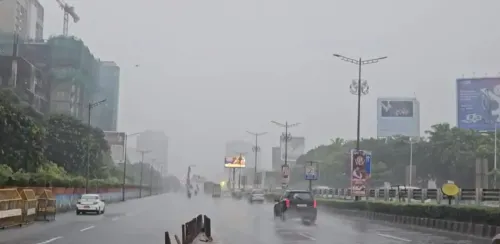
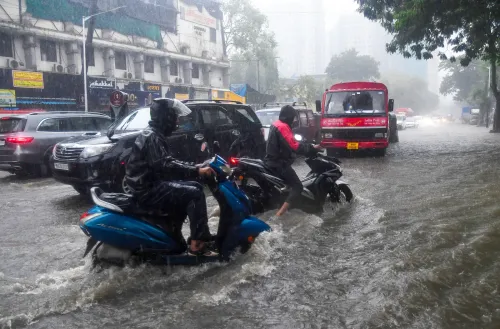
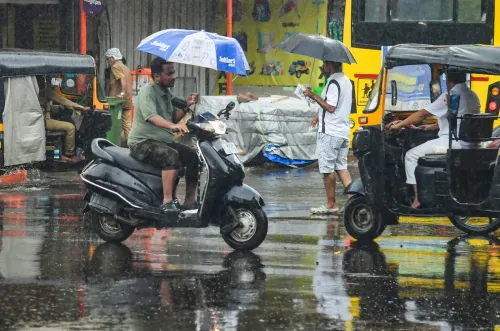
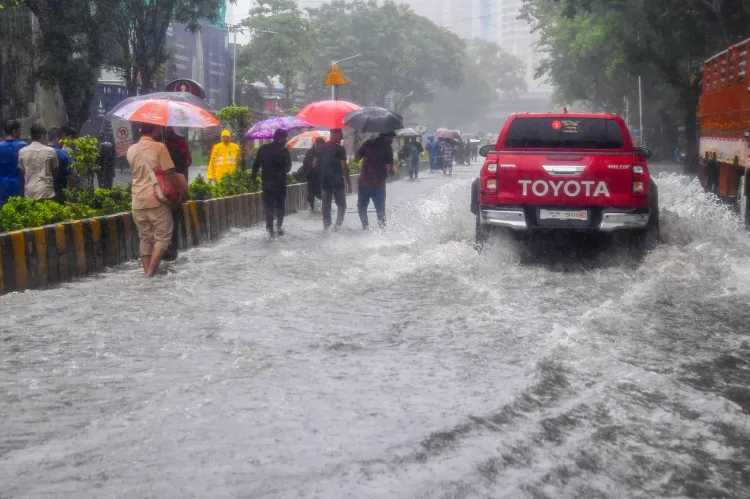
Maharashtra was battered by relentless monsoon rainfall on 4 July, with Mumbai recording 60 per cent of its average monthly July rainfall in just the first three days of the month. The India Meteorological Department (IMD) has issued a red alert for Mumbai, Thane, Palghar, Raigad, Ratnagiri, and Sindhudurg districts, with severe downpours forecast to continue until 6 July. Authorities have urged citizens to step out only if absolutely necessary.
Disruptions Across Mumbai
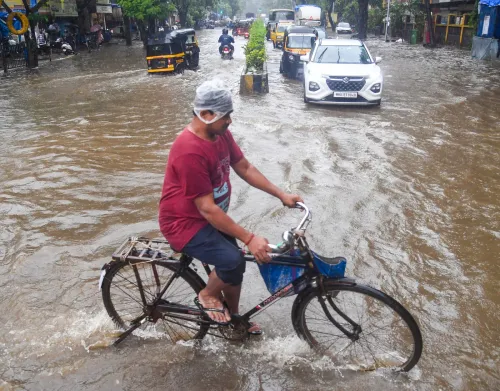
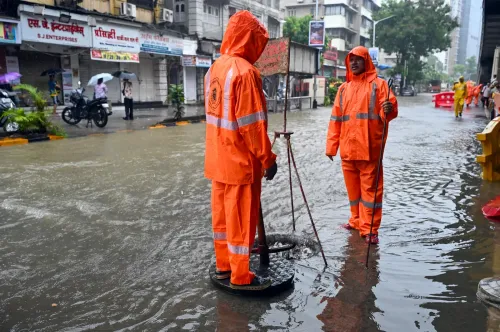
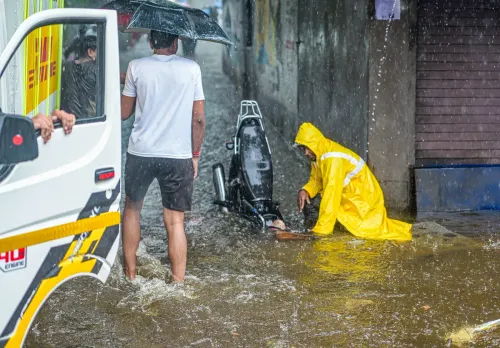
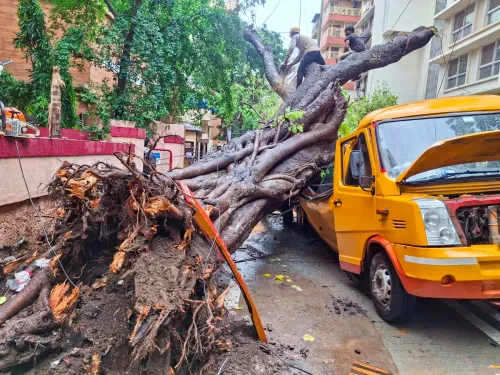
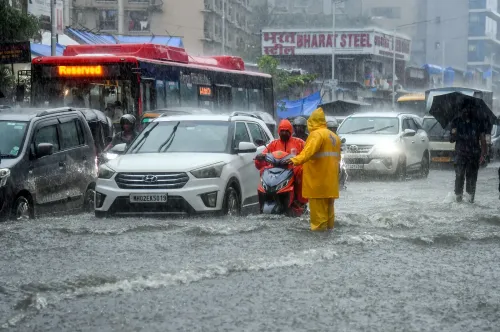
The deluge has turned low-lying areas into virtual lakes, triggering severe waterlogging, road cave-ins, and tree-fall incidents across the city. The Andheri Subway was temporarily shut due to flooding, with traffic between the East and West suburbs diverted to alternative routes. Severe waterlogging near Rolta Junction in Andheri MIDC and outside SEEPZ Gate No 2 choked traffic heading toward the Jogeshwari-Vikhroli Link Road (JVLR).
Mumbai's local train network — the city's lifeline — suffered major disruptions. Waterlogged tracks at Nalasopara station forced Western Railway to run trains at restricted speed, causing delays of 15 to 20 minutes and triggering massive overcrowding at stations during peak hours.
Neighbouring Districts: Submerged Markets and Stranded Families
Dombivli railway station and its surrounding markets were completely submerged, with floodwaters entering shops and inflicting heavy financial losses on local traders. In Mumbra, 88.84 mm of rain fell in just 6 hours, inundating shops in the Amrit Nagar locality. In the Mithagar settlement of Vasai, waist-deep water on roads trapped approximately 150 families and over 1,000 residents. Mahavitaran, the state power utility, preemptively cut electricity supply in affected areas to prevent electrical hazards.
In Navi Mumbai, the premium Agriculture Produce Market Committee (APMC) market was completely flooded, bringing grain, spice, and vegetable trading to a halt. Traders alleged negligence and poor drainage management, with some warning of losses running into millions of rupees. The absence of municipal officials on-site drew sharp resentment from the trading community.
Landslides, River Breaches, and Blocked Highways
According to government sources, torrential rain in Pali and Nagothane in Raigad district caused the Amba River to breach its danger level. The bridge at the Bherav-Khuravle diversion went underwater, severing road connectivity to several villages including Mahagaon, Waghoshi, Bherav, and Tadgaon.
A massive landslide struck Ingloon Ghat in Junnar taluka, blocking the highway with debris and mud. No casualties were reported; JCBs were deployed to clear the wreckage while two-way traffic was managed through a single lane. Multiple ghat routes into the Konkan region were hit by mudslides and falling rocks, prompting authorities to warn travellers against non-essential monsoon journeys. The Panchganga River in Kolhapur district is rising rapidly, raising fresh flood concerns.
Dam Storage at Critically Low Levels
Despite the intensity of the rainfall, Maharashtra's water storage remains surprisingly deficient compared to the previous year. The state's 3,028 large, medium, and small dam projects collectively hold 10,443 million cubic metres of live storage — just 25.56 per cent of total capacity. On the same date last year, storage stood at a significantly healthier 49.76 per cent, underscoring the scale of the deficit heading into this monsoon season.
Government Response and Advisory
The state emergency centre and the Brihanmumbai Municipal Corporation (BMC) have urged residents to monitor official railway and traffic updates before travelling. Emergency services are conducting round-the-clock water-pumping and relief operations across affected areas. With the IMD warning of continued heavy rainfall through 6 July, authorities say the situation in coastal and low-lying districts remains fluid and closely monitored.
Point of View
But the dam storage number is the real story: Maharashtra is simultaneously flooded and water-stressed, with reservoirs at barely a quarter of capacity against last year's near-50%. This exposes a chronic infrastructure gap — the state's drainage and flood-routing systems are simply not built for the intensity that a changing monsoon now delivers routinely. The APMC flooding and trader anger in Navi Mumbai is a recurring annual grievance, suggesting that post-flood reviews have not translated into actionable drainage upgrades. If the IMD forecast holds through 6 July, the Panchganga situation in Kolhapur — which has flooded catastrophically in recent years — deserves far closer official attention than it is currently receiving.
NationPress
3 Oct 2026
Frequently Asked Questions
Why has a red alert been issued for Mumbai and other Maharashtra districts?
The IMD issued a red alert for Mumbai, Thane, Palghar, Raigad, Ratnagiri, and Sindhudurg after Mumbai recorded 60% of its average July monthly rainfall in just the first three days of the month, with severe downpours forecast to continue until 6 July. A red alert signals extremely heavy rainfall that poses a significant risk to life and property.
Which areas of Mumbai are most affected by the flooding?
The Andheri Subway has been closed due to flooding, with severe waterlogging reported near Rolta Junction in Andheri MIDC and outside SEEPZ Gate No 2. Nalasopara station's waterlogged tracks have caused Western Railway train delays of 15 to 20 minutes, and Dombivli's markets and station area are fully submerged.
Has the Maharashtra monsoon caused any landslides or river breaches?
Yes. The Amba River in Raigad district breached its danger level, cutting off road connectivity to villages including Mahagaon, Waghoshi, Bherav, and Tadgaon. A large landslide also blocked Ingloon Ghat in Junnar taluka, though no casualties were reported. Multiple ghat routes into the Konkan region have been hit by mudslides and falling rocks.
How does Maharashtra's current dam storage compare to last year?
Despite the intense rainfall, Maharashtra's 3,028 dam projects hold just 25.56% of their total live storage capacity — compared to 49.76% on the same date last year. The shortfall highlights a significant water storage deficit even as large parts of the state face flooding.
What precautions have authorities advised for Maharashtra residents?
The state emergency centre and the Brihanmumbai Municipal Corporation have urged citizens to leave home only if necessary and to monitor official railway and traffic updates before travelling. Emergency teams are conducting round-the-clock water-pumping and relief operations, and Mahavitaran has cut power supply in flood-prone areas as a precaution against electrical hazards.