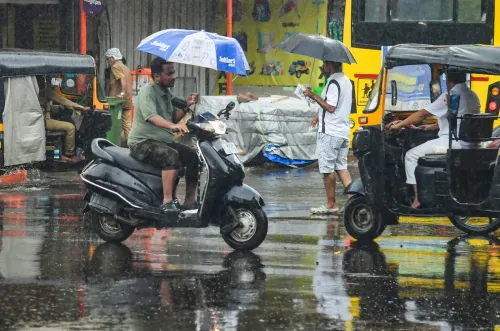
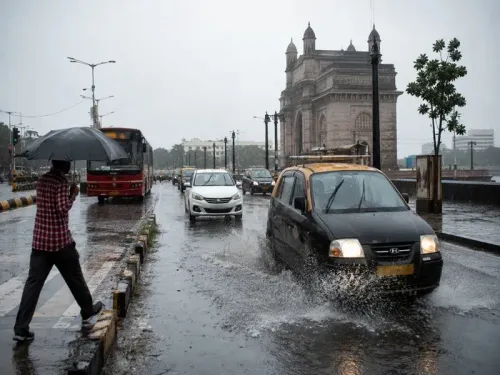
Maharashtra rains: Palghar records 203 mm, rivers breach danger marks
Synopsis
Maharashtra's monsoon turned dangerous on 7 July — Palghar logged a staggering 203 mm in 24 hours, three rivers breached danger levels, two people died, and INCOIS issued a Red Alert wave warning for the entire coastline until 8 July. Dam storage is still 14 percentage points below last year's level for the same date, underlining how quickly conditions can swing.
Key Takeaways
Palghar recorded the state's highest rainfall at 203.3 mm in 24 hours ending 7 July .
Amba , Savitri , and Jagbudi rivers breached the danger level; Kundalika and Pinjal crossed the warning level.
Two people were killed — one in a landslide in Satara , one by lightning in Nandurbar .
INCOIS issued a Red Alert High Wave Warning for the Maharashtra coastline until the night of 8 July , with waves up to 5.0 metres forecast.
Total dam storage across Maharashtra stands at 32.62% , well below the 46.57% recorded on the same date last year.
IMD has placed Orange alerts over Bhandara and Gondia ; Nashik and Palghar remain under warning zones.
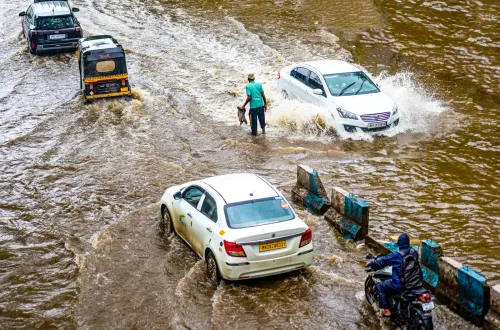
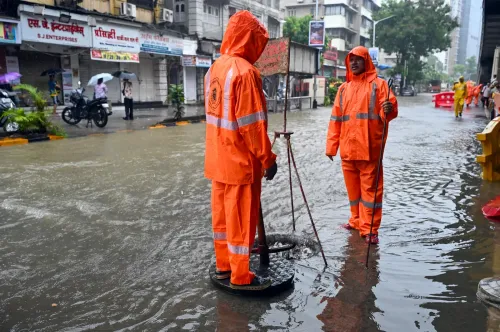
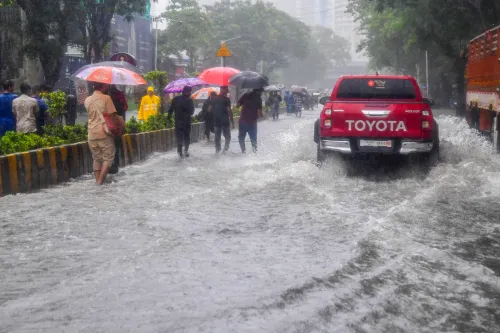
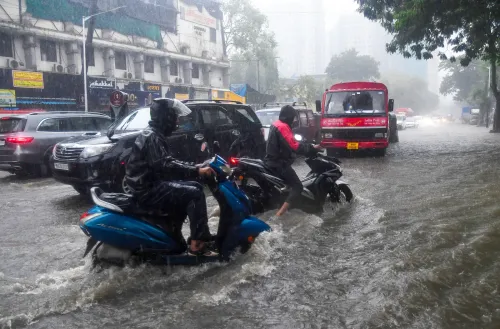
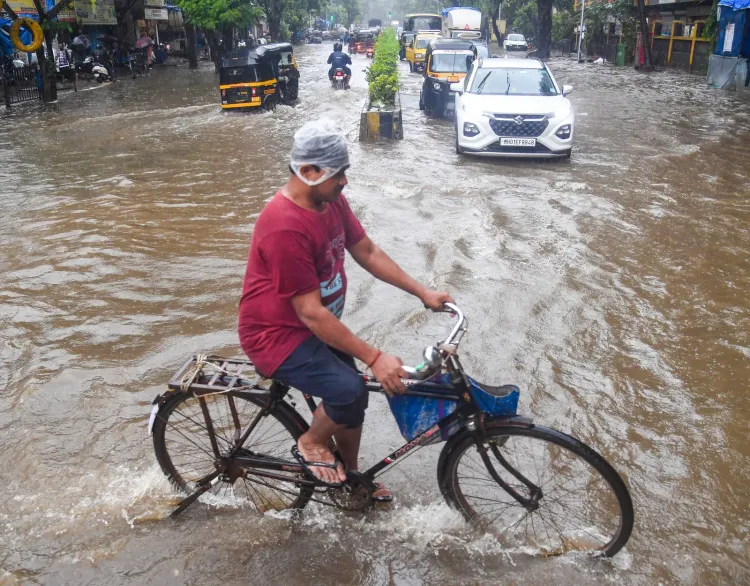
Heavy monsoon rainfall battered several districts of Maharashtra over 24 hours ending Tuesday, 7 July, triggering severe waterlogging, river overflows, and weather-related casualties, according to a situation summary report by the Maharashtra State Disaster Management Authority (MSDMA). The downpour claimed two human lives and injured multiple others across the state.
Rainfall Figures Across Districts
Palghar district recorded the highest rainfall in the state at 203.3 mm over the 24-hour period. Neighbouring Thane and Raigad districts followed with 116.4 mm and 108.7 mm, respectively. Mumbai Suburban logged 90.4 mm, while Pune received 70.9 mm. The Konkan belt bore the brunt of the intense spell, consistent with the region's exposure to the southwest monsoon's first major surge.
Rivers Breach Danger and Warning Levels
The relentless precipitation pushed multiple rivers along the Konkan coast past safe thresholds. The Amba, Savitri, and Jagbudi rivers breached the danger level, while the Kundalika and Pinjal rivers crossed the warning level. Rising river levels have heightened the risk of flash flooding in low-lying communities along these waterways.
Casualties and Damage Reported
According to the MSDMA report, one person was killed in a landslide in Satara, and one person died in a lightning strike in Nandurbar. A wall collapse in Satara resulted in the death of four animals. In Thane and Mumbai city, one person each was reported injured due to falling trees. In Palghar, no human casualties were recorded, but 11 animals were swept away and killed in floodwaters.
Red Alert High Wave Warning for Maharashtra Coast
The Indian National Centre for Ocean Information Services (INCOIS) has issued a Red Alert High Wave Warning for the entire Maharashtra coastline, effective until the night of 8 July. Wave heights of 4.8 to 5.0 metres are forecast for Ratnagiri and Sindhudurg, 4.2 to 4.5 metres for Thane, Mumbai, and Raigad, and 3.7 to 3.9 metres for Palghar. Authorities have strictly prohibited small vessels and fishing boats from venturing into the sea, and all nearshore recreational activities have been suspended due to the threat of coastal erosion and severe wave surges.
Dam Levels and Outlook
Despite the intense rainfall, total reservoir storage across Maharashtra stands at 32.62 per cent of capacity — notably lower than the 46.57 per cent recorded on the same date last year. Reservoirs in the Konkan division are the fullest at 68.52 per cent. The India Meteorological Department (IMD) has placed Nashik and Palghar under alert and warning zones for the afternoon, with Orange alerts active for Bhandara and Gondia in eastern Maharashtra, and a yellow watch over parts of Vidarbha. Emergency services and district administrations across vulnerable zones remain on high alert for flooding and rescue operations.
Point of View
But the combination of three rivers breaching danger levels and dam storage running 14 points below last year's mark raises a less-discussed risk: erratic distribution. Reservoirs that are underfilled in early July often face sudden inflow shocks later in the season, stressing flood-gate management. The INCOIS Red Alert also signals that the Arabian Sea swell is intensifying, which historically correlates with sustained onshore rainfall spells rather than isolated cloudbursts. Authorities would do well to treat this week not as a peak but as a precursor.
NationPress
6 Oct 2026
Frequently Asked Questions
Which district received the most rainfall in Maharashtra on 7 July?
Palghar district recorded the highest rainfall in Maharashtra at 203.3 mm over the 24 hours ending 7 July, according to the MSDMA situation report. Thane and Raigad followed with 116.4 mm and 108.7 mm, respectively.
Which rivers have breached danger or warning levels in Maharashtra?
The Amba, Savitri, and Jagbudi rivers along the Konkan coast breached the danger level, while the Kundalika and Pinjal rivers crossed the warning level. Rising levels have increased the risk of flash flooding in communities along these waterways.
What is the INCOIS Red Alert High Wave Warning for Maharashtra?
The Indian National Centre for Ocean Information Services (INCOIS) issued a Red Alert High Wave Warning for the entire Maharashtra coastline, effective until the night of 8 July. Wave heights of up to 5.0 metres are forecast for Ratnagiri and Sindhudurg; fishing boats and small vessels have been prohibited from venturing into the sea.
How many people have died due to the Maharashtra rains?
Two people died in monsoon-related incidents — one in a landslide in Satara and one in a lightning strike in Nandurbar, according to the MSDMA report. Multiple injuries were also recorded in Thane and Mumbai city due to falling trees.
What is the current dam water level situation in Maharashtra?
Total reservoir storage across Maharashtra stands at 32.62 per cent of capacity as of 7 July, significantly lower than the 46.57 per cent recorded on the same date last year. Konkan division reservoirs are the fullest at 68.52 per cent.