Ritabrata Banerjee: From CPI-M outcast to face of TMC revolt in Bengal

Synopsis
Once a CPI-M poster boy felled by a lifestyle scandal, Ritabrata Banerjee is now the unlikely face of the biggest revolt inside Mamata Banerjee's Trinamool Congress. With over two-thirds of 78 MLAs reportedly behind him after a forged-signature expulsion, Bengal is bracing for a ‘Shiv Sena-like’ rupture in a post-defeat TMC.
Key Takeaways
Ritabrata Banerjee and Sandipan Saha were expelled by the Trinamool Congress on 1 June over alleged ‘forged signatures’ .
More than two-thirds of the remaining 78 TMC MLAs are reportedly backing him as Leader of Opposition.
Banerjee was nominated to the Rajya Sabha by the CPI-M in 2014 , and expelled in September 2017 over lifestyle allegations.
He joined the TMC in 2018 , later heading the state INTTUC unit.
The crisis follows TMC's defeat to the BJP in the latest West Bengal Assembly election.
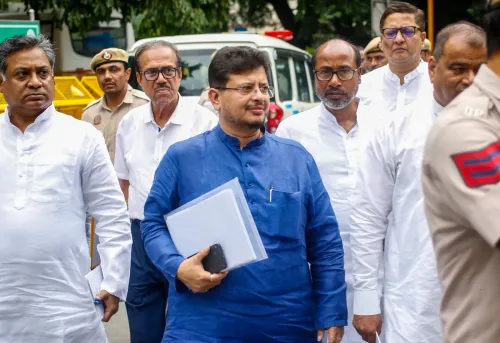
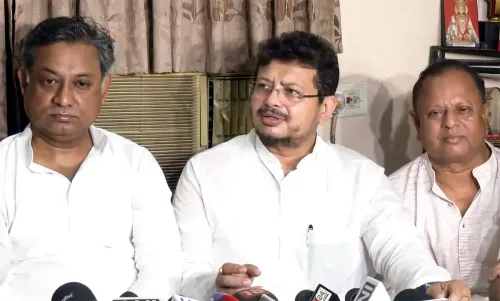
Ritabrata Banerjee, a politician who largely operated in the shadows except when entangled in controversy, has emerged this week as the face of a sweeping rebellion within the Trinamool Congress (TMC) in West Bengal. His expulsion on 1 June, alongside fellow MLA Sandipan Saha, has triggered what insiders describe as the gravest internal crisis the party has faced in years, with reports suggesting more than two-thirds of the remaining 78 legislators are backing him as Leader of Opposition.
The CPI-M years
Banerjee's political ascent began in the Communist Party of India-Marxist (CPI-M), where he rose to become the all-India General Secretary of the Students Federation of India (SFI). Party insiders remain divided on who mentored him — some credit Anil Biswas, the then State CPI-M Secretary, while others point to former Chief Minister Buddhadeb Bhattacharjee as the architect of his rise.
The CPI-M nominated him to the Rajya Sabha in 2014, making him one of the youngest MPs from the state. His first major setback had come earlier, in 2011, when he lost the Kolkata South Lok Sabha by-election — vacated by Mamata Banerjee after she became Chief Minister — to TMC's Subrata Bakshi.
Controversies and expulsion
In April 2013, Banerjee and other SFI members were accused of harassing the then West Bengal Finance Minister Amit Mitra during a protest at New Delhi's Planning Commission — an episode that foreshadowed deeper disciplinary trouble. The turning point arrived in 2017, when allegations of moral turpitude and a lifestyle reportedly incompatible with Communist ideology engulfed his career.
The CPI-M suspended him on 2 June 2017 for three months pending investigation, and recommended his expulsion in September 2017. Banerjee completed the rest of his Rajya Sabha term (2014-2020) as an Independent, openly attacking the party leadership in Kolkata and Delhi.
The Trinamool chapter
Banerjee joined the Trinamool Congress in 2018, beginning as Convener of a newly-formed tribal welfare committee. His brief was to identify gaps in tribal welfare schemes, particularly in the Adivasi-inhabited tea gardens of North Bengal. Unlike his combative SFI years, this phase was marked by deliberate low-profile organisational work.
In 2021, he was appointed General Secretary of the West Bengal unit of the Indian National Trinamool Trade Union Congress (INTTUC), and later elevated to state President. Despite the TMC's poor showing in the tea belt — especially in Alipurduar — during the 2021 Assembly polls, his perseverance was rewarded with a Rajya Sabha by-election nomination in December 2024, following Jawhar Sircar's resignation amid the RG Kar rape-murder scandal.
The expulsion and the rebellion
Recalled to contest this year's West Bengal Assembly election with rumours of a ministerial berth, Banerjee found himself instead at the centre of a fresh storm after the TMC's heavy defeat to the Bharatiya Janata Party (BJP). On 1 June, the party expelled him and Saha from primary membership over allegations of “forged signatures” on a document submitted to Assembly Speaker Rathindra Bose concerning the appointment of the Leader of Opposition, two deputies, and Chief Whip.
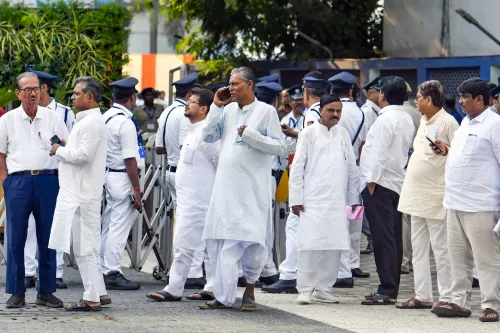
The fallout has been seismic. With well over two-thirds of the remaining 78 MLAs reportedly backing the 46-year-old as Leader of Opposition, speculation of a ‘Shiv Sena-like split’ has gripped Bengal's political circles.
What lies ahead
Banerjee's trajectory mirrors the broader churn in West Bengal politics — from decades of Left dominance to Trinamool hegemony, and now to visible fractures inside the ruling formation as the BJP consolidates. The coming weeks will test whether this rebellion crystallises into a formal split or is absorbed back into the party machinery.
Point of View
Scandal-hit exile, quiet TMC foot soldier, now insurgent — is less a personal story than a mirror of Bengal's political restlessness. The fact that two-thirds of TMC MLAs reportedly stand with an expelled member signals something deeper than a disciplinary spat: a post-defeat power vacuum that Mamata Banerjee's machine has not moved fast enough to fill. If the rebellion holds, it weakens the longstanding myth of TMC's monolithic discipline. If it collapses, it confirms that dissent in Bengal still has a short shelf life. Either way, the BJP is the silent beneficiary.
NationPress
21 Oct 2026
Frequently Asked Questions
Why was Ritabrata Banerjee expelled from the Trinamool Congress?
Ritabrata Banerjee and fellow MLA Sandipan Saha were expelled from primary membership of the TMC on 1 June over allegations of ‘forged signatures’ on a document sent to West Bengal Assembly Speaker Rathindra Bose. The document concerned the appointment of the Leader of Opposition, two deputies, and Chief Whip.
Who is Ritabrata Banerjee and what is his political background?
Ritabrata Banerjee, 46, is a former CPI-M Rajya Sabha MP who began his career as all-India General Secretary of the SFI. He was expelled by the CPI-M in September 2017 over lifestyle-related allegations, joined the TMC in 2018, and later headed the state INTTUC unit before being elected MLA.
What is the ‘Shiv Sena-like split’ speculation about?
Reports indicate that more than two-thirds of the TMC's remaining 78 MLAs are backing Banerjee as Leader of Opposition despite his expulsion. This level of internal support has fuelled speculation of a vertical split similar to the Shiv Sena breakup in Maharashtra.
How did the TMC perform in the latest West Bengal Assembly election?
The Trinamool Congress suffered a heavy defeat to the BJP in this year's West Bengal Assembly election. The loss has triggered internal turbulence, of which the Banerjee expulsion and the MLA rebellion are the most visible signs.
What happens next in the TMC crisis?
The immediate question is whether the rebellion crystallises into a formal split or is contained by the party leadership. Banerjee's claim to the Leader of Opposition post and the Speaker's response will be the next decisive markers.