RRU Gandhinagar hosts 31-team moot court on digital payment security limits
Synopsis
Ninety students from India, Nepal, Uzbekistan, Ethiopia, and the UK are arguing a fictional but timely dispute at RRU Gandhinagar: can a state legally shut down digital payment networks to counter a suspected armed group, even when ordinary families depend on those networks for remittances? The case mirrors a tension that real international tribunals are likely to face as financial infrastructure becomes a front line of national security.
Key Takeaways
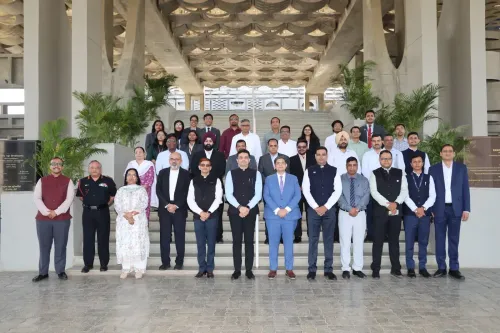
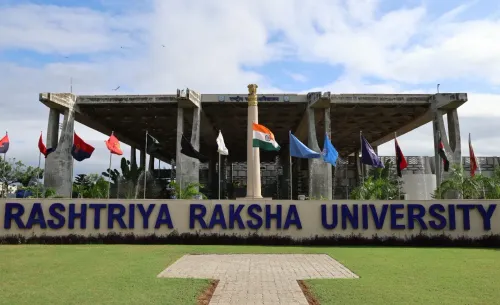
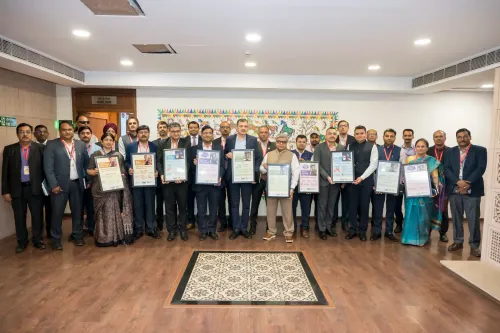
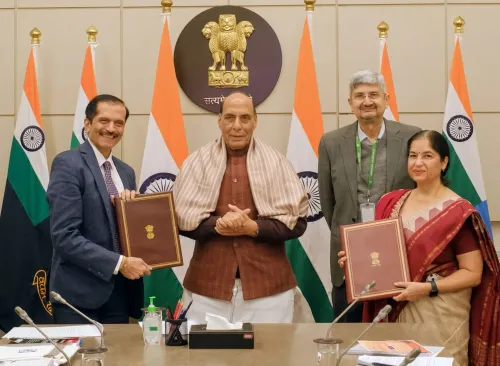
Rashtriya Raksha University (RRU) in Gandhinagar inaugurated its Third International Moot Court Competition on 20 November .
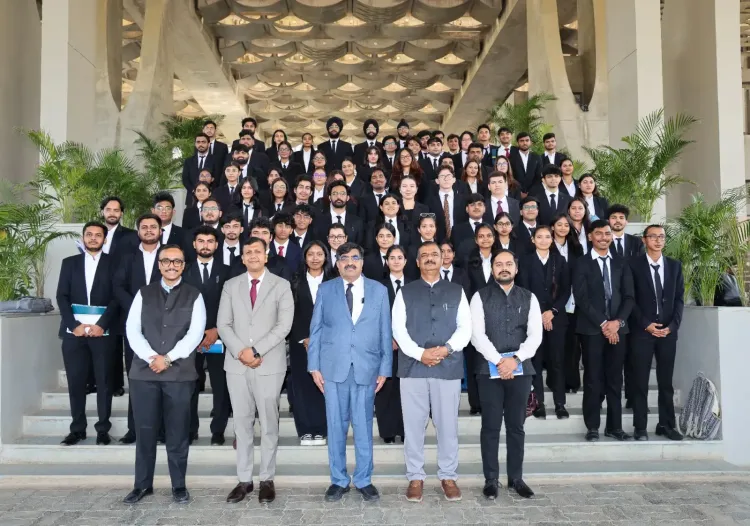
More than 90 students from 31 teams across five countries — India, Nepal, Uzbekistan, Ethiopia, and the UK — are competing over three days.
Teams argue a fictional cross-border dispute involving state intervention in digital payment networks linked to suspected financial transactions of an armed group.
RRU Vice-Chancellor Prof. (Dr.) Bimal N.
Patel , also a judge of ITLOS , urged participants to anchor every argument in specific legal provisions and to separate jurisdiction, consent, and admissibility.
NSE Vice-President CA Deepak Garg argued that financial systems and digital networks now constitute core security domains, calling for a balance between sovereignty and international cooperation.
The competition is organised jointly by RRU's SCLML and SICMSS .
Rashtriya Raksha University (RRU) in Gandhinagar is hosting the Third RRU International Moot Court Competition, a three-day event drawing more than 90 students from 31 teams across five countries to argue the legal boundaries of state authority over cross-border digital payment networks. The competition, inaugurated on 20 November, places national security imperatives in direct tension with the uninterrupted flow of international financial transactions.
Who Is Competing and What They Are Arguing
The participating teams include 25 from India, three from Nepal, and one each from Uzbekistan, Ethiopia, and the United Kingdom — representing legal traditions from South Asia, Central Asia, East Africa, and Europe. The teams are tasked with arguing a fictional dispute between two neighbouring states over suspected financial transactions allegedly linked to an armed group, and the extent to which governments may lawfully intervene in digital payment systems used for cross-border family remittances and business transfers.
The core legal questions before the participants are three-fold: which judicial forum holds jurisdiction over the dispute, what treaty obligations bind the states involved, and whether the evidence presented is sufficient to sustain the claims being made.
What the Organisers Said
Manish Kumar Singh, Director of RRU's School of Integrated Coastal and Maritime Security Studies (SICMSS), described the third edition as a 'milestone', noting that the diversity of participating institutions brought genuinely different legal perspectives to the problem. He invoked Mahatma Gandhi's view of lawyers as agents of reconciliation between divided parties while welcoming delegates, adjudicators, and guests.
RRU Vice-Chancellor Prof. (Dr.) Bimal N. Patel — who also serves as a judge of the International Tribunal for the Law of the Sea (ITLOS) — delivered the inaugural address, pressing participants to ground every argument in a clear legal basis. He urged students to distinguish between three distinct questions in any international dispute: what states have consented to, which matters fall within a court's jurisdiction, and whether a specific claim is admissible. 'Participants should explain how specific legal provisions supported the outcome they were seeking,' Patel said.
The Broader Security Dimension
Joining the inaugural session virtually, CA Deepak Garg, Vice-President of the National Stock Exchange of India Limited (NSE), argued that economic and technological change had fundamentally expanded the concept of security beyond territorial borders. He identified financial systems, energy supplies, digital networks, and data as domains of growing strategic importance for states. Garg called for a calibrated balance between sovereign authority and international cooperation, and raised the question of whether international law could evolve rapidly enough to regulate the forms of power created by emerging technologies.
Structure and Academic Oversight
The competition is jointly organised by RRU's School of Criminal Law and Military Law (SCLML) and SICMSS. The event brings together students who must research applicable treaties, statutes, and evidentiary standards — mirroring the demands placed on practising international lawyers. This is the third consecutive year RRU has hosted the competition, with each edition expanding its international reach.
Why This Competition Matters
The moot's scenario — state surveillance of digital payment corridors versus the rights of families dependent on cross-border remittances — reflects a live and unresolved tension in international law. As digital payment systems increasingly bridge jurisdictions, questions of regulatory jurisdiction, financial intelligence sharing, and sovereign overreach are likely to reach actual international tribunals in the years ahead. For the students arguing these cases at Gandhinagar this week, the exercise is both academic training and a preview of disputes the next generation of international jurists will be expected to resolve.
Point of View
With real consequences for migrant families. What is unusual about this competition is its institutional framing — a defence university putting future security professionals through international law paces, signalling that India's strategic community increasingly views financial infrastructure as a legal battleground, not just a regulatory one. The presence of ITLOS judge Bimal Patel as vice-chancellor gives the event institutional credibility that most moot competitions lack, but the broader question he posed — whether international law can keep pace with emerging financial technology — remains genuinely unanswered.
NationPress
21 Nov 2026
Frequently Asked Questions
What is the RRU International Moot Court Competition?
It is an annual international law competition hosted by Rashtriya Raksha University (RRU) in Gandhinagar, now in its third edition. The 2024 event runs for three days from 20 November, with 31 teams from five countries arguing a fictional cross-border dispute involving digital payment networks and national security.
Which countries are participating in the RRU moot court 2024?
Teams from five countries are competing: India (25 teams), Nepal (3 teams), and one team each from Uzbekistan, Ethiopia, and the United Kingdom, bringing together legal traditions from South Asia, Central Asia, East Africa, and Europe.
What legal questions are the students arguing at RRU?
Students are arguing a fictional dispute between two neighbouring states over whether a government can lawfully intervene in cross-border digital payment networks on national security grounds. The core questions cover which court has jurisdiction, what treaty obligations apply, and whether the available evidence supports the claims.
Who is RRU Vice-Chancellor Bimal N. Patel?
Prof. (Dr.) Bimal N. Patel is the Vice-Chancellor of Rashtriya Raksha University and also serves as a judge of the International Tribunal for the Law of the Sea (ITLOS). At the inaugural session, he advised participants to clearly distinguish jurisdiction, state consent, and admissibility when constructing international legal arguments.
Why is the debate over digital payment networks and state power significant?
As cross-border digital payments grow in scale, the question of how much authority a state has to restrict or surveil these networks — particularly in the name of security — has become a live issue in international law. NSE Vice-President CA Deepak Garg noted that financial systems and digital networks are now core security domains, raising the question of whether existing international law can regulate the power these technologies create.