RRU, IICA launch second MFES cohort to combat AI fraud and money laundering
Synopsis
As AI-powered scams and cross-border financial crime grow more sophisticated, RRU and IICA have launched the second cohort of India's only hybrid master's programme dedicated to financial and economic security — drawing regulators, police, lawyers, and financial professionals into one interdisciplinary classroom aimed squarely at protecting 'Viksit Bharat @2047'.
Key Takeaways
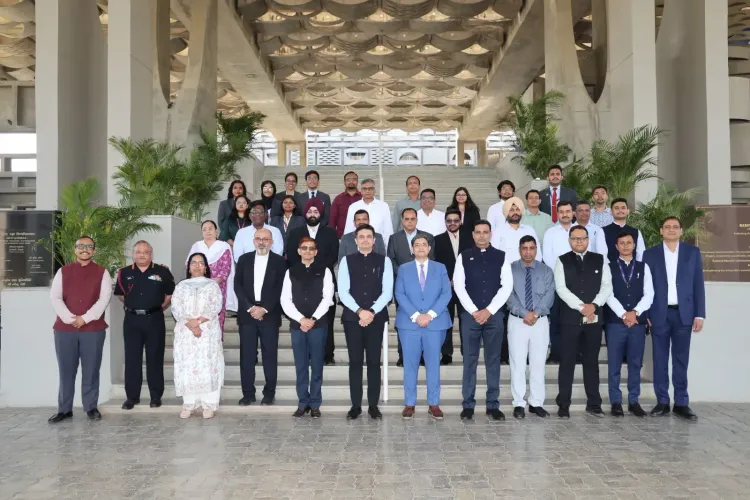
RRU and IICA launched the second cohort of the Master's in Financial and Economic Security (MFES) on 31 October in Gandhinagar .
The programme is offered in a hybrid format , targeting working professionals from regulatory, law-enforcement, financial, and legal sectors.
Key threats addressed include money laundering , terrorist financing , deepfake-enabled scams , virtual digital assets , and AI-driven cyberattacks .
The curriculum covers AML , counter-terrorist financing , international standards, and dedicated sessions on artificial intelligence in financial supervision.
The programme is aligned with the national vision of 'Viksit Bharat @2047' and is conducted under the Union Ministry of Home Affairs .
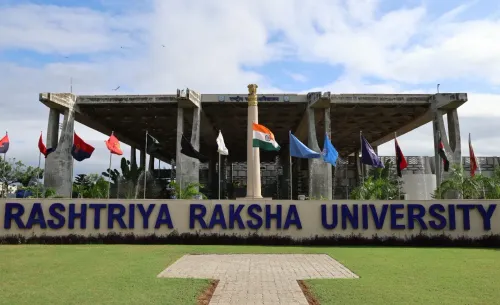
Rashtriya Raksha University (RRU) and the Indian Institute of Corporate Affairs (IICA) launched the second cohort of their Master's in Financial and Economic Security (MFES) programme on 31 October in Gandhinagar, targeting the growing threat of AI-driven financial fraud, money laundering, and cross-border illicit fund flows. The initiative aims to build a specialised cadre of professionals equipped to defend India's financial integrity against increasingly sophisticated threats.
Programme Structure and Participants
The MFES is offered in a hybrid format, enabling working professionals to pursue advanced studies without interrupting their careers. The second cohort draws participants from regulatory bodies, law-enforcement agencies, police organisations, financial institutions, the legal profession, and the entrepreneurship sector, among others.
RRU, designated an institution of 'National Importance' under the Union Ministry of Home Affairs, is conducting the programme in collaboration with IICA. The second cohort builds on lessons from the inaugural batch, deepening both academic rigour and practical application.
Why This Programme Matters Now
The launch comes against a backdrop of rapidly evolving financial crime. Money laundering, terrorist financing, sanctions evasion, illicit financial flows, and the misuse of corporate structures are placing mounting pressure on India's regulatory and enforcement ecosystem. These activities, according to programme organisers, can weaken institutions, distort markets, and undermine national interests.
Technological change has sharpened the threat landscape further. Digital payments, virtual digital assets, decentralised finance (DeFi), and cross-border platforms are increasingly being exploited to conceal criminal proceeds. Artificial intelligence has introduced additional risks — including deepfake-enabled scams, sophisticated impersonation attacks, automated cyberattacks, and manipulation of financial data — even as it simultaneously offers new tools for risk detection and investigation.
What the Faculty and Officials Said
RRU Pro Vice-Chancellor Prof. (Dr.) Kalpesh Wankhade addressed the inaugural ceremony, stating: 'Financial security is a key pillar of a strong and self-reliant India.' He stressed the urgency of building a specialised professional cadre with a sound understanding of financial and economic security, and called for stronger cooperation among institutions working in the field.
Sunil Kavishwar, Director of RRU's School of Criminal Law and Military Law, highlighted the challenges posed by rapid technological advancement for financial crime supervision and enforcement, underscoring the need for professionals to remain equipped to counter technology-enabled threats.
Prof. (Dr.) Naveen Sirohi, Head of the School of Finance and Management and Director of the Forum of Indian Regulators (FOIR) Centre at IICA, said specialised capacity-building programmes like MFES were essential for developing a new generation of economic security professionals. He noted that the vision of 'Viksit Bharat' required 'not only economic growth but also protection against emerging threats such as illicit fund flows, supply-chain disruptions, technology-driven risks and geopolitical tensions.'
Curriculum and Learning Approach
The programme follows an applied, practice-oriented curriculum combining academic instruction with case studies, expert interactions, and campus immersion activities. Participants will engage with regulators, investigative and enforcement agencies, and financial-sector bodies integral to India's economic architecture.
The syllabus covers international standards, cross-border cooperation, comparative regulatory frameworks, and developments in anti-money laundering (AML) and counter-terrorist financing (CTF). Dedicated sessions on artificial intelligence and emerging financial technologies are designed to help participants assess evolving risks and understand the responsible use of technology in compliance and enforcement.
Alignment with Viksit Bharat 2047
The MFES is explicitly aligned with the national vision of 'Viksit Bharat @2047', with RRU and IICA emphasising that financial integrity is foundational to protecting public resources, maintaining investor confidence, and supporting inclusive growth. The diverse professional backgrounds of participants are expected to foster interdisciplinary collaboration on emerging economic security challenges.
As AI-driven fraud and cross-border financial crime continue to evolve, the programme's second cohort signals a broader institutional push to ensure India's regulatory and enforcement workforce keeps pace with the threat.
Point of View
Not before. The MFES is a structural attempt to close that gap, but its real test will be whether graduates translate classroom frameworks into on-ground enforcement outcomes. The inclusion of AI and DeFi modules is timely, yet curriculum relevance will need continuous updating as these technologies evolve faster than any academic cycle. More critically, the programme's interdisciplinary design — bridging regulators, police, and financial professionals — addresses a coordination deficit that has historically allowed sophisticated financial crime to exploit institutional silos in India.
NationPress
1 Nov 2026
Frequently Asked Questions
What is the Master's in Financial and Economic Security (MFES) programme?
The MFES is a hybrid master's programme jointly offered by Rashtriya Raksha University (RRU) and the Indian Institute of Corporate Affairs (IICA), designed to train working professionals in combating financial crimes such as money laundering, terrorist financing, and AI-driven fraud. The second cohort began on 31 October in Gandhinagar.
Who can enrol in the MFES programme?
The programme is open to working professionals from regulatory bodies, law-enforcement agencies, police organisations, financial institutions, the legal profession, and entrepreneurship. Its hybrid format allows participants to study alongside their professional responsibilities.
Why is the MFES programme being launched now?
The programme responds to a sharp rise in technology-enabled financial crime, including deepfake scams, virtual digital asset misuse, and AI-driven cyberattacks. Organisers cite growing threats from money laundering, sanctions evasion, and cross-border illicit fund flows as making specialised capacity-building urgent.
What subjects does the MFES curriculum cover?
The curriculum covers anti-money laundering (AML), counter-terrorist financing (CTF), international regulatory standards, cross-border cooperation, decentralised finance risks, and dedicated modules on artificial intelligence in financial supervision and enforcement. It uses case studies, expert interactions, and campus immersion sessions.
How does the MFES connect to India's Viksit Bharat vision?
RRU and IICA have explicitly aligned the programme with 'Viksit Bharat @2047', arguing that financial integrity — protecting public resources and maintaining investor confidence — is a prerequisite for inclusive economic growth. Faculty noted that national development goals require simultaneous protection against illicit fund flows, supply-chain disruptions, and geopolitical risks.