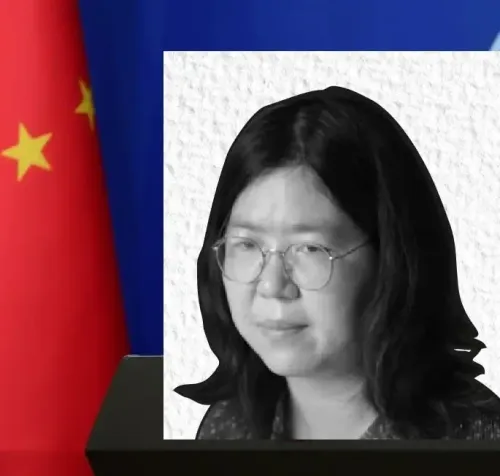
RSF demands full freedom for Chinese journalist Sophia Huang Xueqin after 5-year jailing
Synopsis
Chinese journalist Sophia Huang Xueqin is due to leave prison on 18 September 2026 — but RSF warns she will face four more years of surveillance, travel bans, and press restrictions. Her case encapsulates China's systematic use of 'subversion' charges to silence reporters, in a country that now holds 121 journalists behind bars.
Key Takeaways
Sophia Huang Xueqin is set to be released on 18 September 2026 after nearly five years in a Chinese prison.
She was sentenced on 14 June 2024 to five years for 'inciting subversion of state power'.
Post-release, she will face four additional years of political rights deprivation, including surveillance and a travel ban.
RSF reports she was subjected to harsh interrogation, including use of the 'tiger chair', during detention.
China is described by RSF as the world's largest jailer of journalists , with 121 currently imprisoned.
RSF's Aleksandra Bielakowska has urged the global diplomatic community to press Beijing for Sophia's full and genuine freedom.
Press freedom group Reporters Without Borders (RSF) has called on the international diplomatic community to secure the complete freedom of Chinese journalist Sophia Huang Xueqin, who is set to be released on 18 September 2026 after serving nearly five years in prison for her reporting on gender-based violence and human rights abuses in China. RSF warns, however, that her release will not mean genuine freedom.
What Awaits Sophia After Release
According to RSF, Sophia will face an additional four years of political rights deprivation following her prison term. This includes restrictions on freedom of movement, a ban on travelling abroad, a prohibition on practising journalism, and continuous surveillance by Chinese authorities.
A friend of Sophia's, quoted by RSF, described the situation starkly: 'For people like Sophia, leaving prison does not mean regaining freedom. It often means moving from a small prison to a larger one.'
A Pattern of Arrests and Harsh Conditions
Sophia was first detained in October 2019 in Guangzhou on charges of 'picking quarrels and provoking trouble', linked to her coverage of the Hong Kong protests, during which she reportedly condemned the authorities' violent crackdown on demonstrators. She was released on bail after three months, with no formal charges filed.
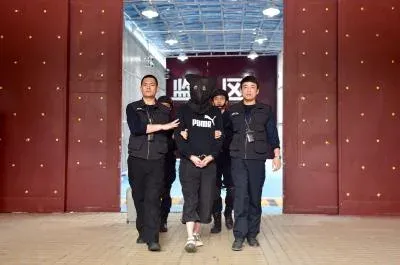
She was re-arrested by Guangzhou police in September 2021 on charges of 'inciting subversion of state power'. According to RSF, citing her friends, Sophia was subjected to harsh interrogation methods during her detention, including the use of the so-called 'tiger chair', described by the group as a 'notorious torture device'. On 14 June 2024, she was formally sentenced to five years in prison.
China's Record on Press Freedom
RSF has described China as the world's 'largest jailer of news professionals', with 121 journalists currently behind bars. Sophia's case, the organisation argues, is not an isolated incident but part of a deliberate pattern of silencing reporters who expose sensitive realities of life under the Chinese Communist Party (CCP).
Aleksandra Bielakowska, Advocacy Manager for RSF Asia-Pacific, said: 'Despite sustained persecution, Sophia Huang Xueqin embodies the spirit of journalism by transforming the injustices she has witnessed into stories that can drive real change. Her case stands out for her astounding ability to speak truth to power, but fits into a terrible pattern: the Chinese Communist Party (CCP) systematically seeks to silence hardworking, trustworthy journalists for exposing the darkest aspects of life in Chinese society.'
International Community Urged to Act
Bielakowska further urged: 'We urge the diplomatic community to remain vigilant in monitoring Sophia Huang Xueqin's situation and to keep her safety high on the agenda in their relations with Beijing, sending a clear message that viciously stifling journalists has its consequences. She must regain her full freedom upon completing her unjust sentence.'
As 18 September 2026 approaches, pressure is mounting on governments and international institutions to use their diplomatic leverage with Beijing to ensure that Sophia's release translates into genuine liberty — and not merely a change in the form of her confinement.
Point of View
Then releasing, then re-arresting on escalating charges, and finally appending years of post-sentence restrictions that effectively extend incarceration by other means. The 'tiger chair' allegation, if verified, places this squarely within documented patterns of custodial abuse that Beijing has never been held internationally accountable for. With 121 journalists behind bars, China's press freedom record is not a peripheral human rights issue — it is a structural feature of the state. The diplomatic community's response to Sophia's release will be a test of whether international pressure on Beijing carries any real consequence.
NationPress
10 Oct 2026
Frequently Asked Questions
Who is Sophia Huang Xueqin and why was she jailed?
Sophia Huang Xueqin is a Chinese journalist who was imprisoned for her reporting on gender-based violence and human rights abuses in China. She was sentenced on 14 June 2024 to five years in prison on charges of 'inciting subversion of state power', following an earlier 2019 detention linked to her coverage of the Hong Kong protests.
When will Sophia Huang Xueqin be released from prison?
Sophia is set to be released on 18 September 2026, with the period of pre-trial detention deducted from her five-year sentence. However, she will remain subject to political rights restrictions for a further four years after her release.
What restrictions will Sophia face after her release?
According to RSF, Sophia will be deprived of political rights for four years post-release, including a ban on practising journalism, restrictions on freedom of movement, a prohibition on travelling abroad, and continuous surveillance by Chinese authorities.
What is RSF's demand regarding Sophia Huang Xueqin?
Reporters Without Borders (RSF) has urged the international diplomatic community to monitor Sophia's situation closely and press Beijing to ensure she regains full and genuine freedom upon completing her sentence. RSF has called her sentence 'unjust' and warned that post-release restrictions amount to continued imprisonment.
How many journalists are currently jailed in China?
According to RSF, China currently holds 121 journalists behind bars, making it the world's largest jailer of news professionals. The organisation argues that Sophia's case is part of a systematic effort by the Chinese Communist Party to silence reporters who cover sensitive topics.