S. Korea, US race to resolve $200 billion investment plan before August deadline
Synopsis
South Korea's industry minister flew to Dallas to salvage a $200 billion investment announcement before August ends — but 'more issues than anticipated' are surfacing at the working level, two days after Seoul's chief trade negotiator was abruptly dismissed. The clock is ticking on a deal that underpins South Korea's 15 percent tariff rate with the US.
Key Takeaways
Industry Minister Kim Jung-kwan arrived in Dallas, Texas on 17 August to resolve sticking points over a $200 billion US investment plan.
The investment is part of a larger $350 billion commitment that secured a US tariff reduction on South Korean imports from 25% to 15% . $150 billion of the total is allocated to shipbuilding cooperation ; the remaining $200 billion is still being negotiated.
South Korea's chief trade negotiator Yeo Han-koo was dismissed just two days before Kim's Dallas trip.
South Korea faces a 12.5% tariff under Washington's new forced-labour probe, alongside Japan and Switzerland .
A separate US investigation into alleged excess industrial capacity covers 16 economies , including South Korea, with results due by end of August.
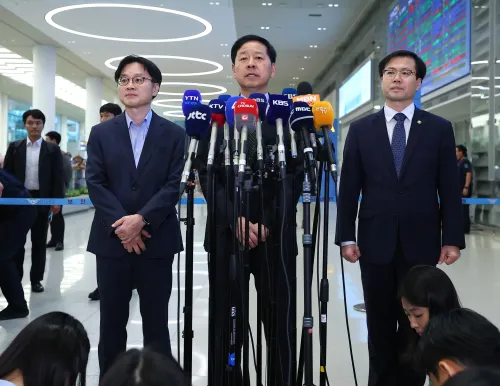
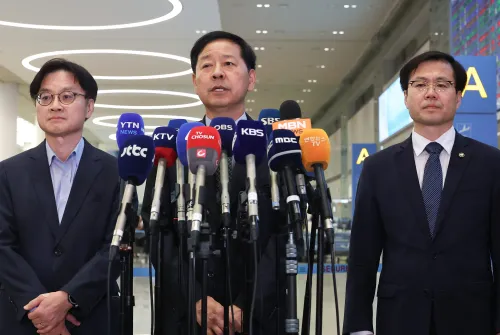
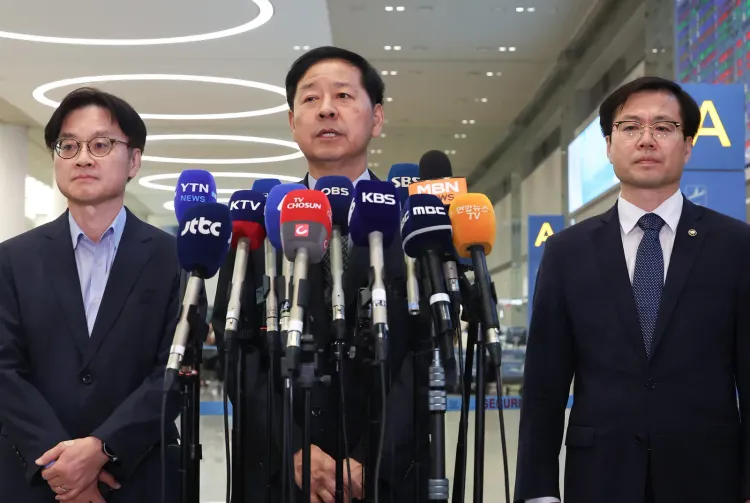
South Korea's Industry Minister Kim Jung-kwan arrived in Dallas, Texas on Sunday, 17 August to hold talks aimed at resolving outstanding issues over a $200 billion investment plan — a key component of the bilateral tariff deal between Seoul and Washington. The visit underscores mounting pressure on both sides to finalise details before a self-imposed end-of-August deadline.
Background: The $350 Billion Trade Framework
Under a broader trade agreement struck last year, South Korea committed to investing $350 billion in the United States in exchange for a reduction in the US tariff rate on South Korean imports from 25 percent to 15 percent. Of this total, $150 billion was designated for cooperation in the shipbuilding sector, while the remaining $200 billion — covering broader investment projects — is still being negotiated at the working level.
What Minister Kim Said
'We had previously said we were considering announcing the projects around the end of August or early September, but as we approach the final stage, various specific issues are emerging at the working level,' Kim told reporters after landing in Dallas. When pressed on whether an announcement could still come by end of August, Kim confirmed that was the target but acknowledged complications. 'Various issues are emerging, more than we had anticipated,' he said. 'Please understand that I came here with the goal of resolving them somehow so that we can meet the end-of-August target.'
Political Turbulence Back Home
Kim's Dallas trip came just two days after Yeo Han-koo, South Korea's chief trade negotiator, was dismissed — a development that adds political sensitivity to an already complex negotiation. The dismissal signals internal strain within Seoul's trade team at a critical juncture in US-South Korea economic relations.
Broader US Tariff Pressure on South Korea
The investment talks are unfolding against a backdrop of escalating US trade actions. Last month, Washington announced a new round of tariffs on imports from 60 trading partners, ranging from 10 percent to 12.5 percent, following an investigation into forced labour under Section 301 of the Trade Act of 1974. South Korea was placed in the 12.5 percent bracket, alongside Japan and Switzerland. Separately, the US government is investigating 16 economies — including South Korea — over alleged excess industrial capacity under the same legislation, with results of that probe expected by the end of this month.
What Comes Next
Both governments are racing against the clock. If the $200 billion investment package is announced on schedule, it would mark a significant milestone in US-South Korea economic diplomacy. A delay, however, could intensify tariff pressure on Seoul and raise questions about the durability of the broader trade framework. Industry observers will be watching closely for any announcement from Washington or Seoul before 31 August.
Point of View
Seoul's leverage weakens considerably, given that Washington is simultaneously running two separate Section 301 investigations that could tighten the tariff vice further.
NationPress
1 Oct 2026
Frequently Asked Questions
What is the $200 billion US-South Korea investment plan?
It is the unresolved portion of a broader $350 billion investment commitment made by South Korea as part of a bilateral trade deal with the United States. The deal lowered US tariffs on South Korean imports from 25 percent to 15 percent, with $150 billion earmarked for shipbuilding cooperation and the remaining $200 billion still under negotiation.
Why did South Korea's Industry Minister travel to Dallas?
Minister Kim Jung-kwan travelled to Dallas on 17 August to hold working-level talks aimed at resolving specific outstanding issues blocking the announcement of the $200 billion investment projects, with an end-of-August target in mind.
What tariffs is South Korea currently facing from the United States?
South Korea is subject to a 12.5 percent tariff under a new US round targeting 60 trading partners over forced-labour concerns under Section 301 of the Trade Act of 1974. A separate investigation into alleged excess industrial capacity — covering 16 economies including South Korea — is also underway, with results expected by end of August.
Who is Yeo Han-koo and why does his dismissal matter?
Yeo Han-koo was South Korea's chief trade negotiator, dismissed just two days before Minister Kim's Dallas trip. His removal at a critical stage of negotiations adds political uncertainty to Seoul's trade posture with Washington.
When could the $200 billion investment projects be announced?
Minister Kim indicated that both sides are negotiating with an end-of-August or early-September target, though he acknowledged that more issues have emerged than anticipated, making the timeline uncertain.