Will Seoul's $200 billion investment in the US prioritize South Korean firms?
Synopsis
Seoul's ambitious $200 billion investment in the U.S. is designed to prioritize South Korean companies, enhancing their market entry and financial support. This strategic move follows a recent tariff agreement, ensuring significant benefits for local businesses. As the deal takes shape, the implications for both economies present an exciting opportunity for growth and collaboration.
Key Takeaways
The investment prioritizes South Korean firms in the U.S.
Structured around a joint investment committee.
Includes a significant allocation for shipbuilding cooperation.
Addresses concerns about domestic investment impacts.
Aims to enhance market presence and cash flow for Korean businesses.
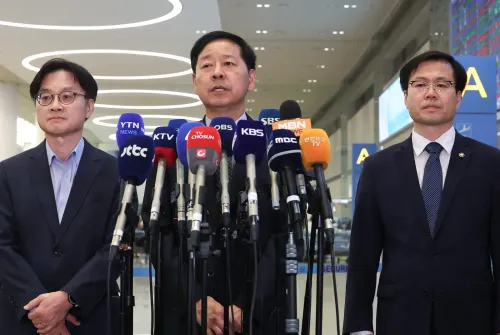
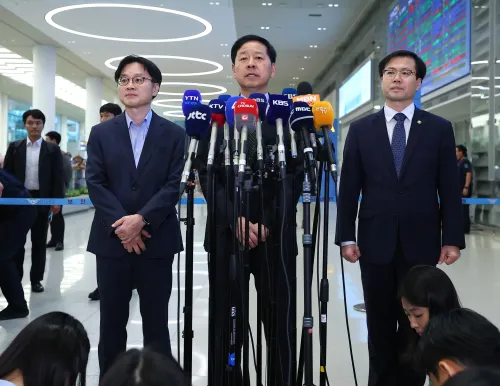
Seoul, Nov 3 (NationPress) The anticipated $200 billion investment from Seoul to the United States is set to predominantly benefit South Korean companies operating within the U.S., as stated by the industry minister on Monday.
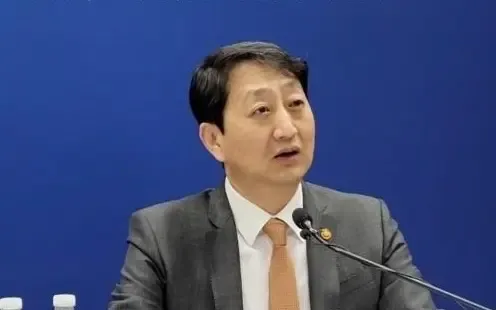
Industry Minister Kim Jung-kwan highlighted during a meeting with CEOs of medium-sized enterprises that this investment is not merely financial assistance to the U.S. He emphasized, “The $200 billion cash investment is structured to prioritize our companies entering the U.S. market,” referring to the recent tariff agreement between the two nations.
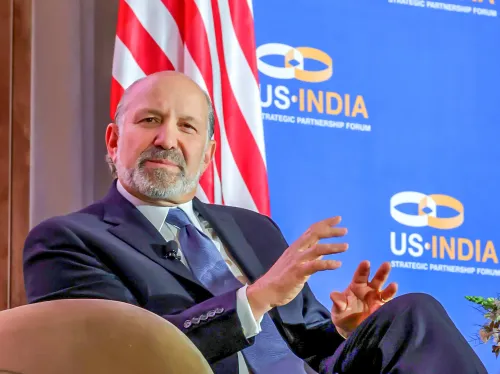
Kim elaborated that investments would be directed towards projects mutually agreed upon through a joint investment committee, which will be co-chaired by U.S. Commerce Secretary Howard Lutnick and himself, according to reports from Yonhap news agency.
“This $200 billion investment will follow a framework of commercial viability. In simpler terms, it will target businesses that can generate cash flow,” he remarked.
Last Wednesday, Seoul and Washington concluded the details regarding Seoul's $350 billion investment promise, which was linked to the reduction of U.S. tariffs.
Under the finalized agreement, the investment will be broken down into $200 billion in cash and $150 billion aimed at fostering bilateral shipbuilding cooperation, capped at $20 billion annually.
Kim noted that both nations are nearing the completion of a memorandum of understanding and a joint fact sheet regarding their recently finalized tariff agreement.
“Korean companies previously had to self-fund their ventures in the U.S., but now they have an alternative option with this tariff deal,” he urged, encouraging medium-sized enterprises to leverage the forthcoming Korea-U.S. investment fund.
When asked about U.S. President Donald Trump’s comments on being a “very tough” negotiator, Kim expressed that it is an “honor for my family,” noting the compliment from someone he considers the toughest negotiator globally.
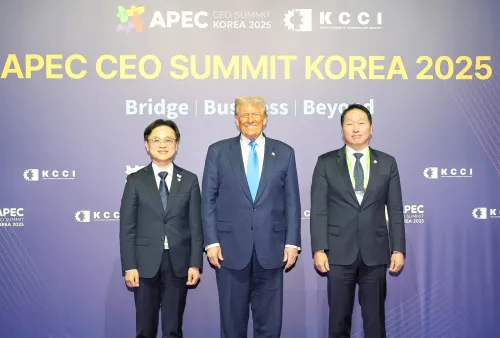
Trump made these remarks during his special address at the Asia-Pacific Economic Cooperation (APEC) CEO Summit held in Gyeongju last week.
In a separate briefing, Vice Industry Minister Moon Shin-hak stated the government is assessing the potential effects of Seoul’s extensive investment strategy in the U.S.
“While Korean conglomerates have been effectively implementing their 'mother factory' strategy, we will need to evaluate whether they can sustain and enhance this strategy,” Moon said, addressing concerns that investments in the U.S. may compromise domestic investments.
The 'mother factory' strategy involves operating a primary facility for technological development and manufacturing high-value products domestically while outsourcing less crucial projects to overseas facilities.
Regarding ongoing dialogues with petrochemical companies about an industrial restructuring plan, Moon indicated that his ministry aims to finalize the plan by year-end.
In August, the government released a roadmap to support the struggling petrochemical sector’s voluntary restructuring initiatives aimed at mitigating the industry-wide crisis caused by global oversupply.
Point of View
It's crucial to recognize the significance of Seoul's $200 billion investment in the U.S. This initiative not only signals a commitment to strengthening international economic ties but also emphasizes the importance of supporting domestic companies in their expansion efforts. While the investment is a positive step forward, ongoing assessments will be necessary to ensure that it does not adversely affect the domestic market.
NationPress
20 Sept 2026
Frequently Asked Questions
What is the purpose of Seoul's $200 billion investment?
The investment aims to support South Korean companies operating in the U.S. and enhance their market entry opportunities.
How is the investment structured?
The investment consists of $200 billion in cash and $150 billion for bilateral shipbuilding cooperation, with an annual cap of $20 billion.
What is the 'mother factory' strategy?
The 'mother factory' strategy involves businesses operating a primary facility for high-value product development in their home country while outsourcing less critical projects to overseas plants.
Who will chair the joint investment committee?
The joint investment committee will be co-chaired by U.S. Commerce Secretary Howard Lutnick and South Korea's Industry Minister Kim Jung-kwan.
What impact might this investment have on domestic investments?
There are concerns that investing heavily in the U.S. could weaken domestic investments by South Korean companies.