Harish Salve calls INDIA bloc's CJI march 'sheer stupidity', says SC used as political tool
Synopsis
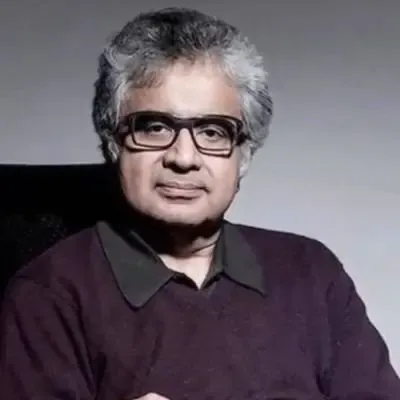
Senior advocate Harish Salve did not mince words — calling the INDIA bloc's march to the CJI's chambers 'sheer stupidity' and alleging that the Supreme Court is being weaponised as a political prop. More sharply, he levelled a direct allegation of foreign funding behind the protests, drawing parallels with political upheaval in Bangladesh and Nepal. His remarks, from a lawyer with 45-plus years at the Bar, carry institutional weight that goes well beyond standard political counter-punching.
Key Takeaways
Former Solicitor General Harish Salve labelled the INDIA bloc's march to meet the CJI as 'sheer stupidity' on 12 October 2026 .
Salve alleged the Supreme Court is being used as a political tool 'every day' by the Opposition.
He criticised daily protests against CEC Gyanesh Kumar , noting the Supreme Court had already scheduled a hearing within 10 days .
Salve drew a distinction between questioning a specific judgment and losing faith in the judiciary, citing senior lawyer Kapil Sibal's reported remarks.
He alleged — explicitly framing it as his personal view — that foreign funding is behind the protests, citing a pattern over ' six to eight months '.
Salve said he has practised law for more than 45 years and has never witnessed political pressure of this kind directed at the Chief Justice.
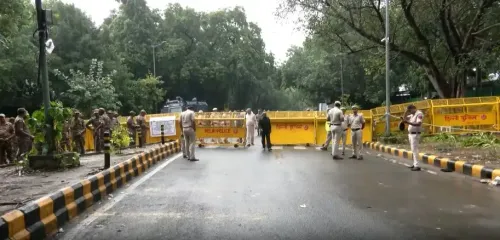
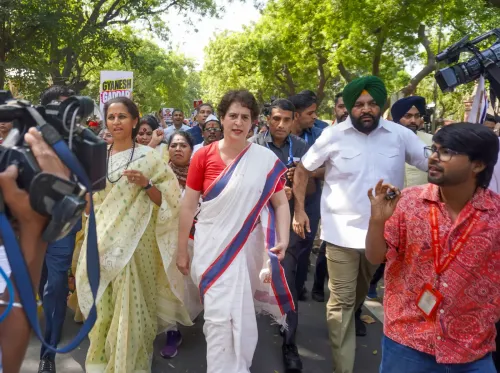
Former Solicitor General and senior advocate Harish Salve on 12 October 2026 sharply criticised the INDIA bloc's decision to march to the Supreme Court and seek a meeting with the Chief Justice of India (CJI), calling it 'sheer stupidity' and alleging that the apex court was being used as a political instrument. Speaking in an interview, Salve also questioned the ongoing protests against Chief Election Commissioner (CEC) Gyanesh Kumar, warning that such moves risk eroding public faith in constitutional institutions.
On the CJI Meeting Bid
Salve said he initially thought reports of Congress leader Rahul Gandhi and INDIA bloc leaders seeking an appointment with the CJI were 'fake', but confirmed the development after lawyers from the Bar and Bench corroborated it. He expressed bewilderment that a party with several senior advocates in its ranks would pursue such a course. 'The Chief Justice does not personally hear every case. The Bench to which the Chief Justice assigns a matter hears it and delivers the judgment,' he said, adding, 'Something new is happening in our country. I do not understand what is going on.'
On the march itself, Salve was unsparing. 'This is sheer stupidity. It appears as though they are proceeding on the assumption that they have no faith in the Constitution or any system and that they will do whatever they want,' he said. He pointed out that the INDIA bloc had already filed a petition, making the street protest politically incongruous with the legal process underway.
Supreme Court as a Political Tool
Salve alleged that the Opposition was 'trying to use the Supreme Court as a political tool every day.' He noted that the court had, on the day of the interview, passed what he described as a 'very balanced order' — directing only that nothing illegal be done and that the government's response remain proportionate. 'I have been practising law for more than 45 years. I have never before seen this kind of thinking, in which people seek to meet the Chief Justice in this manner,' he said.
Salve also addressed remarks attributed to senior lawyer and politician Kapil Sibal, who has reportedly expressed a loss of faith in the judiciary. 'If he has lost faith in the judiciary, he should advise his clients accordingly. If I had no faith in the judiciary, I would not appear in court myself,' Salve said. He drew a distinction between being disappointed with a specific judgment and questioning the institution's integrity, invoking the English legal maxim: 'They are not final because they are right, but they are right because they are final.'
On the Protests Against the Election Commission
Salve criticised the campaign against CEC Gyanesh Kumar, noting that the Supreme Court had already sought a response from the Election Commission and a hearing was due within approximately 10 days. He questioned the necessity of daily agitation. 'Is it necessary to inconvenience the people of Delhi? The festive season is approaching. Shopkeepers are worried that protests could affect their businesses,' he said. Salve emphasised that while the Supreme Court cannot directly remove the CEC, the validity of his decisions and procedures will be examined by the court in due course.
He also noted that if personal misconduct were established, the applicable constitutional procedure — including a motion for impeachment — could be pursued through proper channels.
Allegations of Foreign Funding
In the most pointed section of the interview, Salve alleged that some of the protest activity was being financed and instigated from abroad. 'I believe that foreign funding is being provided for these efforts and that they are being instigated from abroad. This is my allegation,' he said explicitly. He cited what he described as a pattern visible over 'the past six to eight months' and referenced protest figures he named as YouTubers Dipke and Saurav Das, some of whom he said operate from overseas, including Germany. Salve drew a parallel with political upheaval in Nepal, Sri Lanka, and Bangladesh, alleging external involvement in those cases as well — though he offered no documentary evidence for these claims, framing them as his personal assessment.
He said he was 'fully confident' that a government investigation would be initiated, and added that in his view the current movement was 'not a genuine people's movement.'
Institutional Integrity and the Road Ahead
Stepping back, Salve warned against the broader trend of weakening constitutional institutions through political pressure. 'The Constitution has established separate institutions, including the judiciary, the legislature, the elected executive and the Election Commission. Each has its own jurisdiction,' he said. He cautioned that if every unfavourable judgment is met with a declaration of lost faith, the institutional framework of Indian democracy itself is at risk. Salve indicated the government had taken a 'clear and firm position' to protect institutions, and said he believed it should continue to do so. How the INDIA bloc responds — legally and on the streets — is likely to shape the next phase of the stand-off.
Point of View
Coming from someone who has argued before the CJI for decades, is harder to dismiss than a government spokesperson's talking point. That said, his allegation of foreign funding behind the protests is sweeping and unsubstantiated, and mainstream coverage should note that he offered no documentary evidence. The deeper tension he identifies — between the right to protest and the responsibility to trust institutions — is real and unresolved; and the risk he warns about, that every adverse judicial outcome becomes a referendum on judicial integrity, is a genuinely corrosive dynamic that neither side of India's political divide has fully resisted.
NationPress
12 Oct 2026
Frequently Asked Questions
What did Harish Salve say about the INDIA bloc's march to meet the CJI?
Harish Salve called the INDIA bloc's decision to march to the Supreme Court and seek a meeting with the Chief Justice of India 'sheer stupidity.' He said constitutional rights must be exercised within the framework of the law and that there is a prescribed procedure in court that must be followed, noting the bloc had already filed a petition.
Why did Salve say the Supreme Court is being used as a political tool?
Salve alleged the Opposition files petitions but then does not appear in court on behalf of protesters, turning the process into a political performance rather than genuine legal recourse. He said this pattern — of invoking the court publicly while not fully engaging with its process — amounted to using the apex court as a political instrument.
What did Salve say about Kapil Sibal's reported loss of faith in the judiciary?
Salve said if Sibal had genuinely lost faith in the judiciary, he should advise his clients accordingly and stop appearing in court. He drew a firm distinction between being disappointed with a specific judgment and questioning the integrity of the institution as a whole, citing the legal maxim that Supreme Court judgments are 'right because they are final.'
What allegations did Salve make about the protests against CEC Gyanesh Kumar?
Salve alleged that some protest activity is being funded and instigated from abroad, framing this explicitly as his personal allegation without presenting documentary evidence. He also questioned the need for daily agitation given that the Supreme Court had already sought a response from the Chief Election Commissioner and a hearing was due within roughly 10 days.
Can the Supreme Court remove the Chief Election Commissioner?
No. Salve clarified that the Supreme Court cannot directly remove the Chief Election Commissioner. The court can examine the validity of the CEC's decisions and procedures, and if misconduct is established through its observations, the applicable constitutional process — which can include a motion for impeachment — may be pursued through Parliament.