Supreme Court slams 10x cancer drug pricing gap as 'daylight dacoity'
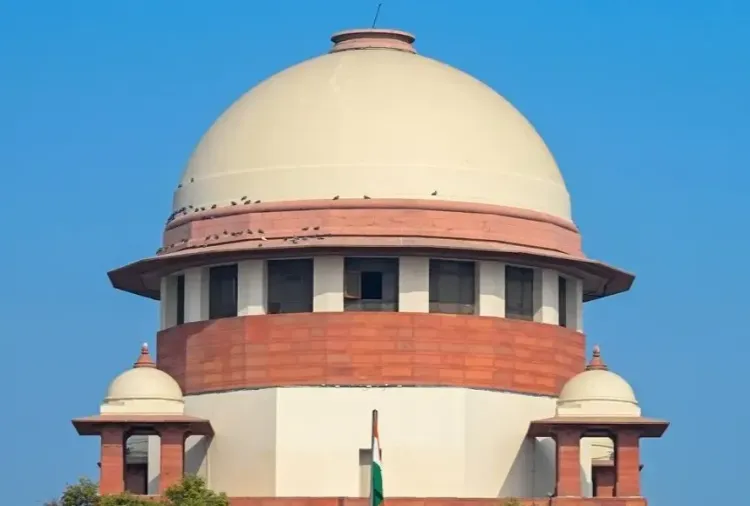
Synopsis
India's Supreme Court has called the 10-fold gap between a cancer drug's trade price and its MRP 'broad daylight dacoity' — and pointedly noted that regulators are 'absolutely silent' on the abuse. With no law controlling how manufacturers initially fix an MRP, and the next hearing set for 29 September, India's pharmaceutical pricing framework faces its most direct judicial scrutiny in years.
Key Takeaways
The Supreme Court on 22 September 2026 called a 10x gap between cancer drug trade price ( ₹2,700 ) and MRP ( ₹27,000 ) an act of 'broad daylight dacoity'.
Justice Sandeep Mehta criticised pricing regulators for being 'absolutely silent' on the disparity.
PIL litigant Kishan Chand Jain told the court there is no regulatory check on a drug's initial MRP — only a cap on subsequent increases of more than 10% .
Separate submissions flagged concerns over generic medicine prescribing , including the risk of pharmacists making commercially motivated choices on behalf of patients.
The Indian Pharmaceutical Alliance argued retailers, not manufacturers, are responsible for high patient-end prices; the court challenged that position, noting manufacturers print the MRP.
The case is next listed on 29 September 2026 for further submissions from the government and the pharmaceutical industry.
The Supreme Court of India on Tuesday, 22 September 2026, delivered a stinging rebuke to the country's pharmaceutical pricing regime, calling the 10-fold gap between a cancer medicine's trade price and its printed maximum retail price (MRP) an act of 'broad daylight dacoity' against patients. The remarks came as a bench of Justices Vikram Nath and Sandeep Mehta heard a clutch of public interest litigations (PILs) concerning medicine price regulation, generic drug prescribing, medical devices, and prescription practices.
The Damning Numbers on the Bench
Justice Sandeep Mehta pointed directly to a cancer drug sold by its manufacturer to retailers at ₹2,700 but stamped with an MRP of ₹27,000 — a markup of exactly ten times. 'That's absolute dacoity, broad daylight dacoity. How can a patient be cheated on a medicine that the manufacturer sells to the retailer at 2,700, while the MRP is printed at 27,000? Ten times!' Justice Mehta said from the bench.
The court's displeasure extended beyond that single example. Documents submitted during the hearing showed that one medicine carried an MRP of ₹73 against a price to retailer (PTR) of ₹22.75, while another showed an MRP of ₹61 against a PTR of just ₹9.65. The pattern, the bench noted, was systemic rather than exceptional.
Regulators in the Dock
Justice Mehta trained his criticism squarely on the authorities responsible for overseeing pharmaceutical pricing, questioning why such disparities were permitted to persist. 'It is very surprising that the authorities who are supposed to decide on this are absolutely silent. We need not spell out the reason for that,' he observed — a remark widely interpreted as a pointed reference to regulatory capture.
PIL litigant Kishan Chand Jain, appearing in person, underscored the structural gap: under the current framework, a manufacturer launching a new drug faces no regulatory check on its initial price. It can set the MRP at ₹1 or ₹1,000 — the only restriction is that it cannot raise that price by more than 10% once set. 'No regulatory regime controls price fixation,' Jain told the bench.
The Generic Medicine Debate
A second strand of the hearing focused on generic drug prescribing. PIL litigant Dr Sanjay Kulshresthra acknowledged that generics could dramatically reduce the cost of treatment but flagged an accountability gap: when a doctor prescribes a generic without naming a brand, the effective choice of manufacturer falls to the pharmacist — who has not examined the patient and may have commercial incentives. Kulshresthra argued patients should retain the right to choose between generic and branded options.
This concern resonates beyond the courtroom. India's Jan Aushadhi scheme has made generic medicines widely available, yet uptake remains uneven, in part because questions about quality consistency persist among both doctors and patients.
What the Government and Industry Said
Additional Solicitor General K.M. Nataraj, representing the Union government, adopted a conciliatory posture, telling the court that the Centre was not treating the proceedings as adversarial and would examine areas for improvement in the existing system.
Senior advocate Kapil Sibal, appearing for the Indian Pharmaceutical Alliance, argued that manufacturers were not responsible for the prices ultimately paid by patients and contended that retailers were pocketing substantial profit margins. The Supreme Court was quick to challenge that position, noting that it is the manufacturer who prints the MRP on the medicine's packaging — making the manufacturer the proximate actor in setting the ceiling price consumers see.
What Happens Next
The Supreme Court has listed the matter for further hearing on 29 September 2026, when it will hear additional submissions from Sibal and the Union government. The case could compel the National Pharmaceutical Pricing Authority (NPPA) and the Ministry of Health to defend the existing Drugs (Prices Control) Order framework — and potentially overhaul how initial MRPs are set for medicines outside the controlled-price list. With millions of cancer patients and their families bearing the brunt of opaque pricing, the court's unusually sharp language signals that a business-as-usual response from regulators may not be acceptable.
Point of View
The bench is signalling that incremental regulatory tweaks will not satisfy judicial scrutiny. The deeper problem the court has surfaced is structural: India's Drugs (Prices Control) Order regulates price increases but leaves initial MRP-setting entirely to manufacturers, creating a system where a company can embed a massive margin at the point of launch and remain technically compliant forever after. The bench's aside about regulators being 'absolutely silent' — followed by 'we need not spell out the reason' — amounts to a public accusation of regulatory capture, which the government's anodyne response did nothing to rebut. The pharmaceutical industry's attempt to shift blame to retailers will be hard to sustain when the MRP is printed by the manufacturer; that argument may buy time, but it is unlikely to hold on 29 September.
NationPress
23 Sept 2026
Frequently Asked Questions
What did the Supreme Court say about cancer medicine pricing?
The Supreme Court on 22 September 2026 called the practice of selling a cancer drug to retailers at ₹2,700 while printing an MRP of ₹27,000 an act of 'broad daylight dacoity'. Justice Sandeep Mehta said the ten-fold markup amounted to cheating patients and questioned why regulators had allowed it to continue.
Why is there such a large gap between medicine MRP and trade price in India?
Under India's current drug pricing framework, manufacturers face no regulatory control over the initial MRP they set for medicines outside the government's controlled-price list. The only restriction kicks in after the MRP is fixed — the manufacturer cannot raise it by more than 10% annually. This leaves manufacturers free to embed large margins at the point of launch.
What is the case before the Supreme Court about?
The Supreme Court is hearing a set of public interest litigations (PILs) covering medicine price regulation, generic drug prescribing, medical device pricing, and prescription practices. The bench is examining gaps in the regulatory framework and the government's ability to protect patients from arbitrary pricing.
What did the Indian Pharmaceutical Alliance argue before the court?
The Indian Pharmaceutical Alliance, represented by senior advocate Kapil Sibal, argued that manufacturers are not responsible for the high prices paid by patients and that retailers earn substantial profit margins. The Supreme Court pushed back, noting that it is the manufacturer who prints the MRP on the packaging.
When is the next hearing in the medicine pricing case?
The Supreme Court has scheduled the next hearing for 29 September 2026, when it will hear further submissions from the Indian Pharmaceutical Alliance and the Union government on how the current pricing regime should be reformed.