NHRC Urges Comprehensive Action Against Fake Medicines
Synopsis
In a critical meeting, NHRC Member Justice Sarangi urged immediate and coordinated measures to combat the alarming rise of spurious medicines in India, highlighting the urgent need for regulatory reforms to protect human rights.
Key Takeaways
Urgent action is needed against spurious medicines.
Enhanced oversight and accountability in the pharmaceutical sector are crucial.
Legal reforms, including special drug courts, can expedite justice.
Public health is at stake, impacting the right to life and health.
Collaboration with international bodies can strengthen efforts to combat this crisis.
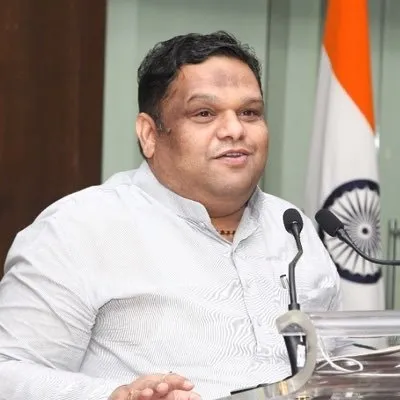
New Delhi, Feb 26 (NationPress) Member of the National Human Rights Commission (NHRC), Justice (Dr.) Bidyut Ranjan Sarangi, emphasized on Thursday that the rising menace of spurious medications necessitates a comprehensive, multi-faceted approach to tackle this serious violation of human rights.
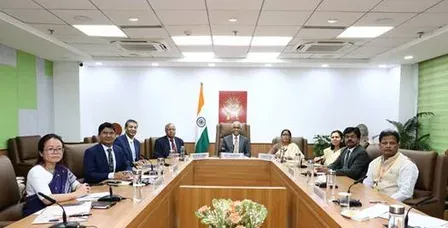
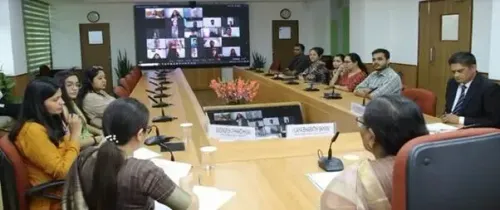
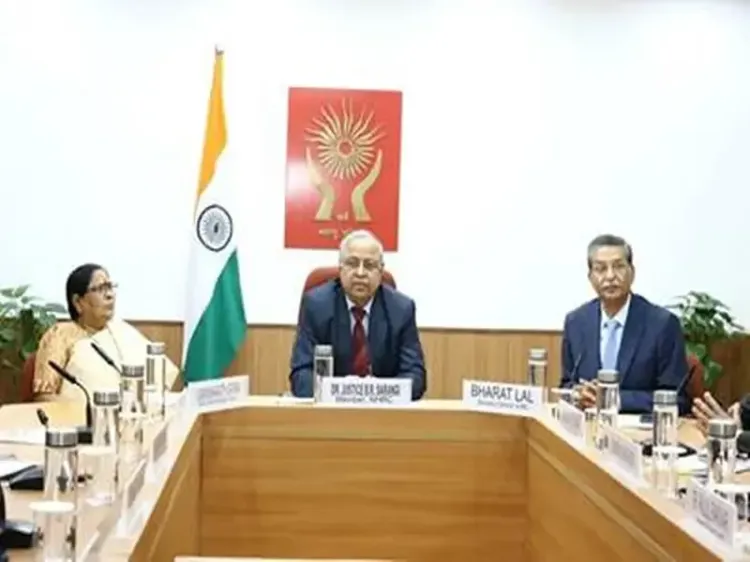
Justice Sarangi made these remarks during an Open House Discussion (OHD) held in hybrid format, focusing on the theme ‘Strategies to Combat Spurious Medicines in India’ at NHRC's office in Delhi.
He pointed out that in a nation as extensive and varied as India, even minor regulatory issues can lead to widespread human suffering if not addressed promptly and systematically.
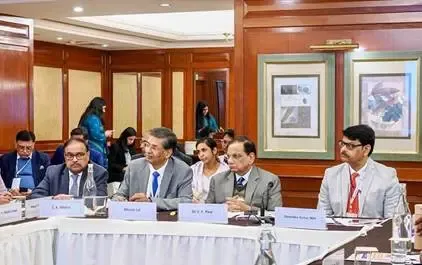
Other attendees included NHRC Member Vijaya Bharathi Sayani, former NHRC Member Rajiv Jain, Secretary General Bharat Lal, Director General (Investigation) Anupama Nilekar Chandra, Registrar (Law) Joginder Singh, and Joint Secretaries Samir Kumar and Saidingpuii Chhakchhuak, along with senior government officials.
Sayani shared her personal experience regarding the human toll of inadequate treatment, recalling that a family member faced irreversible blindness due to improper care and the use of inferior medications.
She stated that this pressing issue needs urgent attention through the establishment of enhanced oversight and accountability structures within the pharmaceutical sector.
Former NHRC Member Rajiv Jain advocated for the establishment of specialized drug courts to expedite the trial process for offenders, and proposed measures such as real-time drug testing, mandatory QR codes, track-and-trace systems, and blockchain-based supply chain verification.
He also highlighted the necessity for using NABL-accredited laboratories, employing AI-driven anomaly detection in distribution patterns, conducting surprise inspections, bolstering whistleblower protections, implementing digital case tracking, creating a centralized national database for spurious drug incidents, enhancing public helplines, and reviewing regulatory safeguards for e-prescriptions.
NHRC Secretary General Bharat Lal pointed out that both spurious and substandard medicines negatively affect the fundamental right to life and health, underscoring the need for coordinated institutional efforts to combat this issue.
He stressed that citizens take medications in good faith, trusting the state’s commitment to uphold life and dignity, warning that any failure in this regard could lead to human rights violations for those affected.
Emphasizing the principle that ‘medications should heal, not harm,’ he made a clear distinction between 'spurious drugs' as defined under Section 17-B of the Drugs and Cosmetics Act, 1940, and 'substandard drugs' which are authorized products failing to meet quality standards.
Referring to the National Survey on Drugs, he noted that approximately 10 percent of government samples were classified as substandard.
He explained that spurious drugs are linked to criminal enterprises with no identifiable manufacturer, necessitating criminal investigations, whereas the makers of substandard drugs can be traced.
Justice Sarangi highlighted that the NHRC has been actively taking suo motu cognizance of reported rights violations stemming from the consumption of spurious medications.
Keshav Kumar, NHRC Special Rapporteur who has conducted extensive research on this topic, called for improved monitoring, the formation of task forces at both central and state levels, enhanced regulatory compliance, better inter-agency coordination, training for law enforcement and judicial personnel, victim compensation frameworks, and partnerships with international organizations.
Point of View
I see the NHRC's call for action as a crucial step toward safeguarding public health. The rise of spurious medicines not only compromises individual health but also poses a significant threat to the integrity of healthcare systems. A united effort across various sectors is essential to confront this challenge effectively.
NationPress
7 Oct 2026
Frequently Asked Questions
What are spurious medicines?
Spurious medicines are products that are falsely labeled or have no identifiable manufacturer, often linked to criminal activities.
Why is the NHRC concerned about spurious medicines?
The NHRC is concerned because spurious medicines violate human rights, particularly the right to health and life.
What measures are being suggested to combat this issue?
Proposed measures include establishing special drug courts, real-time drug testing, and enhanced oversight mechanisms.
How prevalent are substandard drugs in India?
According to a National Survey, about 10 percent of government samples were found to be substandard.
What can individuals do if they suspect they have received spurious medication?
Individuals should report their concerns to local health authorities and utilize public helplines for guidance.