SC defers Punjab govt plea against CBI probe into CM Mann's OSD corruption case
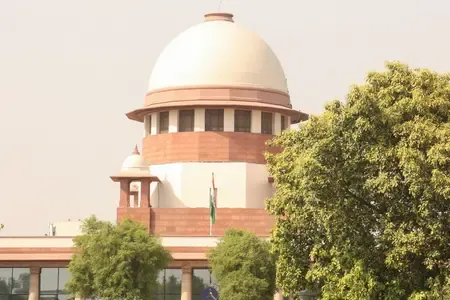
Synopsis
The Supreme Court refused to grant the Punjab government any interim relief against a High Court-ordered CBI probe into Chief Minister Bhagwant Mann's OSD, adjourning the matter to Friday. With the CBI already conducting searches at eight locations — including the CM's camp office — and summoning Ghuman and associates, the AAP government faces an active federal investigation it cannot yet legally stop.
Key Takeaways
The Supreme Court on 8 October deferred the Punjab government 's plea against the CBI probe to Friday , granting no interim relief.
A bench of Justice Dipankar Datta and Justice Sheel Nagu declined to pass an interim order, saying it had not yet read the case file.
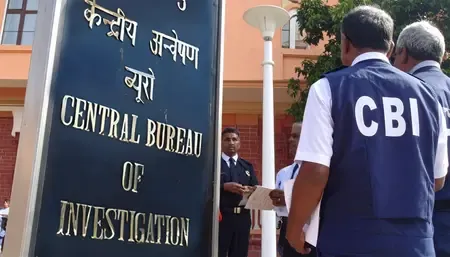
The CBI has already registered an FIR and searched eight locations in Chandigarh and Punjab , including CM Bhagwant Mann 's camp office in Sector 2, Chandigarh .
OSD Rajvir Ghuman and associates Nitin Gohal and Bir Devinder were summoned by the CBI on Wednesday .
The probe was ordered by the Punjab and Haryana High Court on 5 October following a PIL after Punjab Police did not act on ED letters alleging corruption.
The High Court has directed a CBI status report within two months .
The Punjab government on Thursday, 8 October 2026 failed to obtain immediate relief from the Supreme Court against the Punjab and Haryana High Court's order directing the Central Bureau of Investigation (CBI) to probe corruption allegations against Chief Minister Bhagwant Mann's Officer on Special Duty (OSD) Rajvir Ghuman and associates. The hearing on the state's plea was adjourned to Friday after a bench noted it had not had adequate time to examine the case file.
Why the Supreme Court Deferred the Matter
A bench comprising Justice Dipankar Datta and Justice Sheel Nagu deferred the hearing after Justice Datta noted that the case file had reached the bench late, leaving Justice Nagu without sufficient time to review the papers. When senior advocate Vikas Singh, appearing for the Punjab government, sought protection against any precipitative action in the interim, the bench declined.
'When we haven't read the file, how can we?' Justice Datta remarked, signalling that no interim order could be passed without first studying the matter. The case has now been listed for Friday, with the Punjab government securing no immediate stay or protection against the High Court's directions.
CBI Already in the Field: Searches and Summons
The development is significant because the CBI has not waited — it has already registered an FIR and set its investigation in motion. On Tuesday, the agency conducted coordinated searches at eight locations across Chandigarh and Punjab, including the Chief Minister's camp office in Sector 2, Chandigarh, and premises linked to Ghuman in Sangrur and Mohali.
The day after — on Wednesday — Ghuman and other associates were formally summoned to appear before the CBI's Chandigarh office in connection with the probe. The pace of the investigation underscores why the Punjab government's bid for interim protection was urgent; the absence of any stay leaves the probe legally unimpeded.
Background: ED Letters, Punjab Police Inaction, and the High Court Order
The chain of events traces back to three letters written by the Enforcement Directorate (ED) to Punjab Director General of Police (DGP) Gaurav Yadav. The ED alleged that Ghuman and his associates Nitin Gohal and Bir Devinder were interfering in administrative transfers, postings, and government tenders, and called for the registration of an FIR. The federal anti-money laundering agency further alleged their involvement in corruption.
When the Punjab Police did not act on the ED's communications, advocate Nikhil Saraf filed a Public Interest Litigation (PIL) before the Punjab and Haryana High Court, seeking a CBI-led probe free from the influence of the Punjab Police and Punjab Vigilance. The petition argued that the allegations touched persons linked to the Chief Minister's Office and warranted an independent investigation.
On 5 October, the High Court ordered the CBI to register a case, directed the Punjab government and police to extend full cooperation to the agency, and mandated a status report within two months. It is this order that the Punjab government has now challenged before the Supreme Court.
Political and Legal Stakes
The case puts the Aam Aadmi Party (AAP)-led Punjab government in a politically sensitive position — its own Chief Minister's office is at the centre of an active CBI investigation ordered by the High Court, at a time when AAP nationally has faced repeated scrutiny over governance issues. Notably, this is not the first instance of central agencies and AAP-governed states clashing over jurisdiction and probe mandates.
The Punjab government's challenge in the Supreme Court will be heard on Friday. Until then, the CBI probe continues unhindered, with the next hearing likely to determine whether the state secures any interim relief or faces an unobstructed federal investigation into its highest office.
Point of View
And that is not a neutral outcome for an AAP government already navigating national-level scrutiny. What stands out is the sequence: the ED flagged the allegations, Punjab Police did not act, a PIL forced the High Court's hand, and the CBI moved within days of the order. That chain suggests institutional momentum the Punjab government will find difficult to slow, regardless of what the Supreme Court decides on Friday. The deeper question is whether AAP's governance model — which positioned itself as the anti-corruption alternative — can withstand a federal probe at the very top of its administrative structure in its marquee state.
NationPress
8 Oct 2026
Frequently Asked Questions
Why did the Supreme Court not grant relief to the Punjab government today?
The Supreme Court deferred the Punjab government's plea to Friday because the bench of Justice Dipankar Datta and Justice Sheel Nagu had not had adequate time to read the case file. Justice Datta remarked, 'When we haven't read the file, how can we?' — indicating no interim order could be passed without reviewing the matter first.
What is the CBI probe into CM Bhagwant Mann's OSD about?
The CBI probe concerns corruption allegations against Rajvir Ghuman, the OSD of Punjab Chief Minister Bhagwant Mann, and associates Nitin Gohal and Bir Devinder. The Enforcement Directorate had alleged in three letters to the Punjab DGP that they were interfering in administrative transfers, postings, and government tenders — but Punjab Police did not register an FIR, prompting a PIL and a High Court order directing the CBI to take over.
What action has the CBI taken so far in this case?
The CBI has registered an FIR and conducted searches at eight locations in Chandigarh and Punjab, including Chief Minister Bhagwant Mann's camp office in Sector 2, Chandigarh, and premises linked to Ghuman in Sangrur and Mohali. Ghuman and other associates were also summoned to the CBI's Chandigarh office on Wednesday.
What did the Punjab and Haryana High Court order on 5 October?
The High Court ordered the CBI to register a case based on the ED's letters, directed the Punjab government and police to extend full cooperation to the CBI, and mandated the agency to submit a status report within two months. The Punjab government has challenged this order before the Supreme Court.
What happens next in the Supreme Court?
The Supreme Court has listed the Punjab government's plea for hearing on Friday. Until then, no interim stay is in place, meaning the CBI investigation continues unhindered. The Friday hearing will determine whether the state gets any interim protection against the High Court's directions.