SC halts Yamuna river channel construction in Vrindavan, Mathura
Synopsis
The Supreme Court has frozen construction inside the Yamuna river channel at Vrindavan, warning it could shrink the river permanently. With states failing to comply on Ganga encroachments and Bihar given a final six-week deadline on Patna ghats, the court is escalating fast — and the threat to summon Chief Secretaries signals it has run out of patience.
Key Takeaways
The Supreme Court ordered status quo on construction inside the Yamuna river channel at Vrindavan, Mathura on 23 July .
The Bench of Justices J.B.
Viswanathan warned the construction risks shrinking the Yamuna's river channel .
States that fail to submit encroachment data face having their Chief Secretaries summoned to court.
Himachal Pradesh and Madhya Pradesh were added to the list of states required to furnish information.
The Bihar government has six weeks to remove all unauthorised structures between Nauzar Ghat and Nurpur Ghat in Patna.
The court clarified its directions override any conflicting interim orders from other courts.
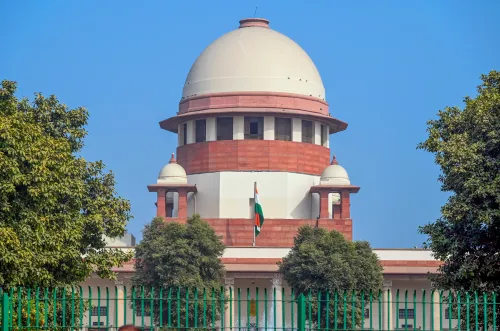
The Supreme Court of India on 23 July ordered a status quo on all construction activities allegedly under way inside the Yamuna river channel in Vrindavan, Mathura district, Uttar Pradesh, warning that the work risks shrinking the river's channel and disrupting its ecological flow. The direction came from a Bench of Justices J.B. Pardiwala and K.V. Viswanathan while hearing an intervention application filed in a pending appeal on illegal constructions and encroachments along the Ganga and its floodplains.
What the Court Said
The Bench flagged the gravity of the situation in unambiguous terms: 'What has been highlighted in the interlocutory application is something very serious. It is a matter of concern. We have been made to understand that the construction which is going on will ultimately lead to shrinking of the river channel of the river Yamuna in Vrindavan District, Mathura, State of Uttar Pradesh.'
The court added that its overriding concern was ecological: 'Our concern is to ensure that the ecological flow of water is maintained.' The status quo order effectively freezes all further construction pending a fuller examination of the matter.
States Put on Final Notice
Additional Solicitor General Aishwarya Bhati informed the Bench that several states had yet to furnish satisfactory information on encroachments and compliance with earlier court directions. The court granted what it described as one last opportunity, warning: 'We grant one last opportunity to all the States to furnish the necessary information to the Union, failing which we shall be compelled to summon the Chief Secretary of each of those States before this Court.'
The scope of the proceedings was also widened, with Himachal Pradesh and Madhya Pradesh added to the list of states from which information has now been sought.
Bihar Given Six Weeks on Patna Encroachments
The court expressed sharp dissatisfaction over the absence of any action in Patna despite its prior orders. Noting that 'till this date, no steps have been taken to remove the encroachments,' it gave the Bihar government six weeks to clear all unauthorised structures between Nauzar Ghat and Nurpur Ghat in Patna. A compliance affidavit must be filed before the next hearing, and the Bench cautioned that 'any laxity in this regard will be viewed strictly.'
Court Overrides Conflicting Interim Orders
Addressing a key procedural hurdle, the apex court clarified that interim stays or orders passed by other courts would not excuse non-compliance: 'Irrespective of any order that may be in operation, our directions shall be fully complied with.' This effectively removes any shield that local authorities or encroachers may have sought from lower-court orders.
Background and Broader Context
This is not an isolated intervention. In March 2025, the Supreme Court had already sought a comprehensive status report on illegal constructions along the Ganga basin, observing that the problem extended well beyond Bihar and required coordinated, multi-state action. At that time, the court directed the Union government, the National Mission for Clean Ganga (NMCG), and all riparian states to report on existing encroachments, removal actions taken, and implementation of the 2016 Ganga Protection Notification.
The Vrindavan development adds a new dimension — active construction inside a river channel, as opposed to encroachment on banks or floodplains — raising the ecological stakes considerably. With the court now monitoring compliance across multiple Ganga basin states, the pressure on state governments to act is at its highest point yet.
Point of View
But the fact that it is now being deployed across multiple states simultaneously suggests the court believes the executive has been deliberately slow. What mainstream coverage underplays is the 2016 Ganga Protection Notification: nearly a decade old and still largely unimplemented, it represents a systemic failure of Centre-state coordination that no single court order can fix on its own. The Vrindavan intervention is a symptom of that deeper dysfunction.
NationPress
22 Oct 2026
Frequently Asked Questions
Why has the Supreme Court stopped construction in the Yamuna river channel at Vrindavan?
The Supreme Court halted construction because it was reportedly being carried out inside the Yamuna river channel in Vrindavan, Mathura, and the court found credible concern that it would shrink the channel and disrupt the river's ecological flow. A Bench of Justices J.B. Pardiwala and K.V. Viswanathan issued the status quo order on 23 July pending a fuller examination.
What happens if states do not comply with the Supreme Court's directions on Ganga encroachments?
The Supreme Court has warned that it will summon the Chief Secretary of any state that fails to furnish the required encroachment data to the Union government. The court described this as a final opportunity for states to comply.
What has the Supreme Court directed Bihar to do, and by when?
The court gave the Bihar government six weeks to remove all unauthorised structures and encroachments between Nauzar Ghat and Nurpur Ghat in Patna. A compliance affidavit must be filed before the next hearing, and the court cautioned that any laxity will be viewed strictly.
Which new states have been added to the Supreme Court's Ganga encroachment proceedings?
Himachal Pradesh and Madhya Pradesh have been added to the list of states from which the Supreme Court has now sought information on encroachments and compliance with its earlier directions.
What is the background to this Supreme Court case on Ganga encroachments?
The case originates from a pending appeal on illegal constructions and encroachments on the banks and floodplains of the Ganga. In March 2025, the court sought a comprehensive status report from the Union government, the National Mission for Clean Ganga (NMCG), and all Ganga basin states, covering existing encroachments, removal actions, and implementation of the 2016 Ganga Protection Notification.