Supreme Court grants bail to ex-IAS officer Anil Tuteja in Chhattisgarh DMF scam case
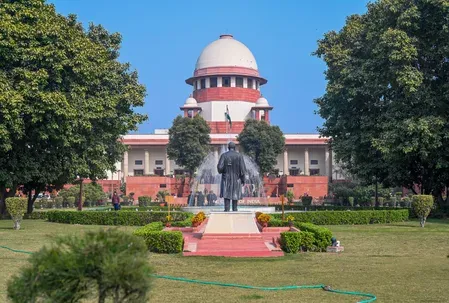
Synopsis
The Supreme Court has granted bail to former IAS officer Anil Tuteja in the Chhattisgarh DMF scam — overturning a High Court rejection — citing over a year of pre-trial custody and 85 witnesses yet to be examined. The bench was careful to make clear it expressed no view on the merits, leaving the serious allegations of tender manipulation and illegal commissions entirely for trial.
Key Takeaways
The Supreme Court granted bail to former IAS officer Anil Tuteja on Monday in the alleged Chhattisgarh DMF fund scam case.
Tuteja has been in custody since 21 April 2024 and was formally arrested in the present case on 23 February 2026 .
The bench cited 85 witnesses yet to be examined and the bail already granted to co-accused as key reasons for the relief.
Tuteja must reside outside Chhattisgarh and report his address to the Anti-Corruption Bureau (ACB) within one week of release.
The Chhattisgarh High Court had earlier rejected his bail plea, finding prima facie material of involvement in cheating, forgery, and corruption offences.
The Supreme Court explicitly stated it expressed no opinion on the merits of the allegations, which will be decided at trial.
The Supreme Court on Monday granted bail to former Indian Administrative Service (IAS) officer Anil Tuteja in a corruption case linked to the alleged District Mineral Foundation (DMF) fund scam in Chhattisgarh. A bench comprising Chief Justice of India (CJI) Surya Kant and Justice Joymalya Bagchi granted the relief, noting that Tuteja has been in custody since April 2024 and that the trial is unlikely to conclude in the near term.
Key Developments in the Bail Order
The apex court recorded that as many as 85 witnesses are proposed to be examined in the trial, making a swift conclusion improbable. The bench also noted that similarly placed co-accused individuals had already been granted bail.
'It is true that there are serious allegations against the petitioner, but that will be the subject matter of the trial. We deem it appropriate to release the petitioner on bail without expressing anything on merits,' the CJI-led bench observed.
According to court records, Tuteja was formally arrested in the present DMF case on 23 February 2026, though he had already been in custody since 21 April 2024 in connection with other cases.
Stringent Conditions Imposed
The Supreme Court attached strict conditions to the bail order. Tuteja has been directed to reside outside Chhattisgarh and furnish details of his place of stay and a contact number to the Anti-Corruption Bureau (ACB) and the jurisdictional police station within one week of his release.
He must appear before the trial court on every date of hearing unless specifically exempted, and is prohibited from attempting to influence witnesses or tamper with evidence in any manner.
What the Prosecution Argued
The prosecution strongly opposed bail, contending that Tuteja was a key conspirator in multiple scams, including the DMF scam, and had a history of influencing witnesses and interfering with the investigation. Prosecutors also relied on certain WhatsApp communications allegedly indicating attempts to secure favourable outcomes in earlier cases.
Tuteja's counsel, however, argued that similar allegations had been considered in earlier proceedings and that he had already been granted bail in other cases — a position the Supreme Court ultimately found persuasive given the prolonged pre-trial detention.
Background: The DMF Scam and High Court Rejection
The DMF case pertains to alleged irregularities in the utilisation of funds earmarked for developmental works in mining-affected areas of Chhattisgarh, including allegations of manipulation of tender processes and illegal commissions.
The Chhattisgarh High Court had rejected Tuteja's bail plea in April 2025, with a single-judge bench of Justice Narendra Kumar Vyas observing that economic offences are 'committed with cool calculation and deliberate design with an eye on personal profit regardless of the consequence to the community' and therefore warrant a stricter approach at the bail stage.
The High Court had found prima facie material disclosing Tuteja's involvement in alleged offences under Indian Penal Code (IPC) provisions related to cheating, forgery, and criminal conspiracy, as well as provisions of the Prevention of Corruption Act. It had also flagged the risk of evidence tampering given his reportedly influential position.
What Happens Next
With bail now secured from the Supreme Court, Tuteja's case moves to the trial phase, where the merits of the allegations — including the DMF fund misappropriation and tender manipulation charges — will be examined. The trial's progress will depend on the examination of the 85 witnesses listed by the prosecution. All bail conditions remain in force through the duration of the proceedings.
Point of View
And the bench correctly distinguished bail from acquittal. But the case surfaces a structural problem: economic offences involving public funds routinely stall at the witness-examination stage, effectively converting bail denial into informal punishment. The prosecution's reliance on WhatsApp communications as evidence of witness influence deserves scrutiny at trial — digital evidence of intent is notoriously contestable. What is harder to contest is that DMF funds, meant for communities in mining-affected districts, allegedly became a vehicle for private gain, and accountability for that — regardless of bail outcomes — must move faster.
NationPress
14 Sept 2026
Frequently Asked Questions
Why did the Supreme Court grant bail to Anil Tuteja?
The Supreme Court granted bail primarily because Tuteja had been in custody since April 2024 and the trial — with 85 witnesses to be examined — is unlikely to conclude soon. The bench also noted that similarly placed co-accused had already received bail, and clarified it was not commenting on the merits of the allegations.
What is the Chhattisgarh DMF scam about?
The District Mineral Foundation (DMF) scam involves alleged irregularities in the use of funds set aside for developmental works in mining-affected areas of Chhattisgarh. Allegations include manipulation of tender processes and collection of illegal commissions from contractors.
What conditions has the Supreme Court imposed on Tuteja's bail?
Tuteja must reside outside Chhattisgarh, furnish his address and contact number to the Anti-Corruption Bureau and local police within one week of release, appear before the trial court on every hearing date, and refrain from influencing witnesses or tampering with evidence.
Why had the Chhattisgarh High Court rejected Tuteja's bail earlier?
The Chhattisgarh High Court rejected bail in April 2025, finding prima facie material indicating Tuteja's involvement in cheating, forgery, criminal conspiracy, and Prevention of Corruption Act offences. It also flagged the risk of evidence tampering given his influential position.
Does the Supreme Court's bail order mean Tuteja has been cleared of charges?
No. The Supreme Court explicitly stated it expressed no opinion on the merits of the case. The allegations against Tuteja will be fully examined during the trial, and the bail order is solely based on procedural grounds related to the length of his detention and the trial timeline.